


Travel lifts, marine hoists and boat trailers
Every hull is lifted on its own terms: marine travel lifts, boat hoists, self-propelled boat trailers and jib cranes from 16 to 220 t — for navies, coast guards, shipyards and marinas — and electric repowering of the machines already in service.
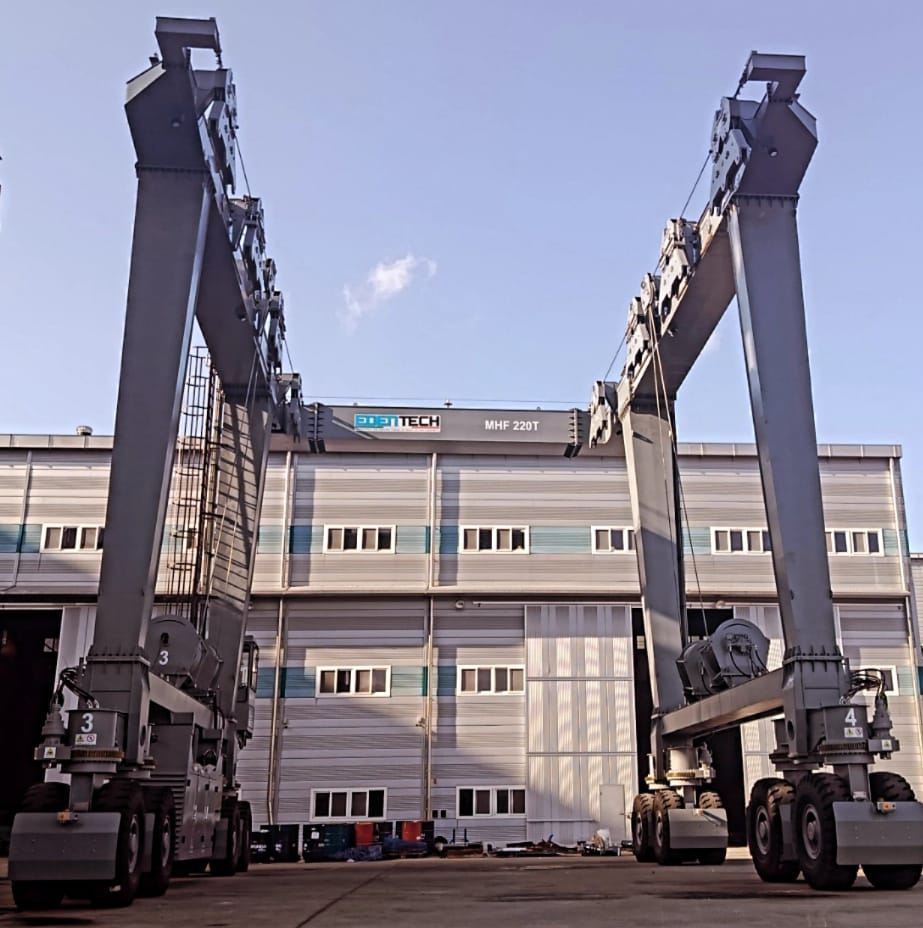
Marine Hoist 220 t — navy
A 220-tonne travel lift on sixteen tyres, engineered around a navy specification.
- Sixteen tyres, four articulated bogies. Ground pressure spread over sixteen contact points, so an existing quay can take a 220 t lift without being reinforced.
- Electronic hoisting synchronism. The lifting points move together; the hull is never loaded diagonally.
- Multiple electronic steering modes. Manoeuvring inside a congested naval yard without a dedicated approach lane.
- Cabin plus remote control. The operator can move to the point with the best view of the slings.
Project, machine & technical data
The project
A naval base is not a marina: the vessels are heavier and less standardised, the operating windows are fixed, and the quay structures are the ones that already exist — they cannot be rebuilt around the machine. The customer required sixteen tyres, and the machine was designed around that requirement rather than around the simplest solution for the builder.
The machine
Sixteen tyres in four articulated bogies keep the pressure on the quay within the limits of the existing structure, while the articulation lets each bogie follow the real surface. Steering and hoisting are both electronically controlled; with hulls of this size, any difference between corners is transferred straight into the structure of the vessel, and synchronism is what prevents it.
Technical data
- Capacity (SWL)
- 220 t
- Running gear
- 16 tyres in 4 articulated bogies
- Steering
- Enhanced electronic steering modes
- Hoisting
- Electronically controlled, synchronised lifting points
- Structure
- Advanced cross beam
- Operator interface
- Enclosed cabin plus remote control
- Application
- Handling of boats and barges
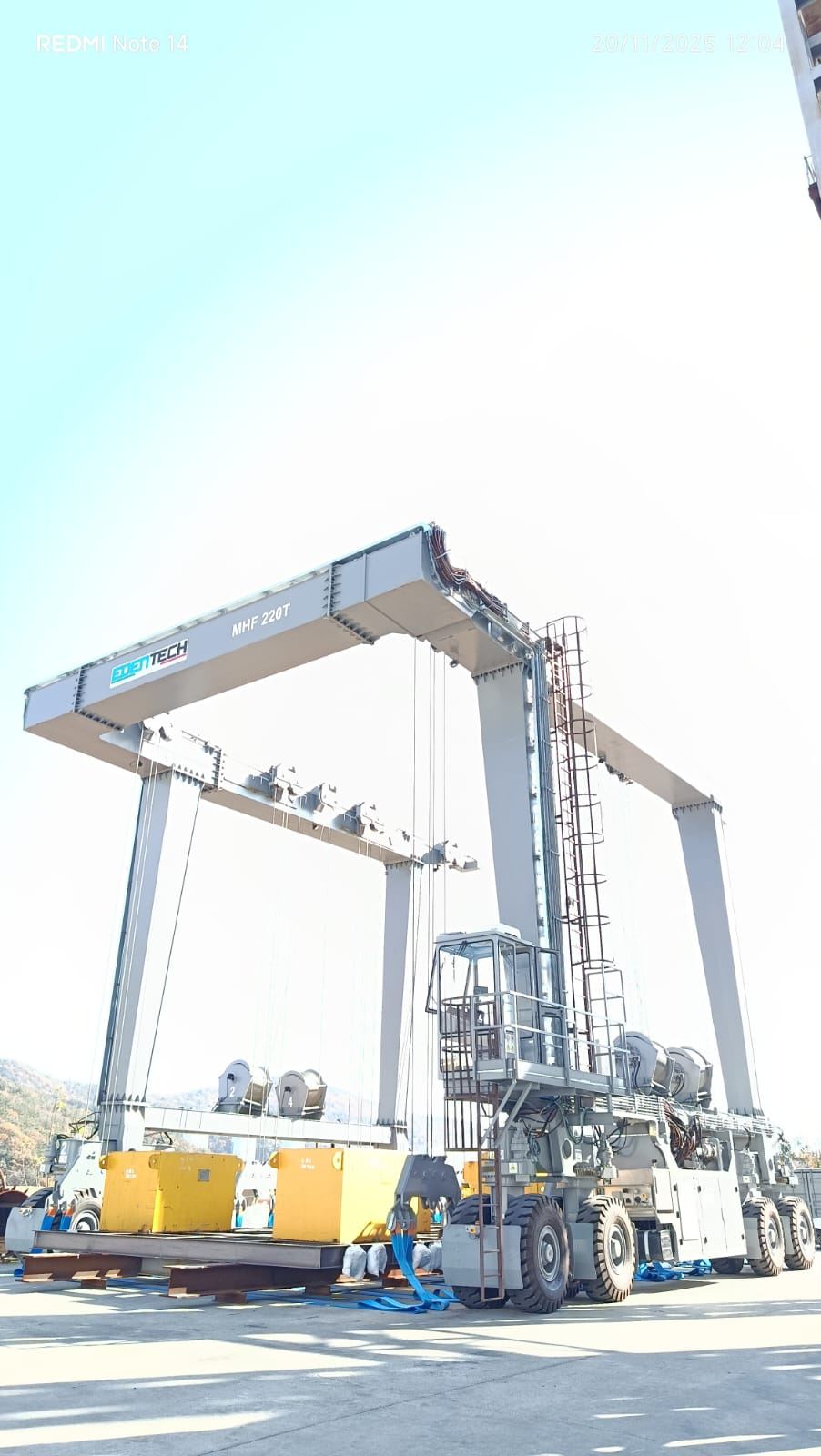
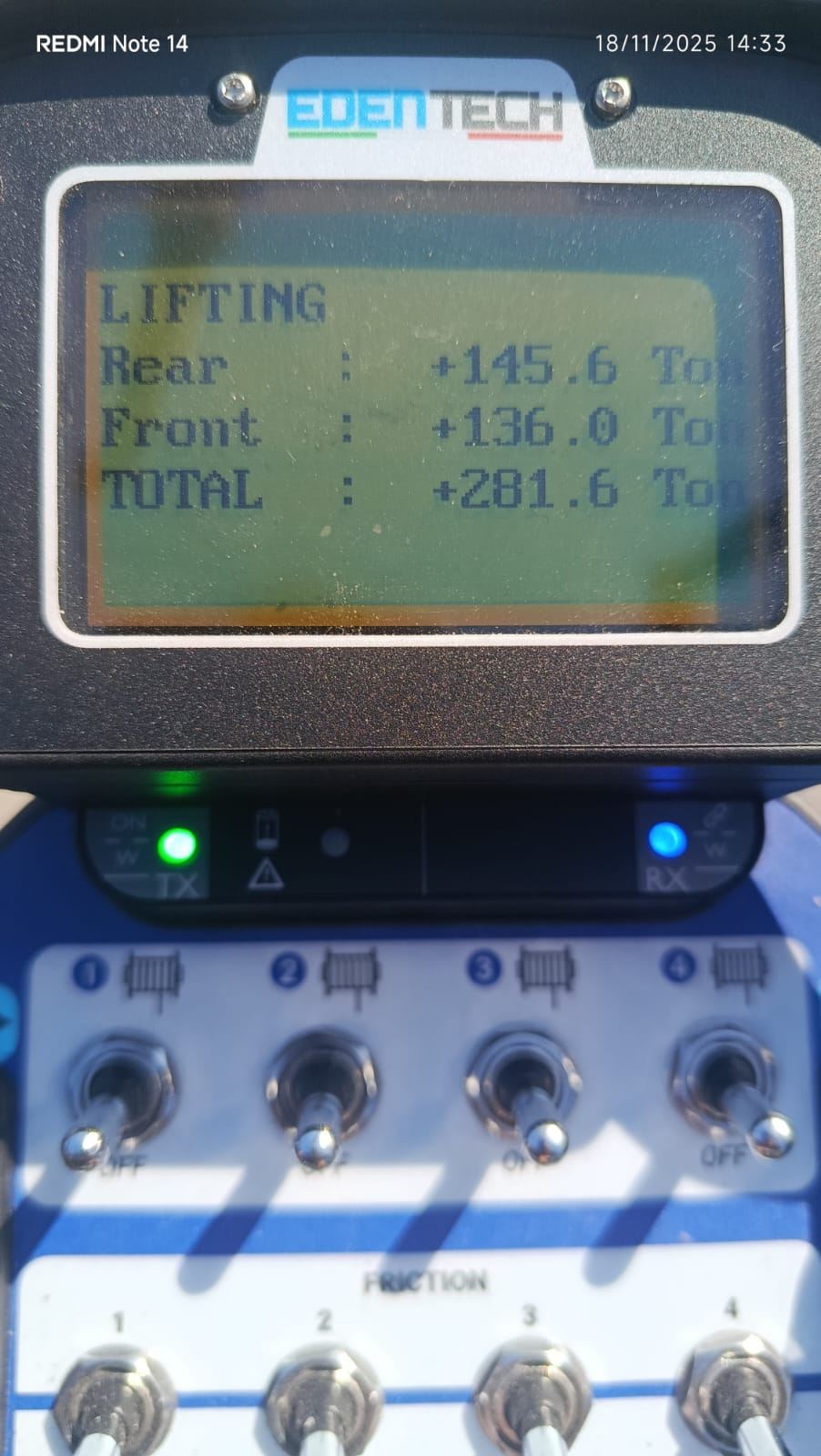
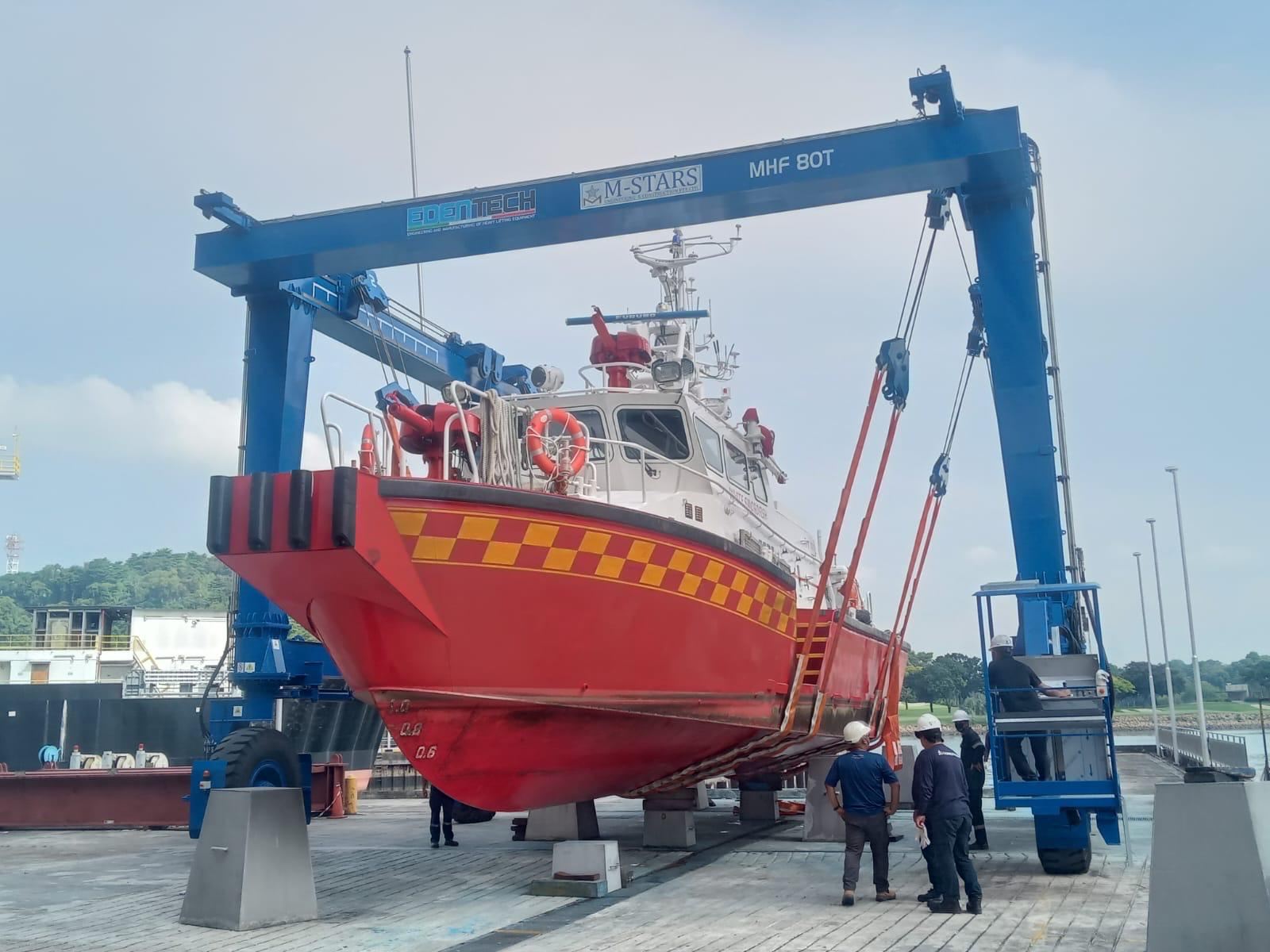
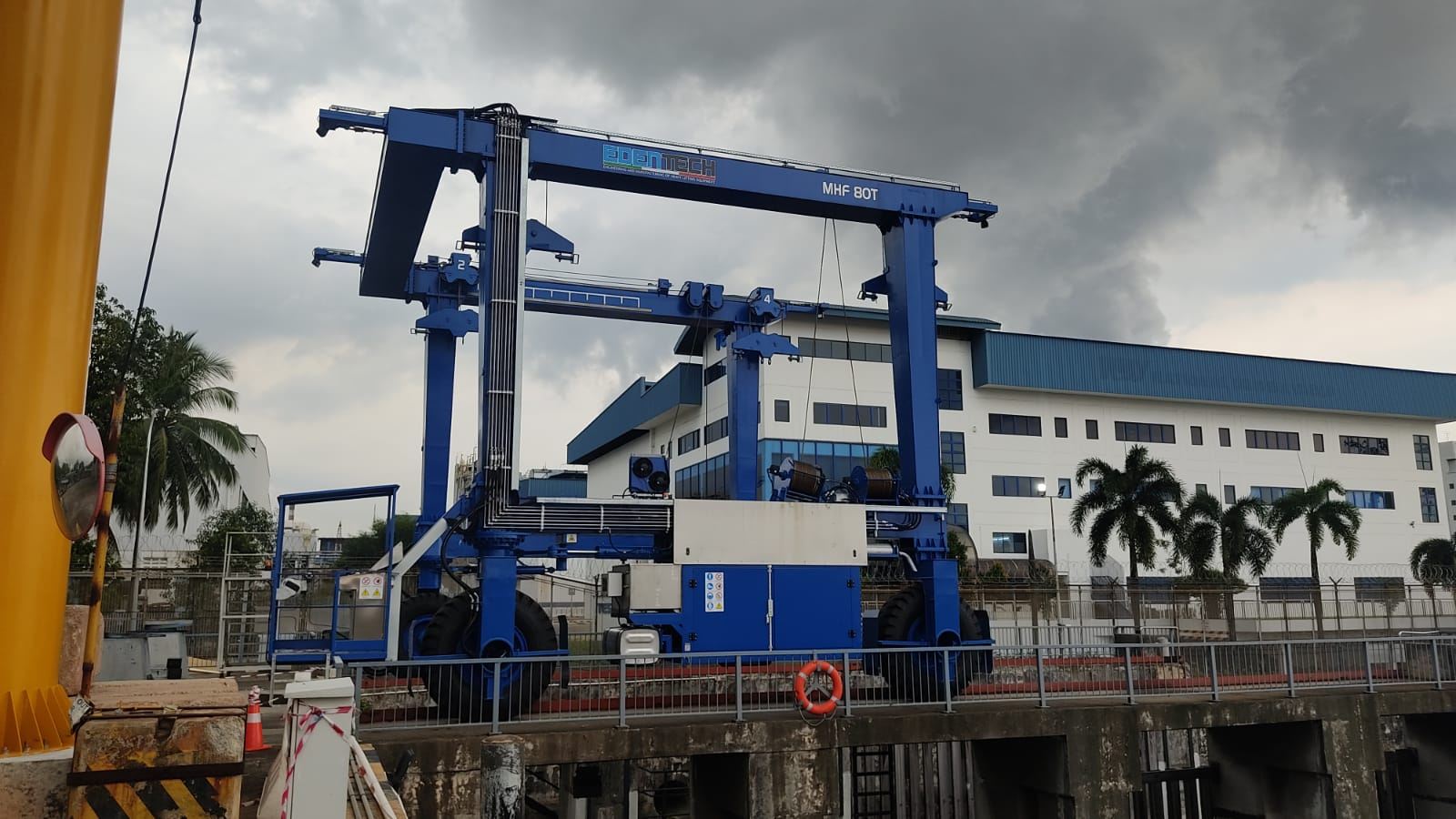
Two Marine Hoists 80 t and one 50 t — coast guard
Three travel lifts for a coast guard fleet update, working pools nearly seven metres deep.
- Electronic synchronism over a 7 m travel. A deep pool magnifies any error between lifting points; the vessel comes up level from the first centimetre to the last.
- Diesel-hydrostatic drive. No dependence on a fixed power supply; the machines work wherever they are needed.
- Stainless steel protection of the control station. Designed for permanent exposure to a saline environment.
- Three machines, one design language. Common controls across the fleet; operators move between sites without retraining.
Technical data
- Units supplied
- 2 × 80 t and 1 × 50 t
- Power unit
- Diesel-hydrostatic
- Hoisting travel
- Approx. 7 m below yard level
- Hoisting
- Electronic control for synchronism over the full travel
- Operator interface
- Open cab with controls, stainless steel protection boards
- Application
- Boat handling at several locations
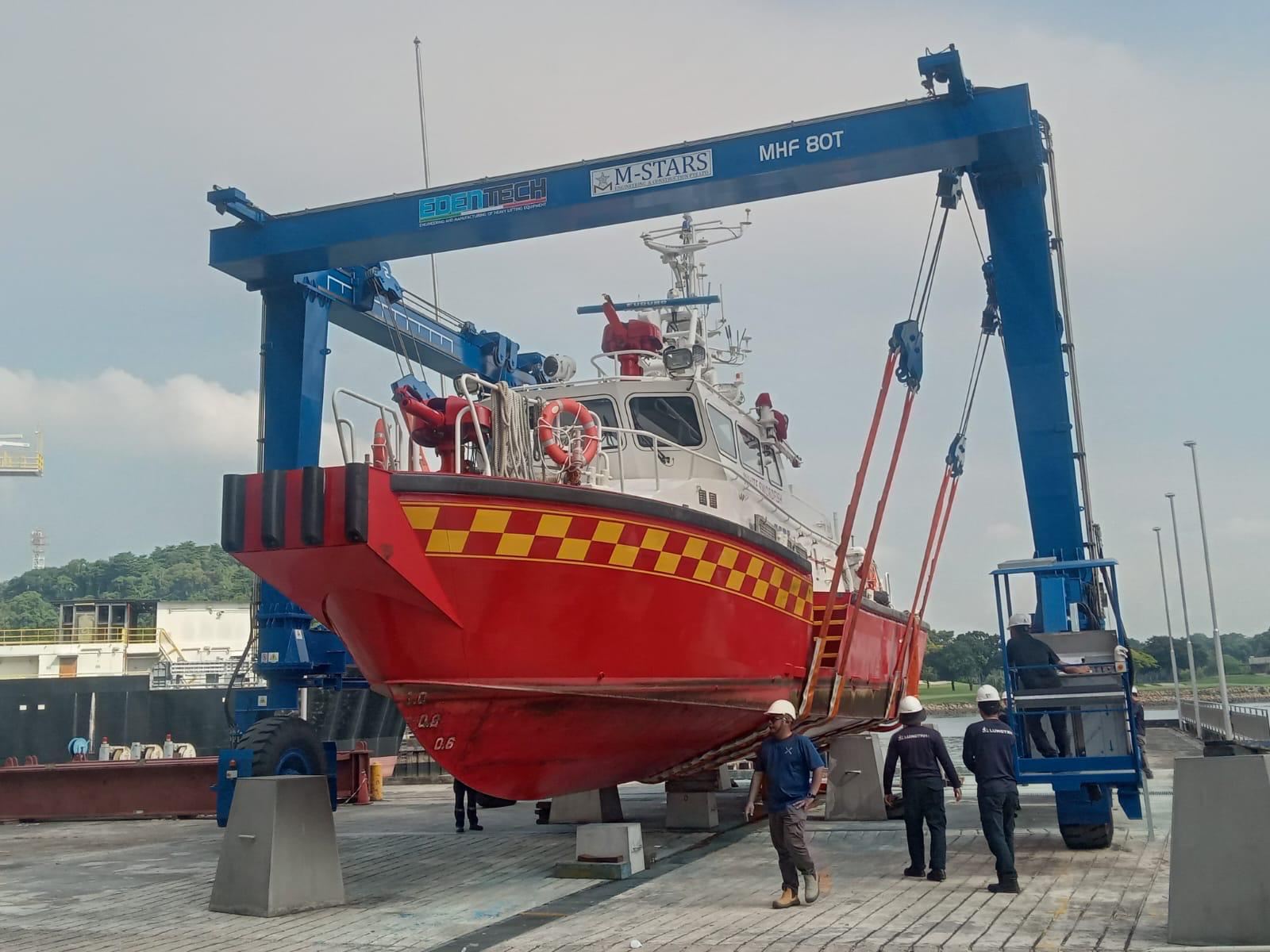
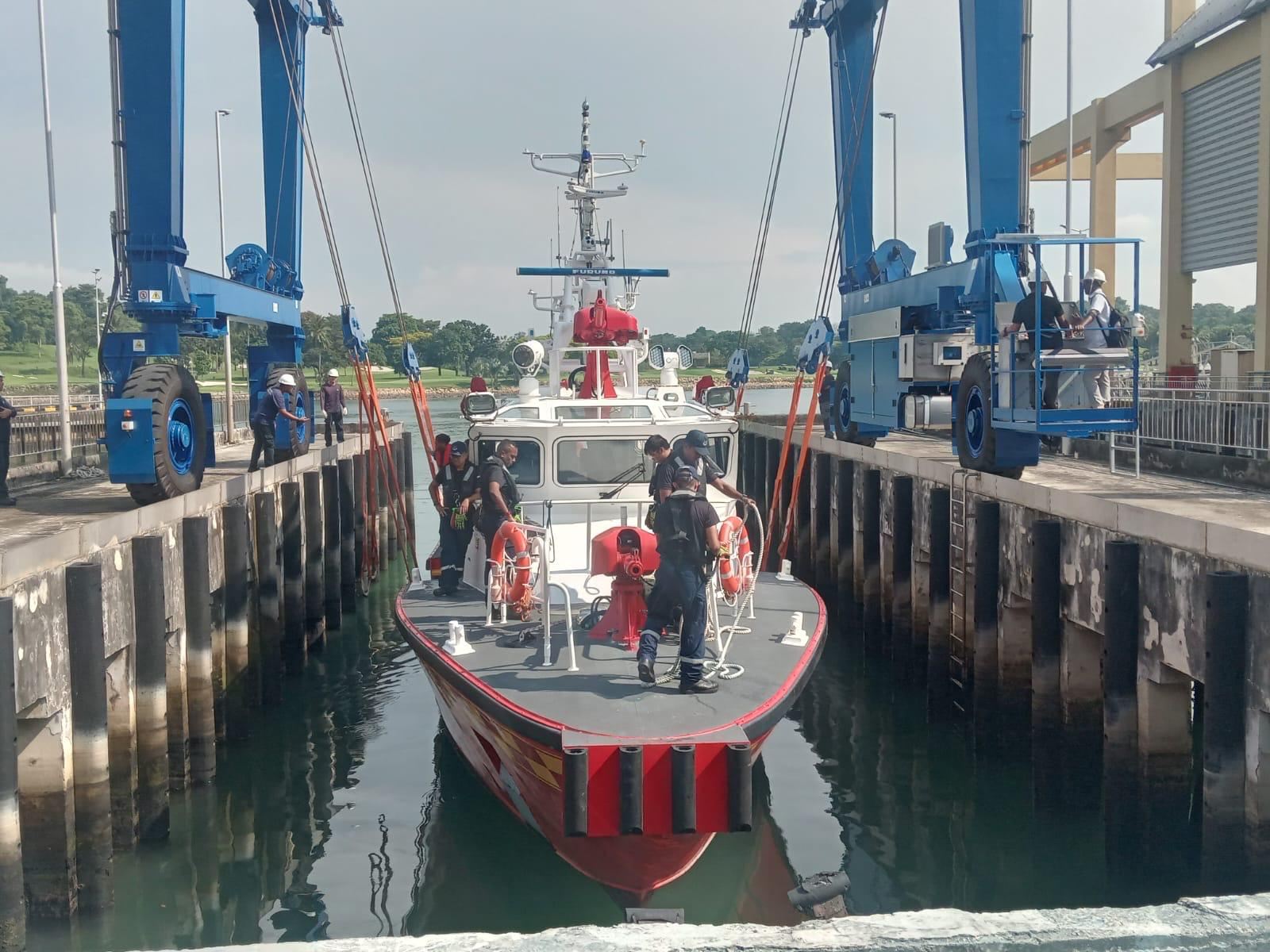
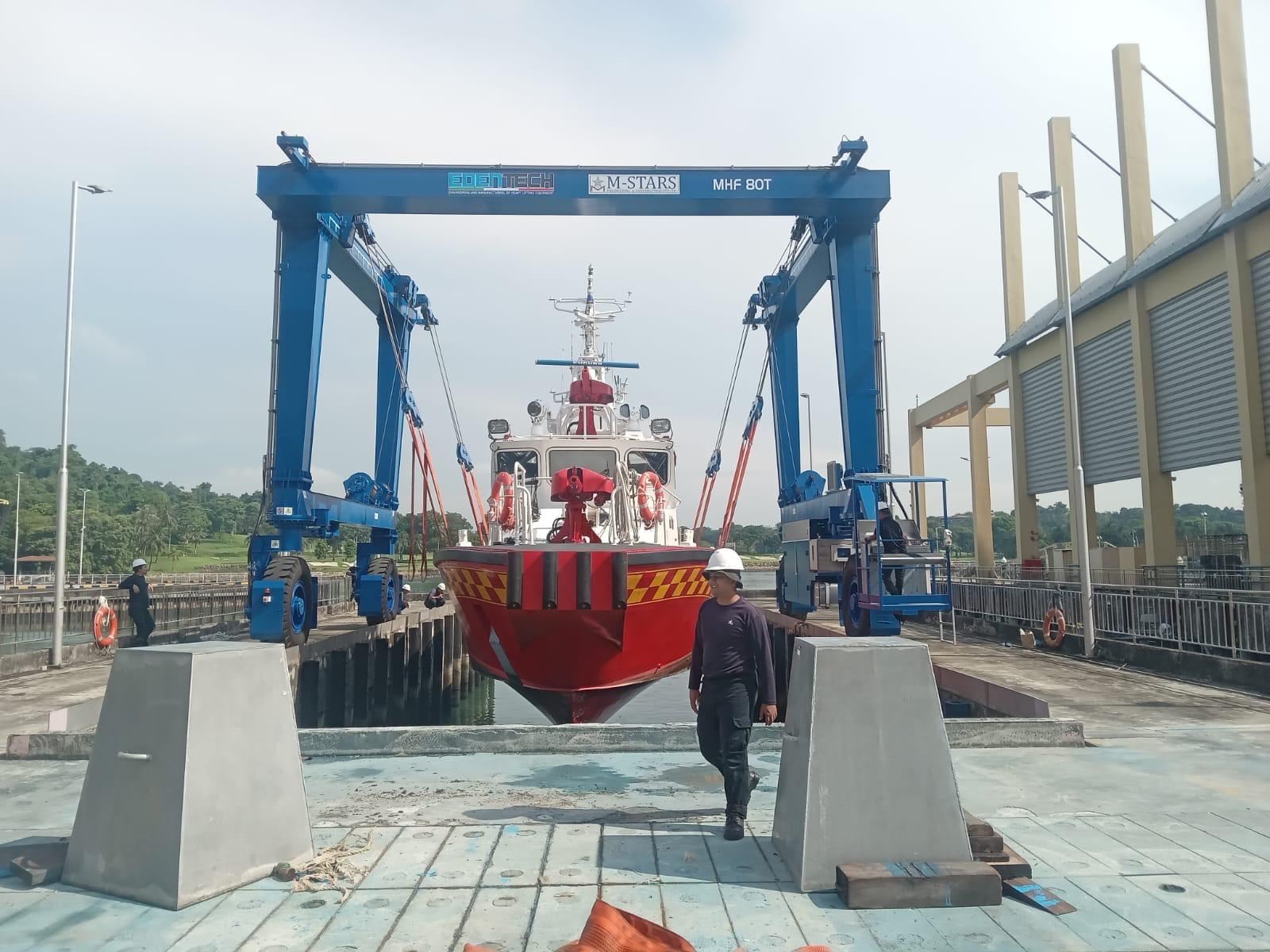
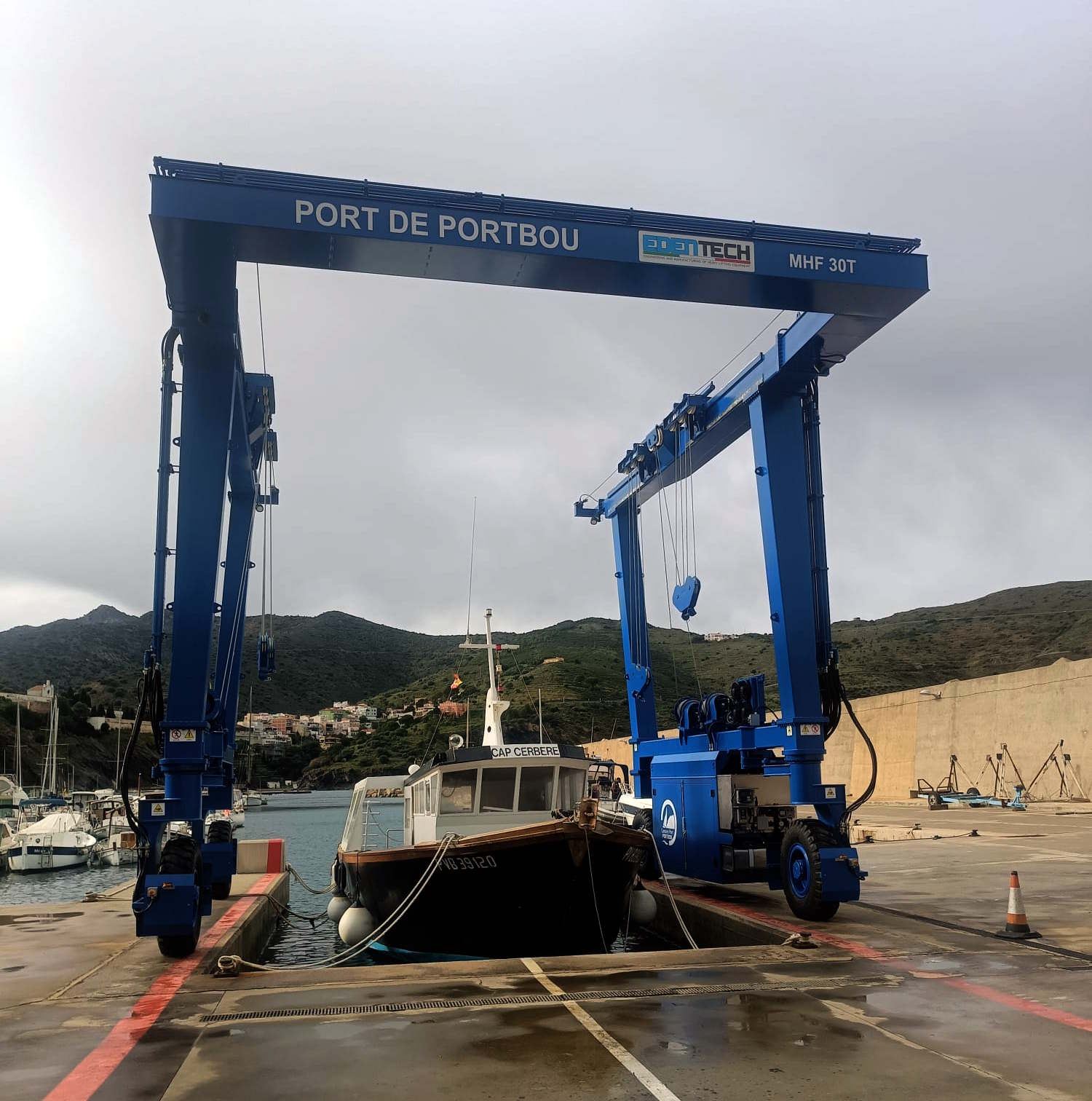
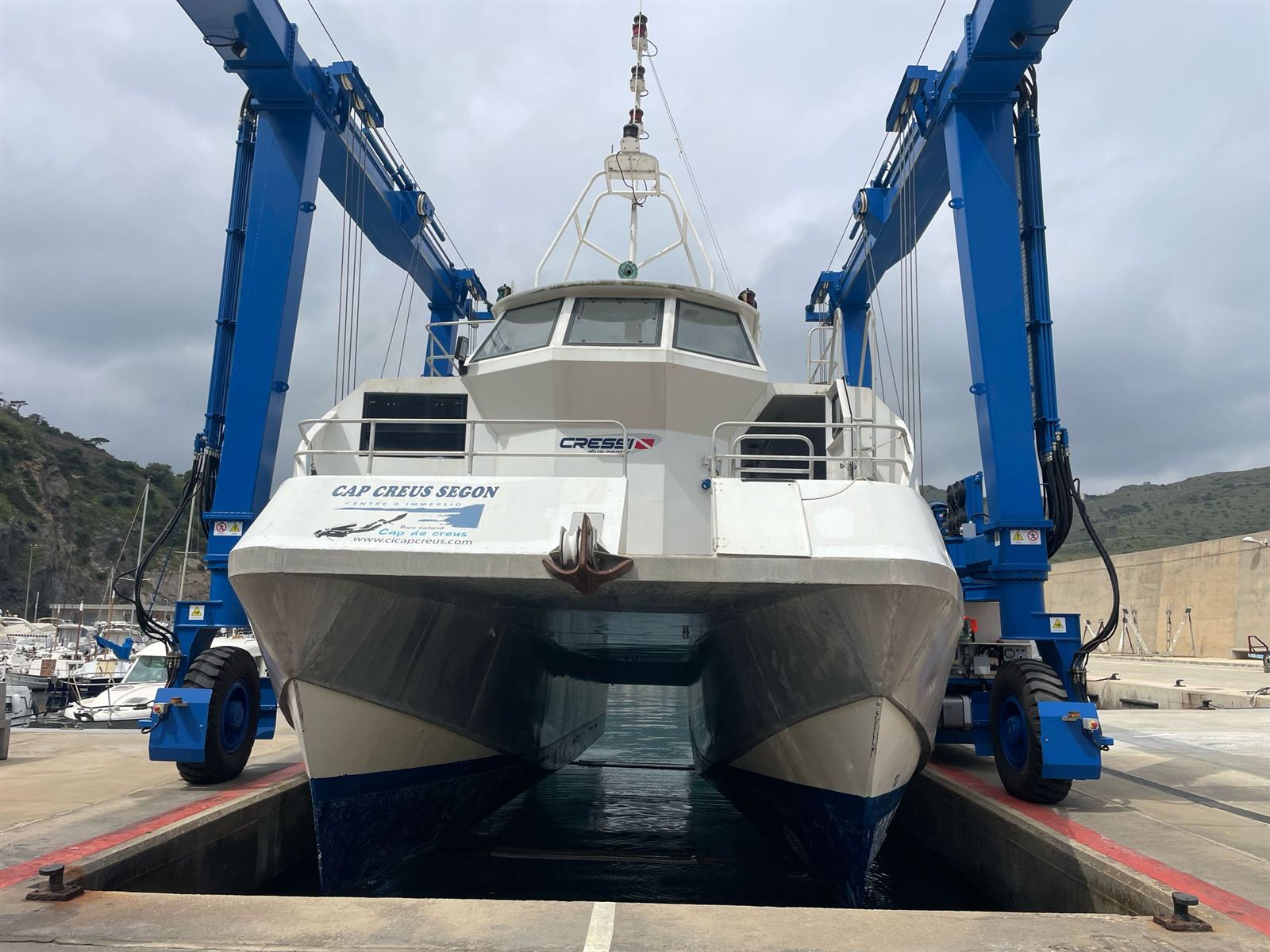
Marine Hoist 30 t — for sailing boats
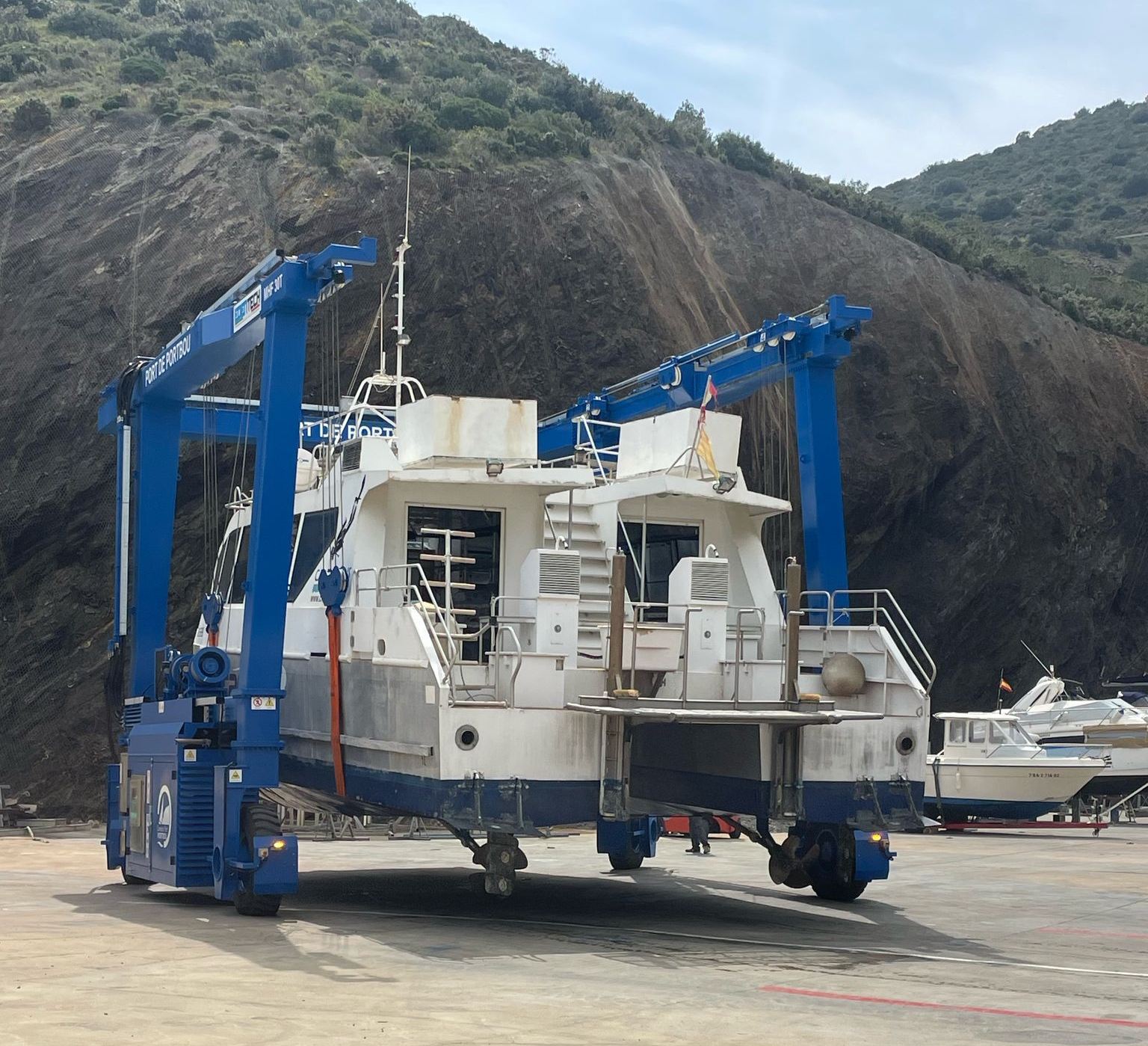
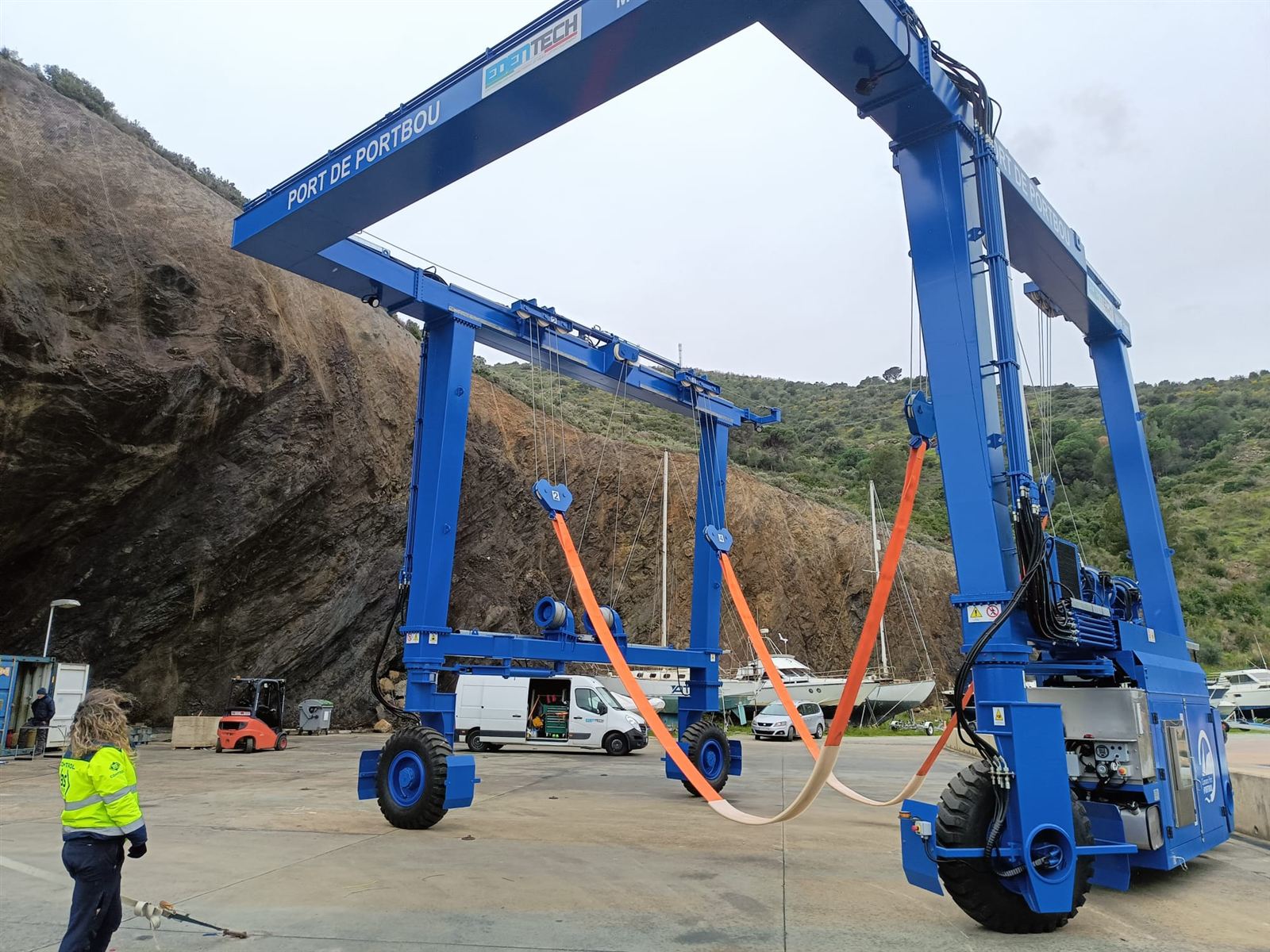
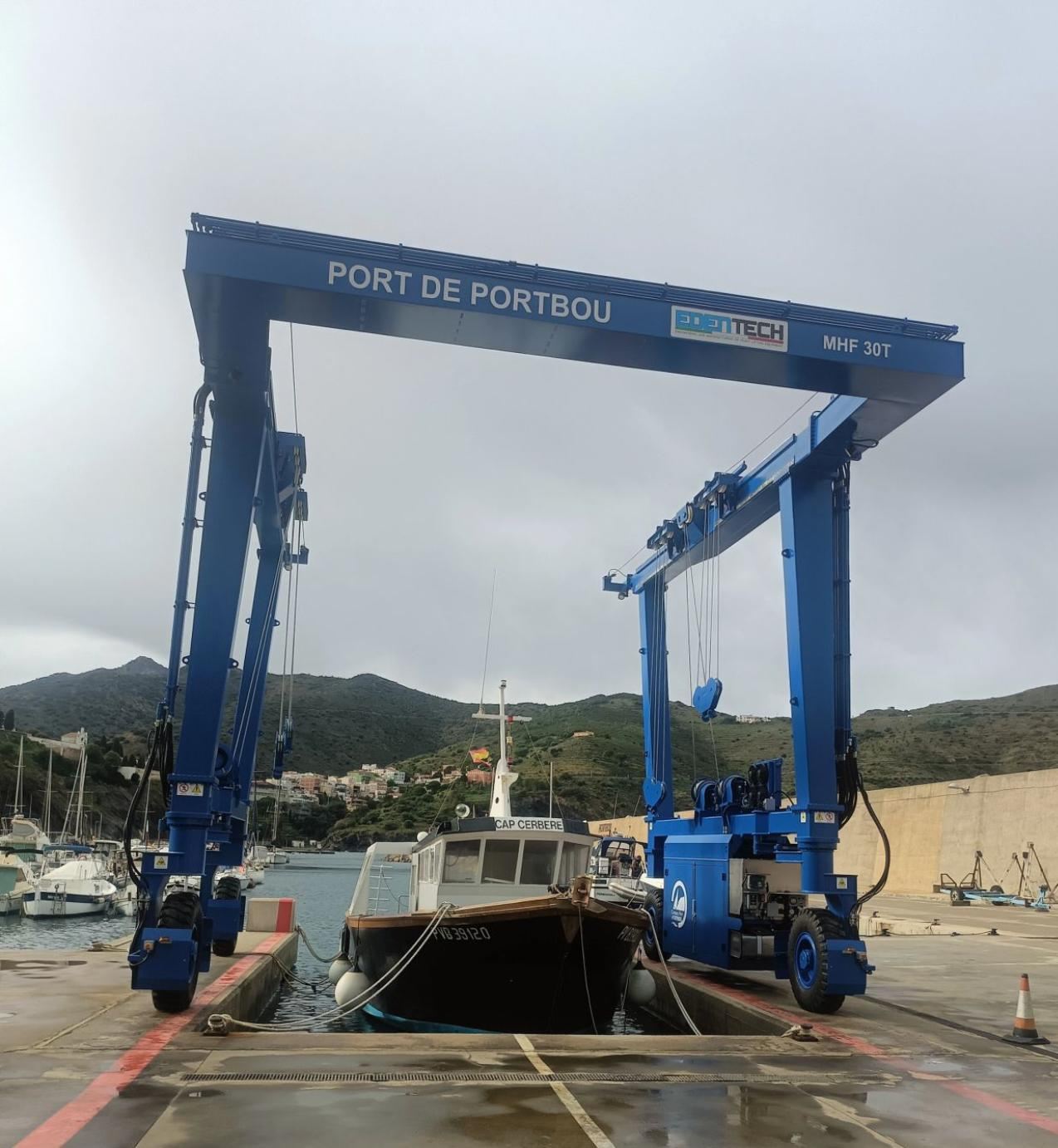
Equipment update for a yard on the Spanish Mediterranean coast, working mainly with sailing boats.
- Mobile lifting point. Sling geometry adapted to each hull, instead of each hull adapted to the machine.
- Specially advanced cross beam. Structure designed around the handling of keel boats.
- Electronic hoisting control. A level lift, which on a sailing boat is a matter of protecting the hull.
Project & technical data
Sailing boats are the least forgiving vessels a travel lift has to handle. The mass is concentrated in the keel, the hull is easily marked, and the rig limits where the slings can pass. The mobile lifting point means the boat is picked up on the points the naval architect intended, and lifted with those points moving together.
- Capacity (SWL)
- 30 t
- Power unit
- Diesel-hydrostatic
- Hoisting
- Electronically controlled
- Lifting arrangement
- Mobile lifting point, adjustable to the individual hull
Marine Hoist 25 t — naval base
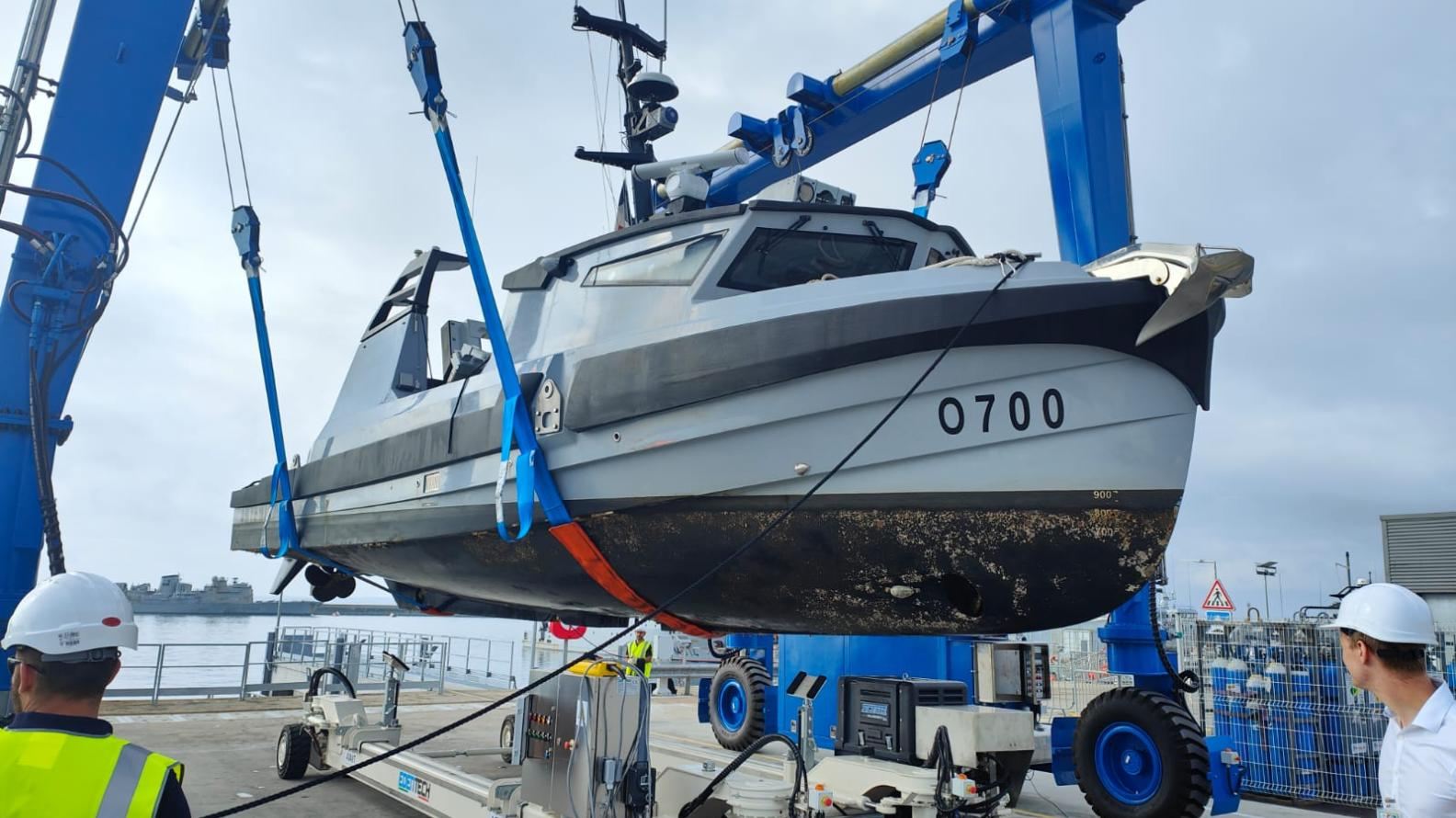
A travel lift working over a floating pontoon, designed to naval cyber-security requirements.
- Cyber-secure electrical board and control system. Designed to defence-installation requirements from the outset, not retrofitted.
- Handling from a floating pontoon. The machine keeps control of the load while the reference plane moves.
- 8 m of hoisting travel below yard level. Electronic control maintains synchronism over the whole range.
- Mobile lifting points. Sling positions set by the hull, not by the machine.
Technical data
- Capacity (SWL)
- 25 t
- Power unit
- Diesel-hydrostatic
- Hoisting travel
- Approx. 8 m below yard level
- Working conditions
- Pool equipped with a floating pontoon
- Steering / hoisting
- Both electronically controlled
- Electrical system
- Designed to maximum cyber-security requirements
photographs not published
Four boat trailers 22 t — naval base
Four self-propelled boat trailers handling boats and cradles inside a naval base, supplied together with the 25 t marine hoist.
- 90° side steering. The trailer translates sideways into the storage bay; no manoeuvring space is required around it.
- Boats and cradles handled by the same machine. One unit covers the whole movement cycle inside the base.
- Cyber-secure electrical system. Same site standard as the marine hoist supplied with them.
- Supplied as a fleet. Identical units, interchangeable operators and spare parts.
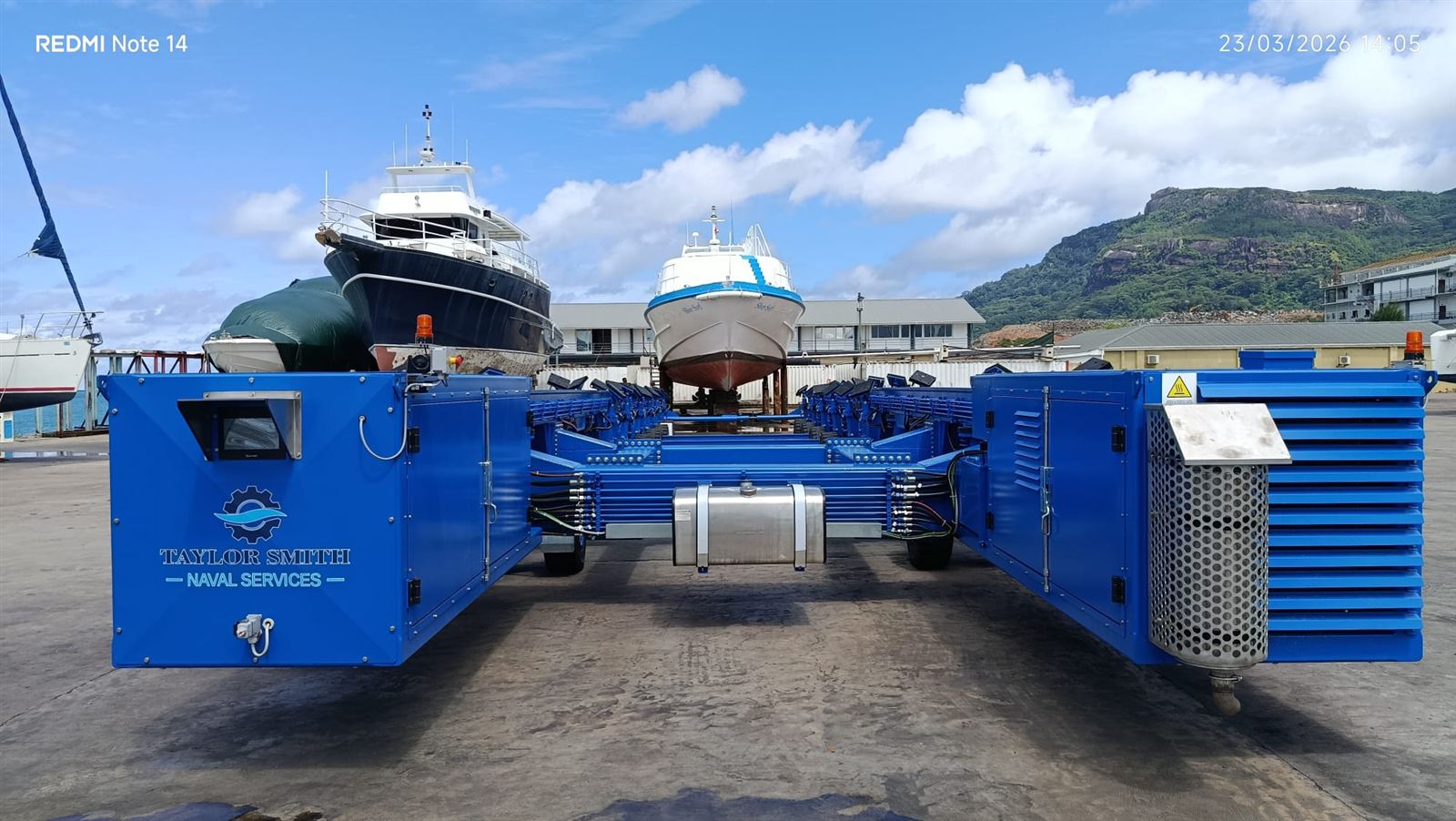
Boat trailer 200 t for boats and catamarans
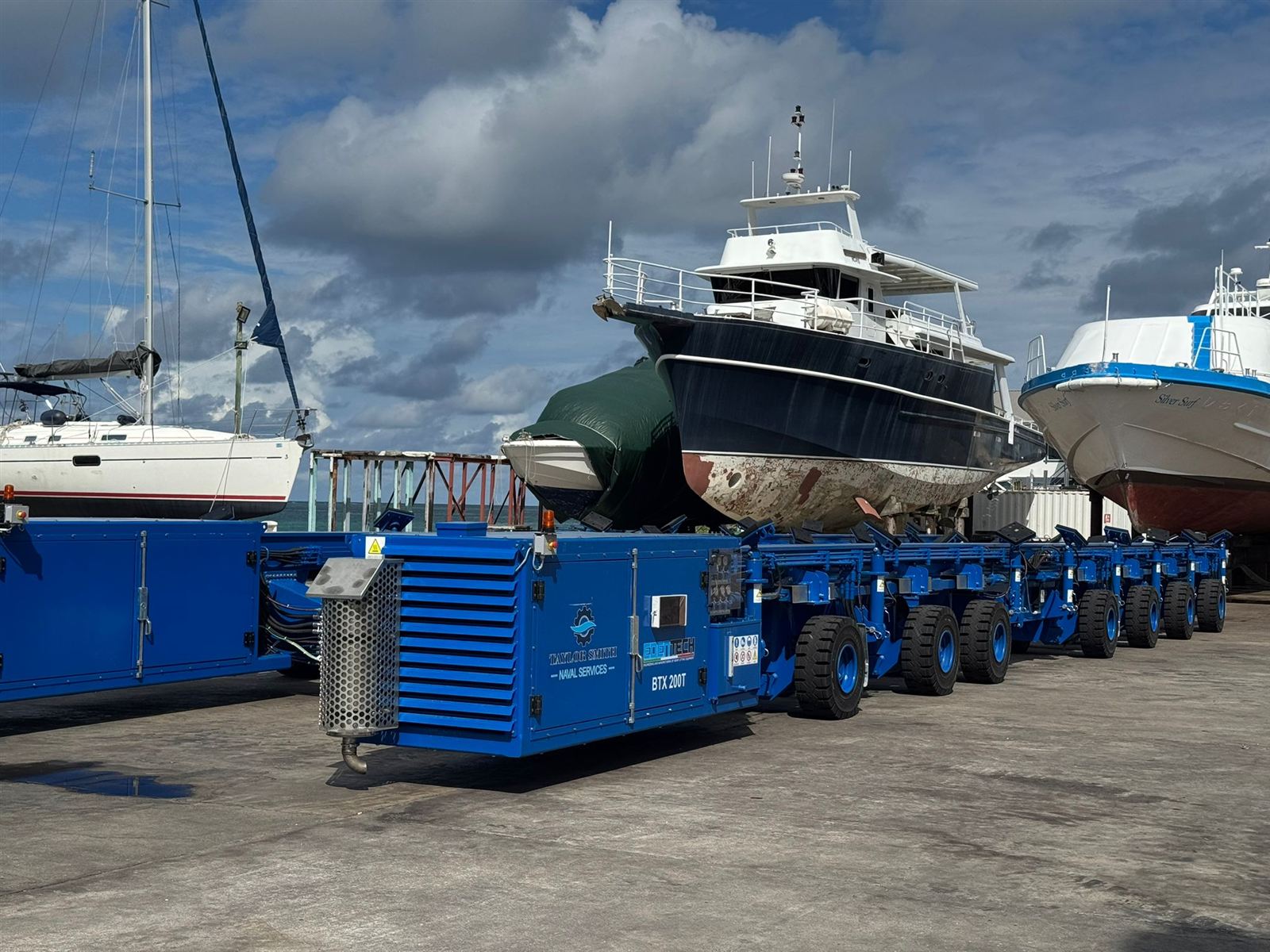
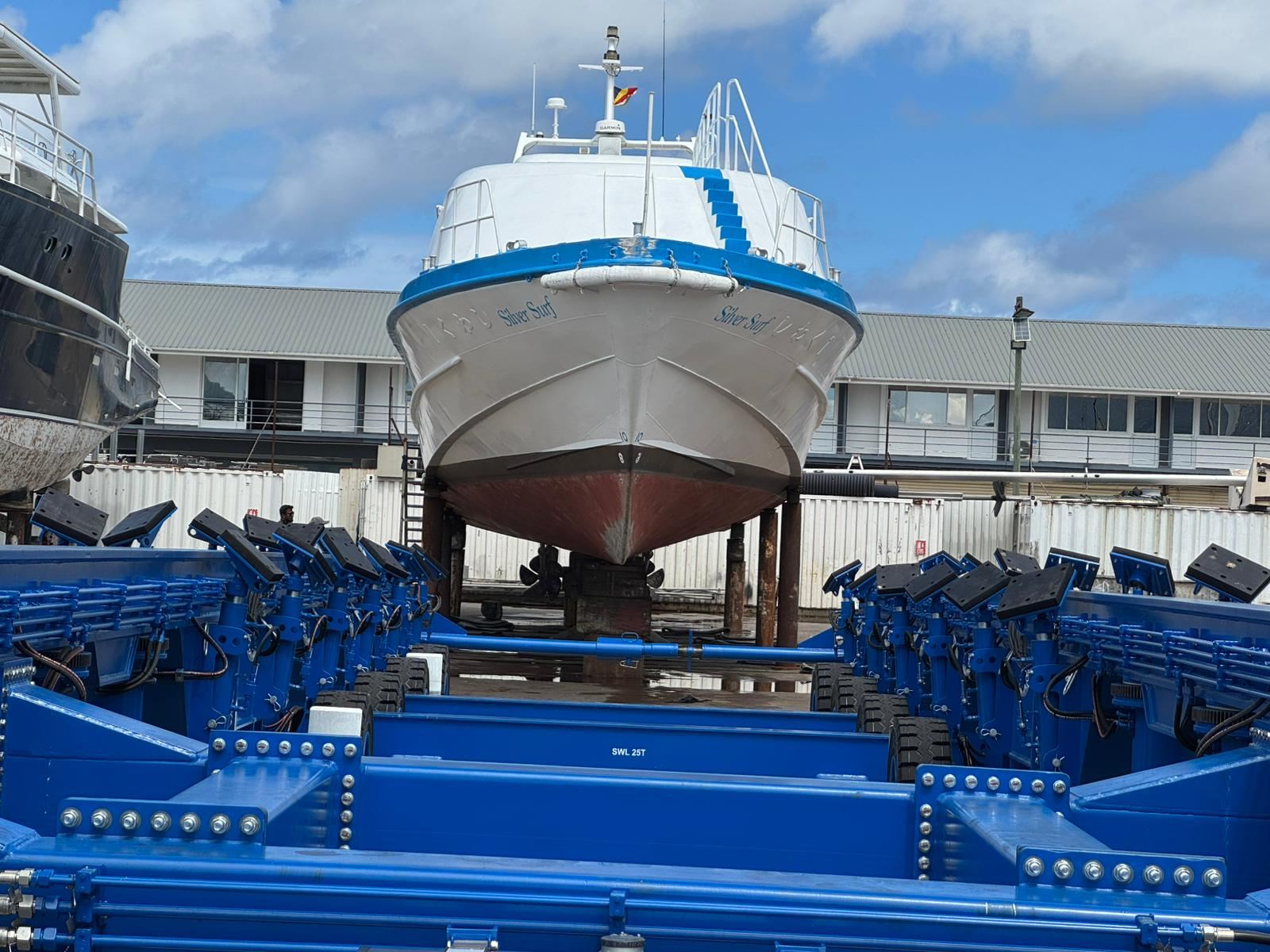
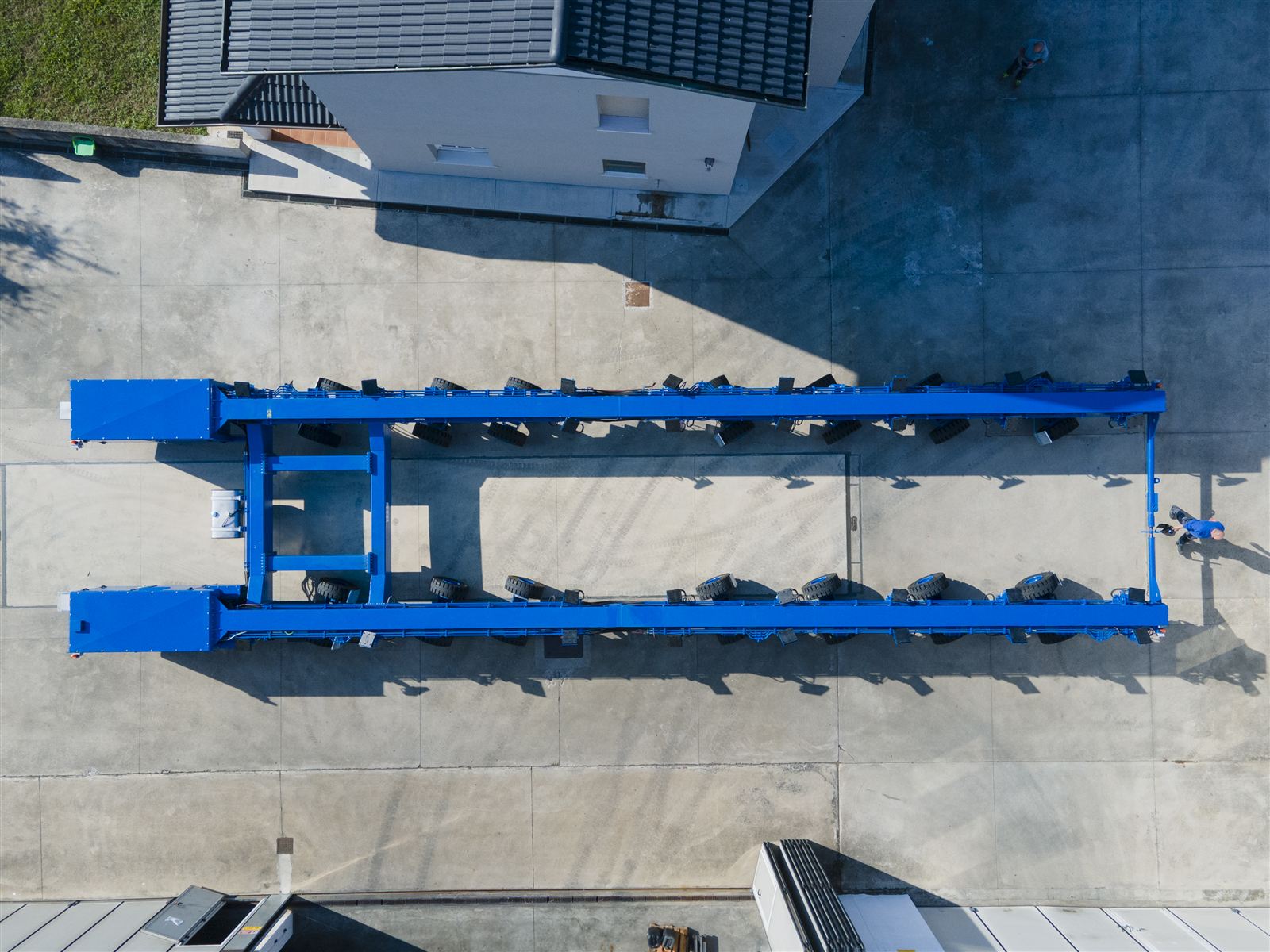
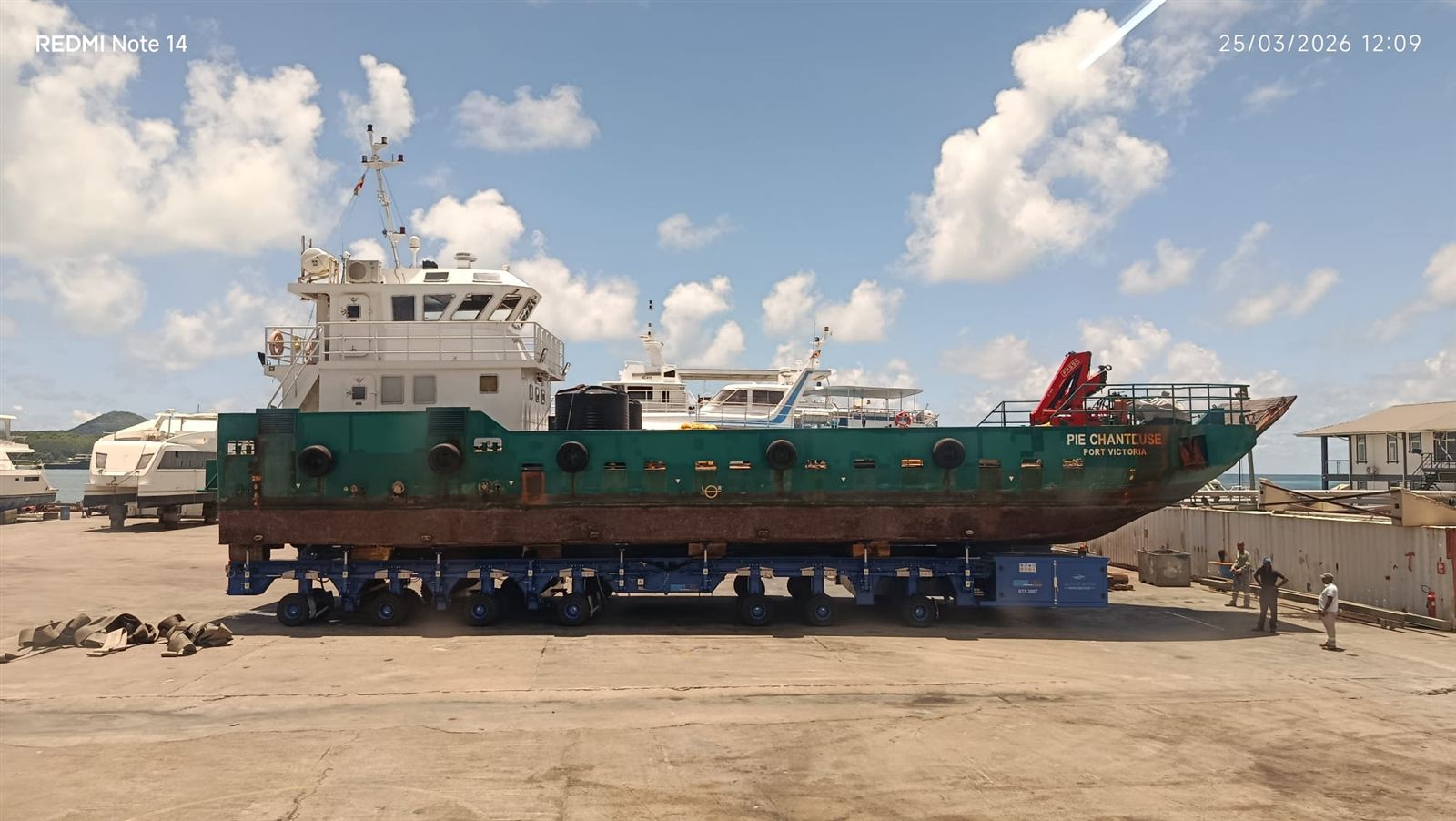
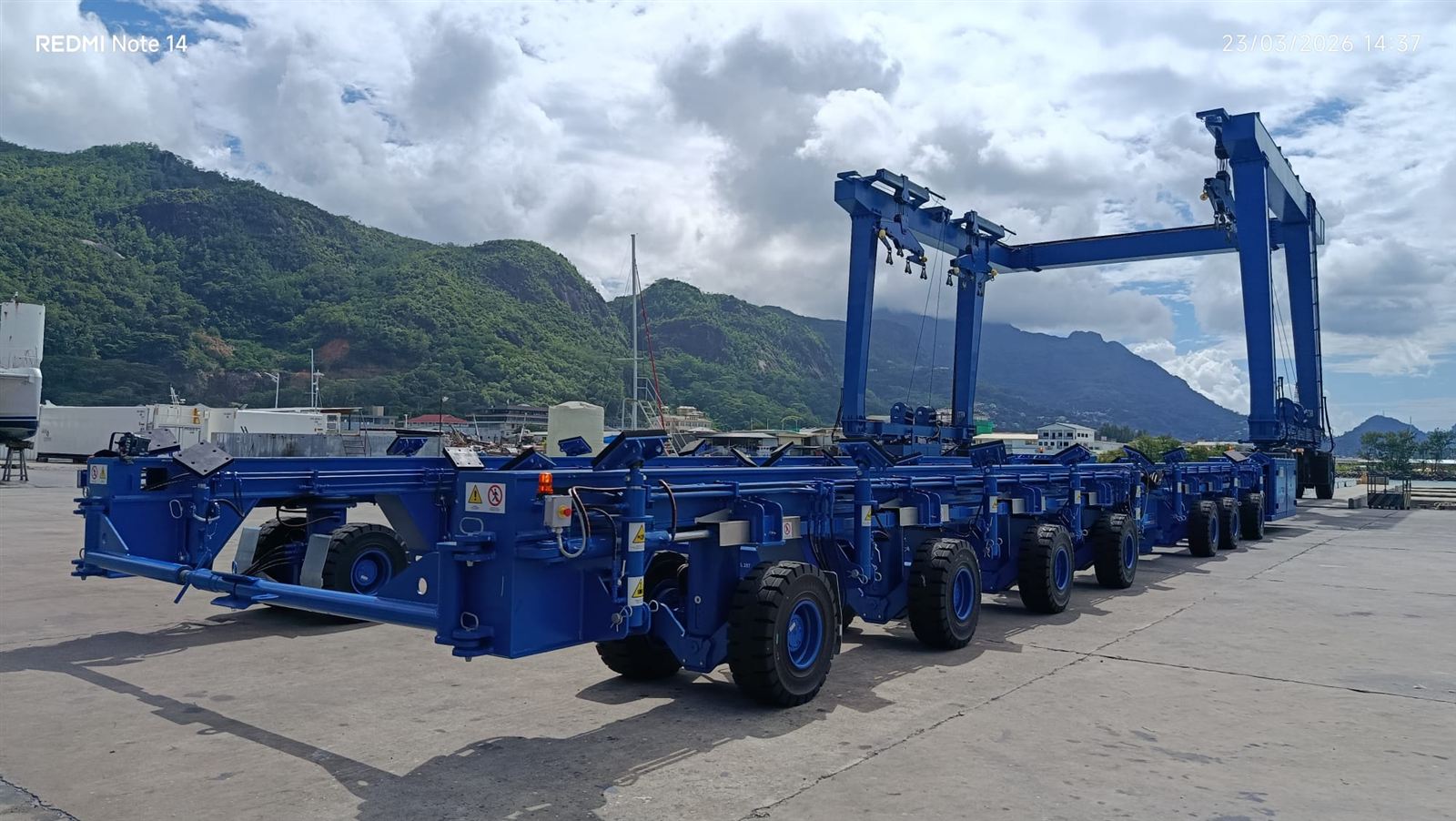
A 200-tonne self-propelled trailer for boats and catamarans, with variable-height wheel supports.
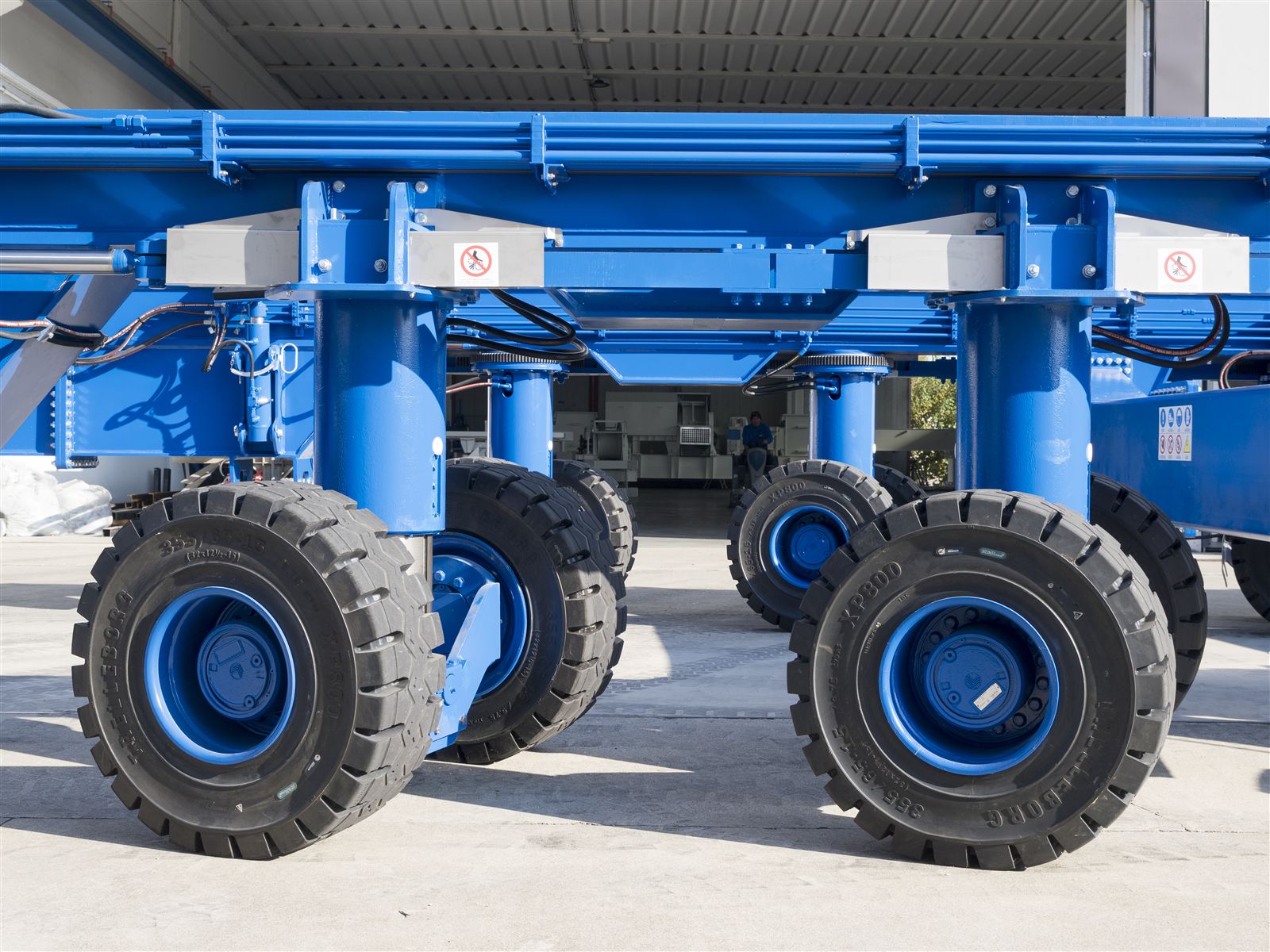
- Variable-height wheel supports. The support geometry follows the hull; monohulls and catamarans on the same machine.
- 90° side steering on a 200 t machine. Sideways translation under load, where a conventional trailer would need a manoeuvring lane.
- Hydraulic cylinder steering actuation. Force and precision matched to the mass of the machine.
Project & technical data
A catamaran is the hardest load a boat trailer can be asked to take. The mass is carried by two widely separated hulls, so the trailer cannot simply lift under a keel line. At 200 t, adapting the supports to the hull is not an accessory — it is the design brief.
- Capacity
- 200 t
- Power unit
- Diesel-hydrostatic
- Load supports
- Variable-height wheel supports
- Steering
- Advanced controlled steering, special 90° side steering, hydraulic cylinder actuation
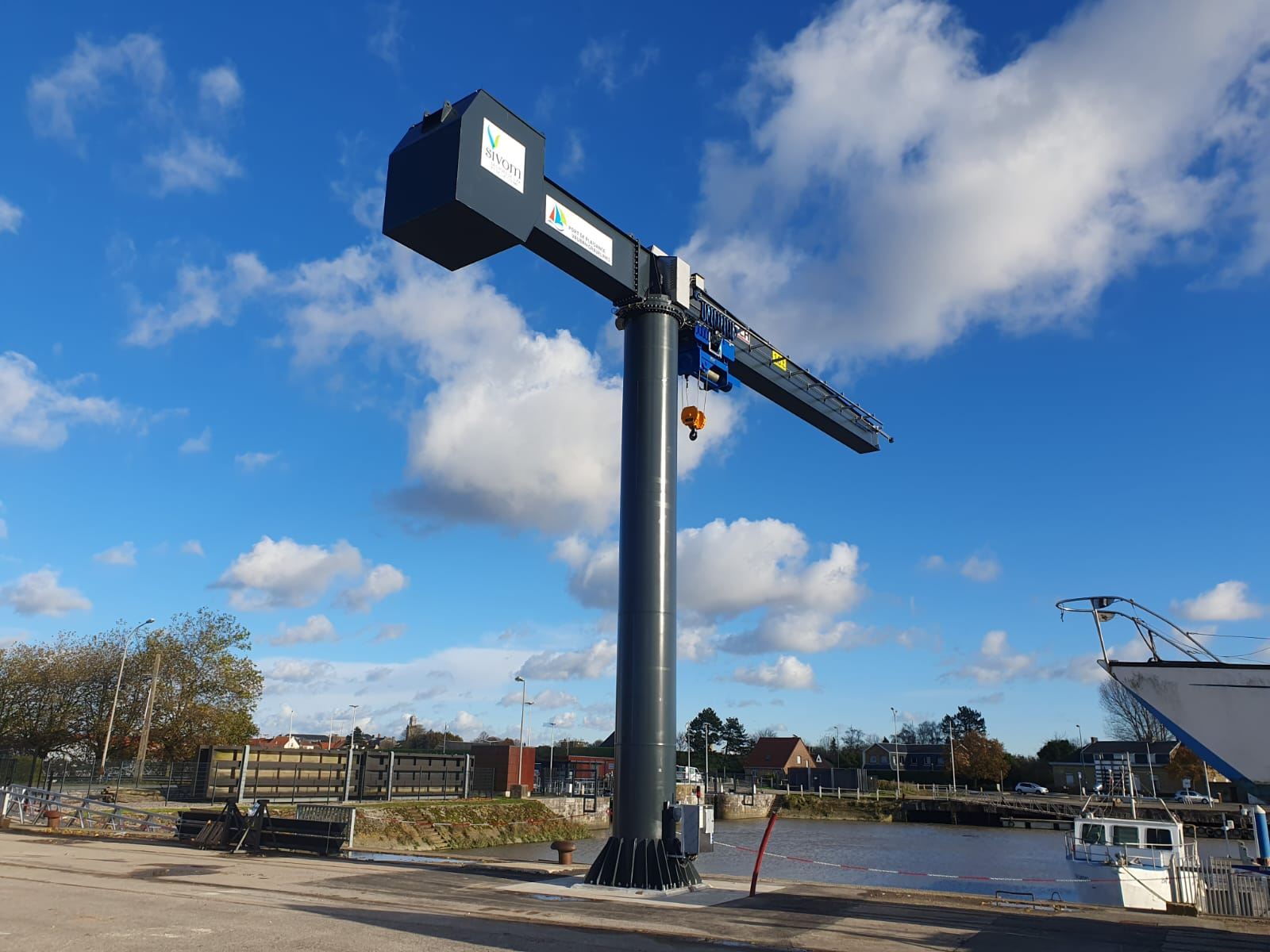
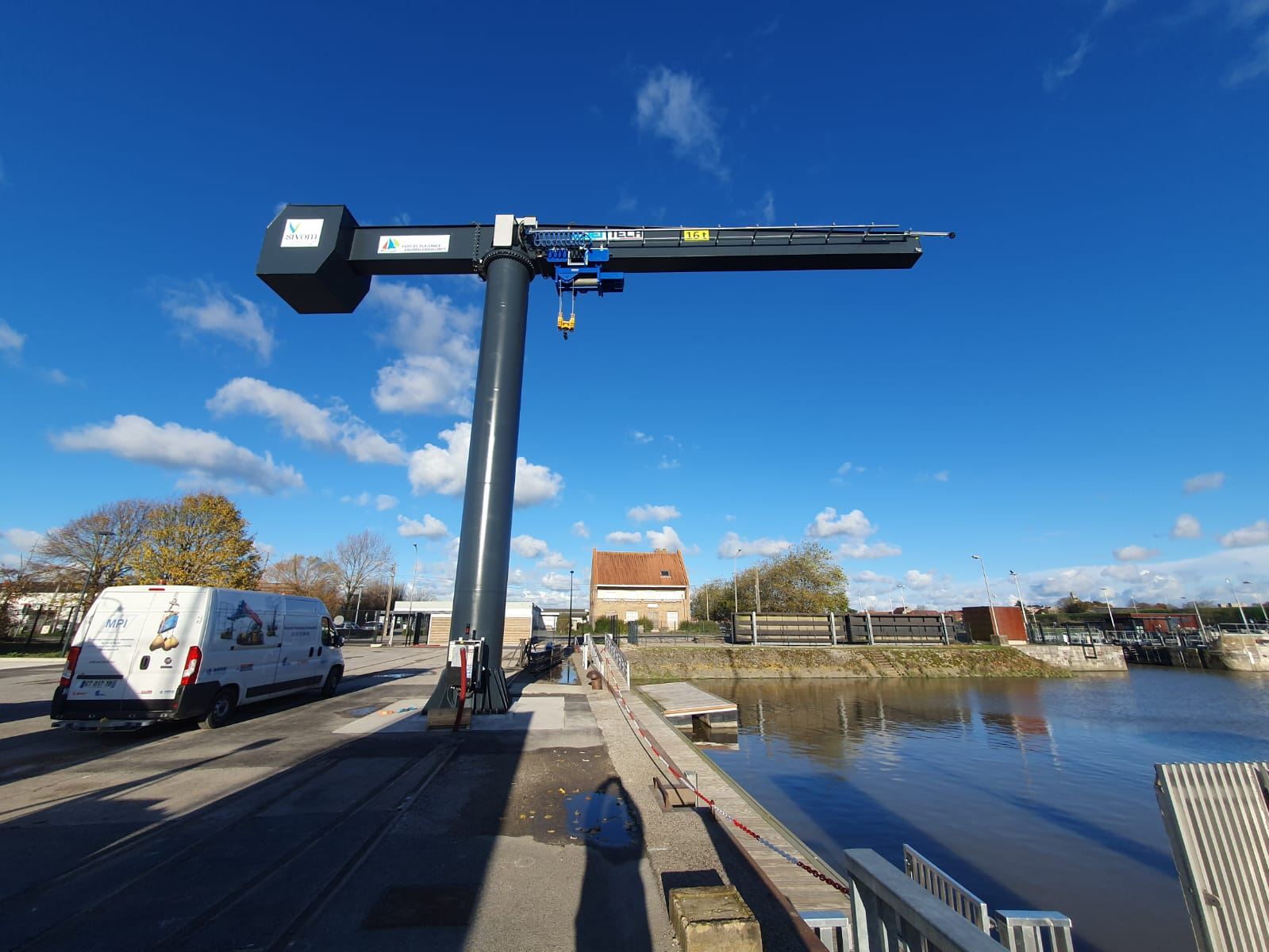
Jib crane 16 t @ 10 m
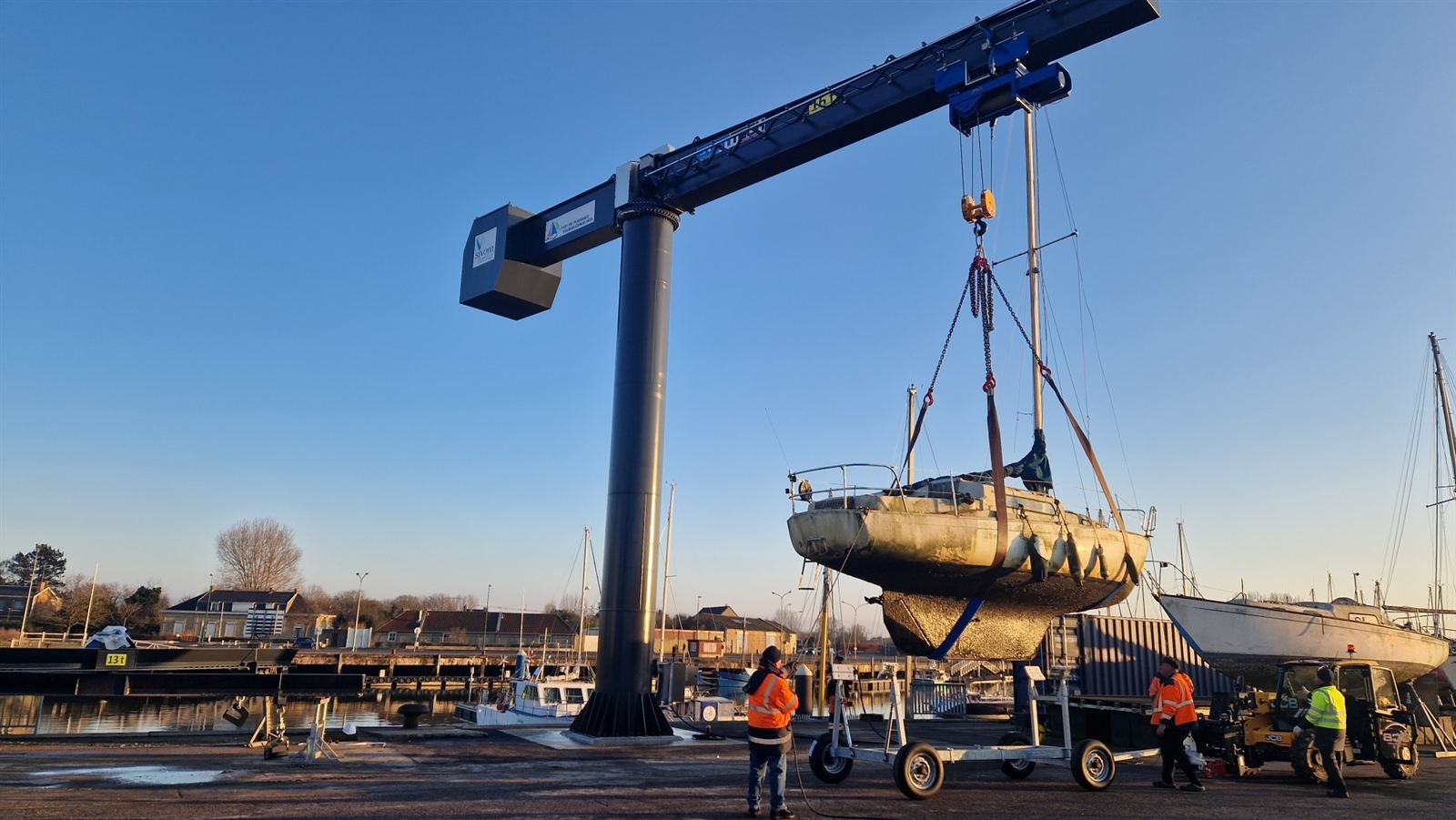
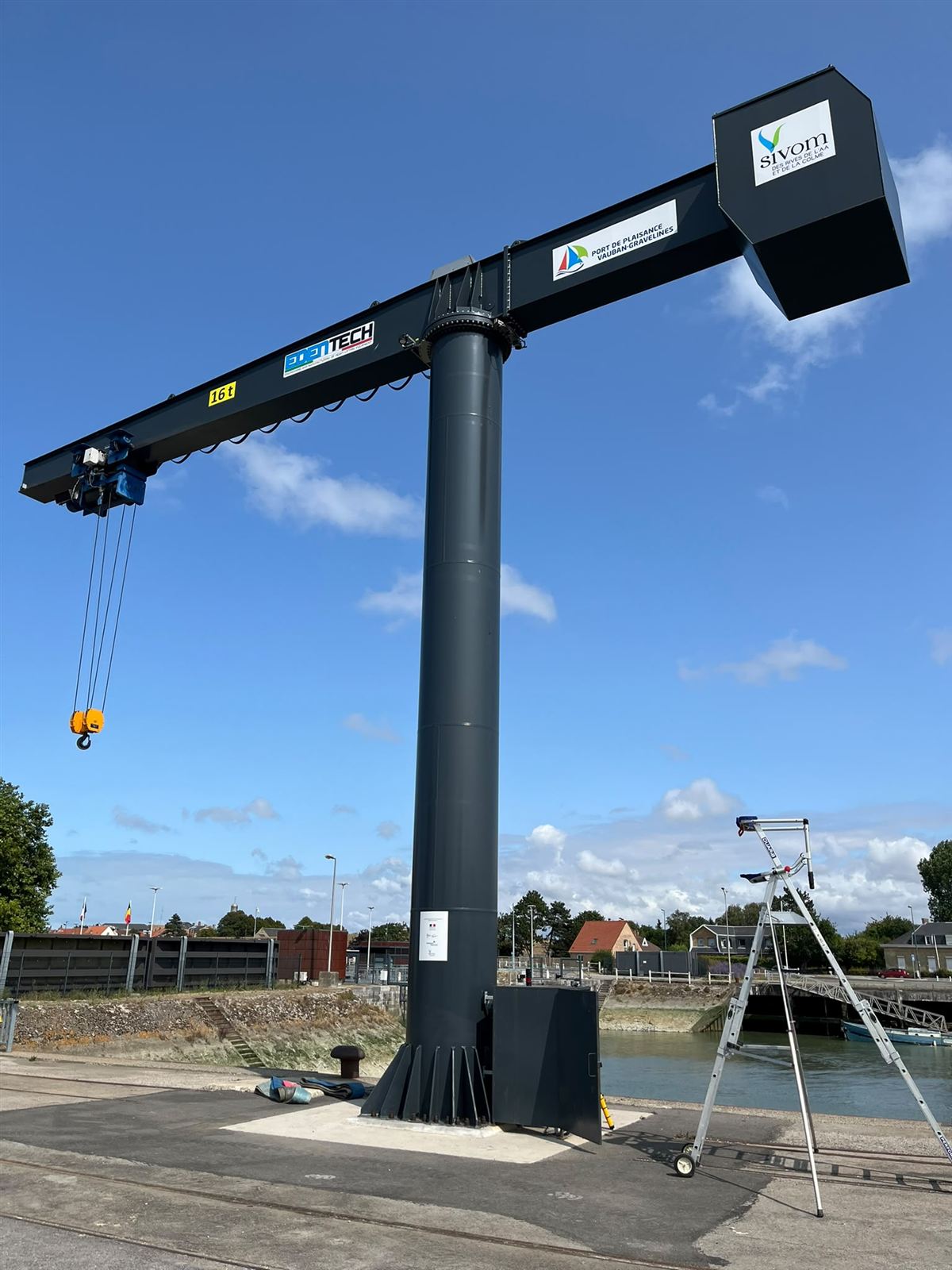
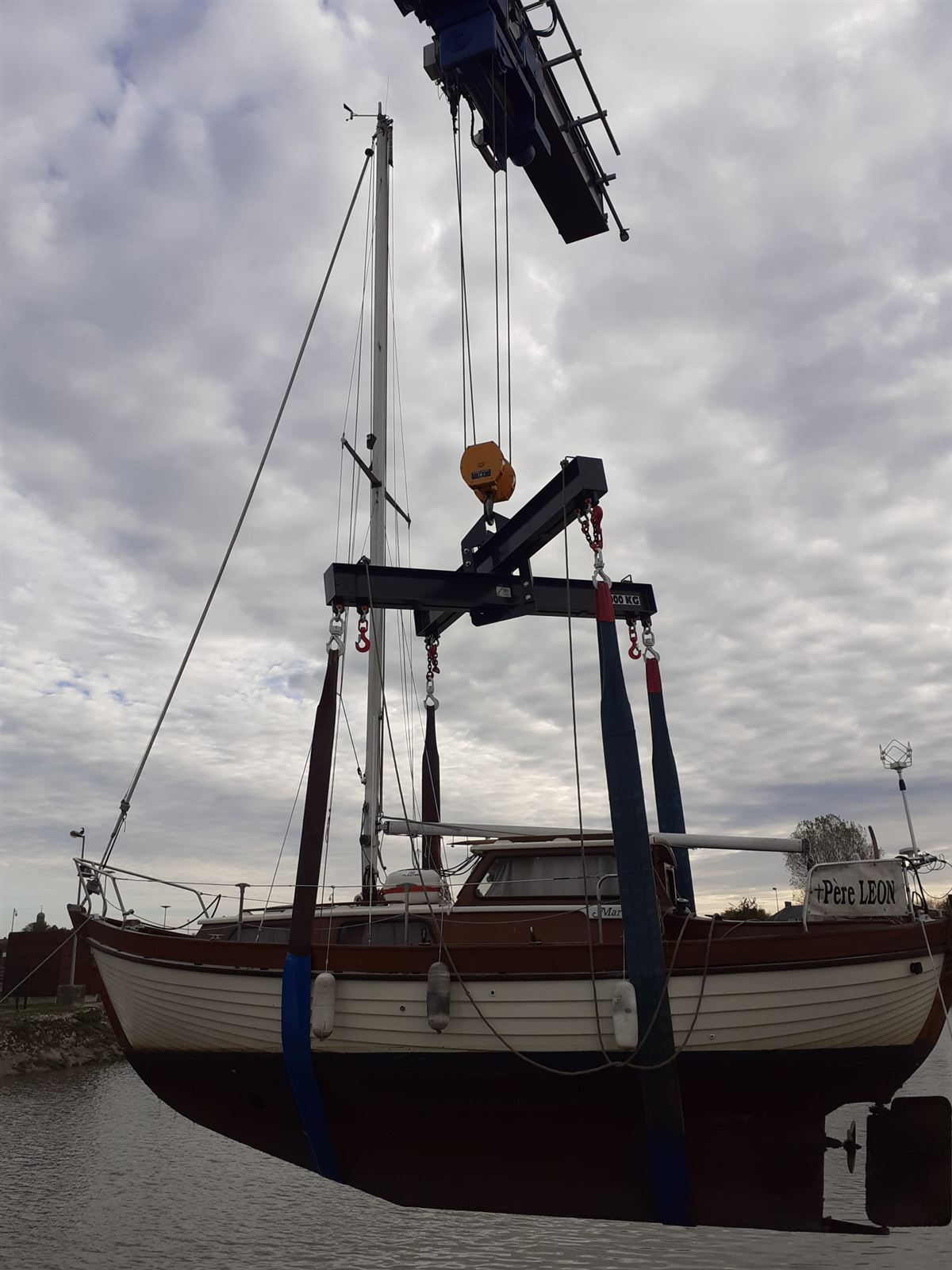
Sixteen tonnes at ten metres, held over the whole hook travel along the jib — for launching and recovering sailing and motor boats.
- 16 t held over the full 10 m of hook travel. No derating along the jib: the whole served area is usable at full capacity.
- Almost 360° slewing. The boat can be set down anywhere in the circle served by the crane.
- Boat spreader supplied with the machine. Delivered as a complete handling solution, not as a hook.
- Wired and wireless remote control. The operator works from the position with the best view of the lift.
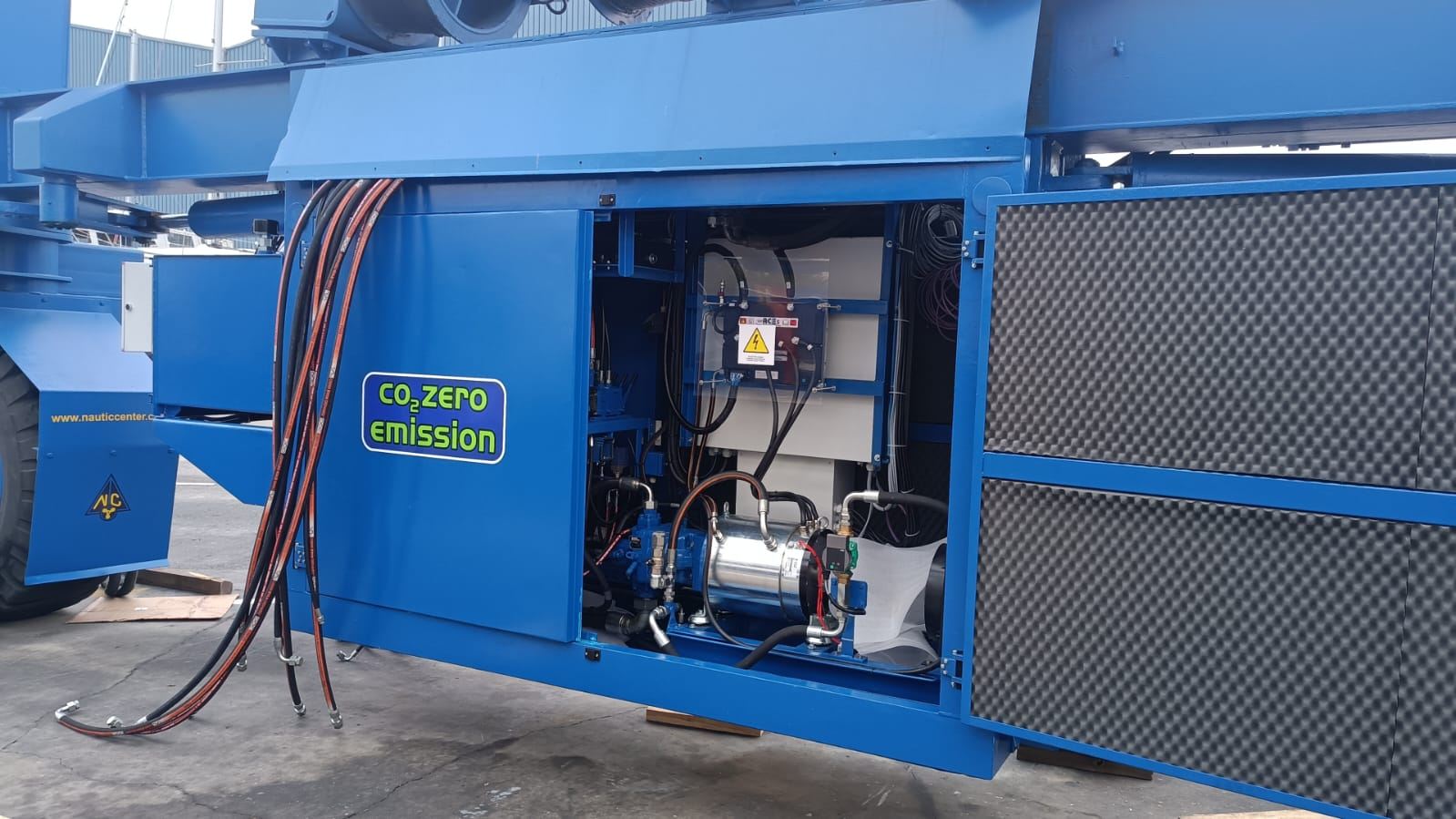
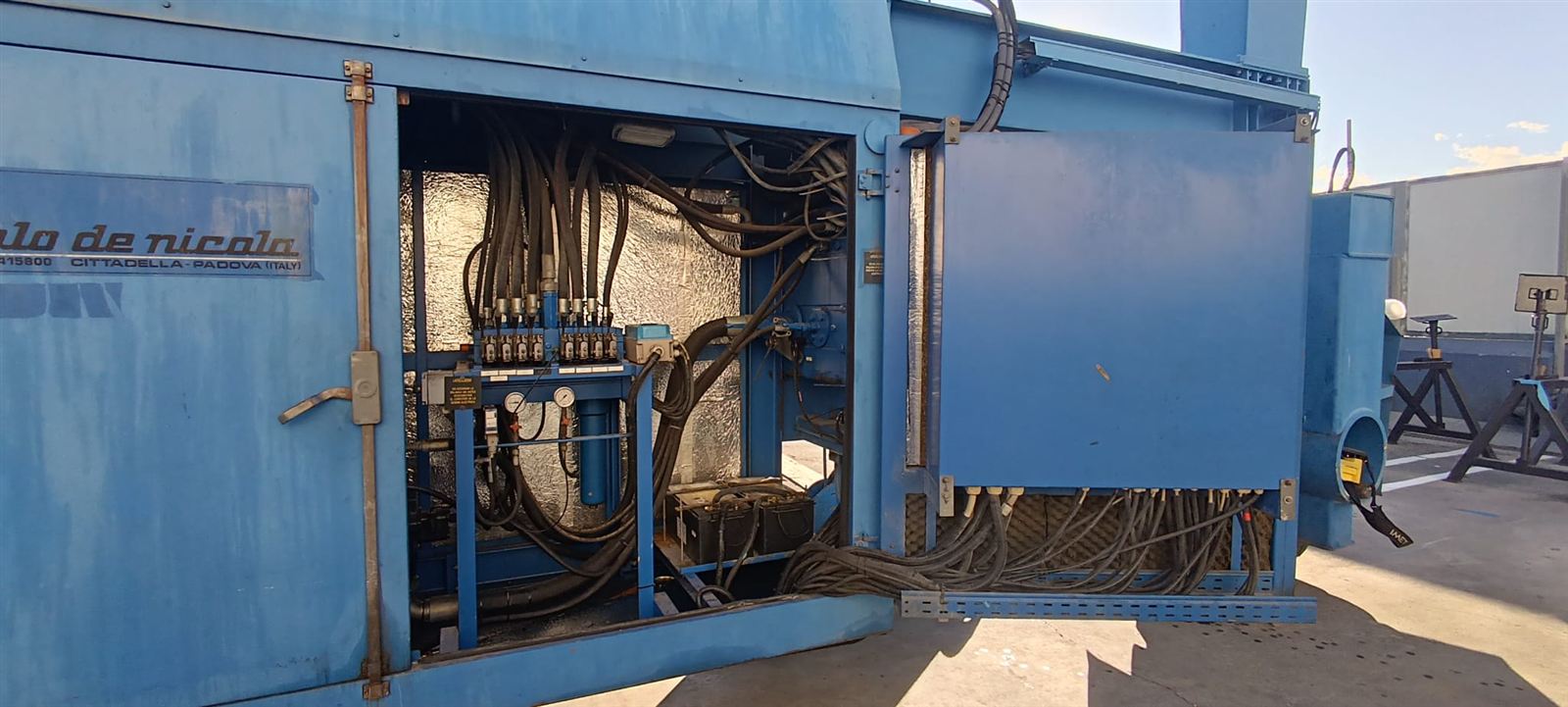
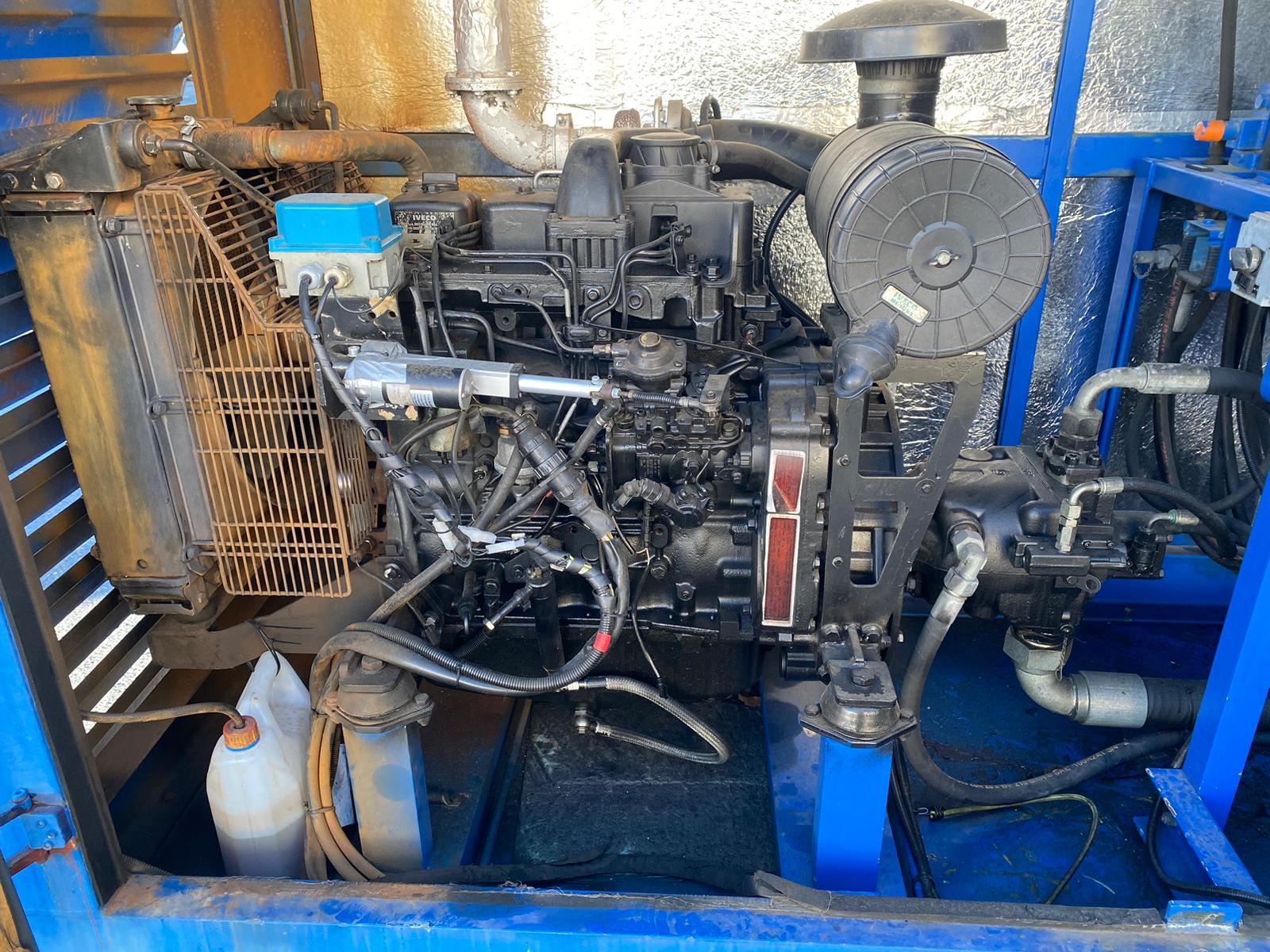
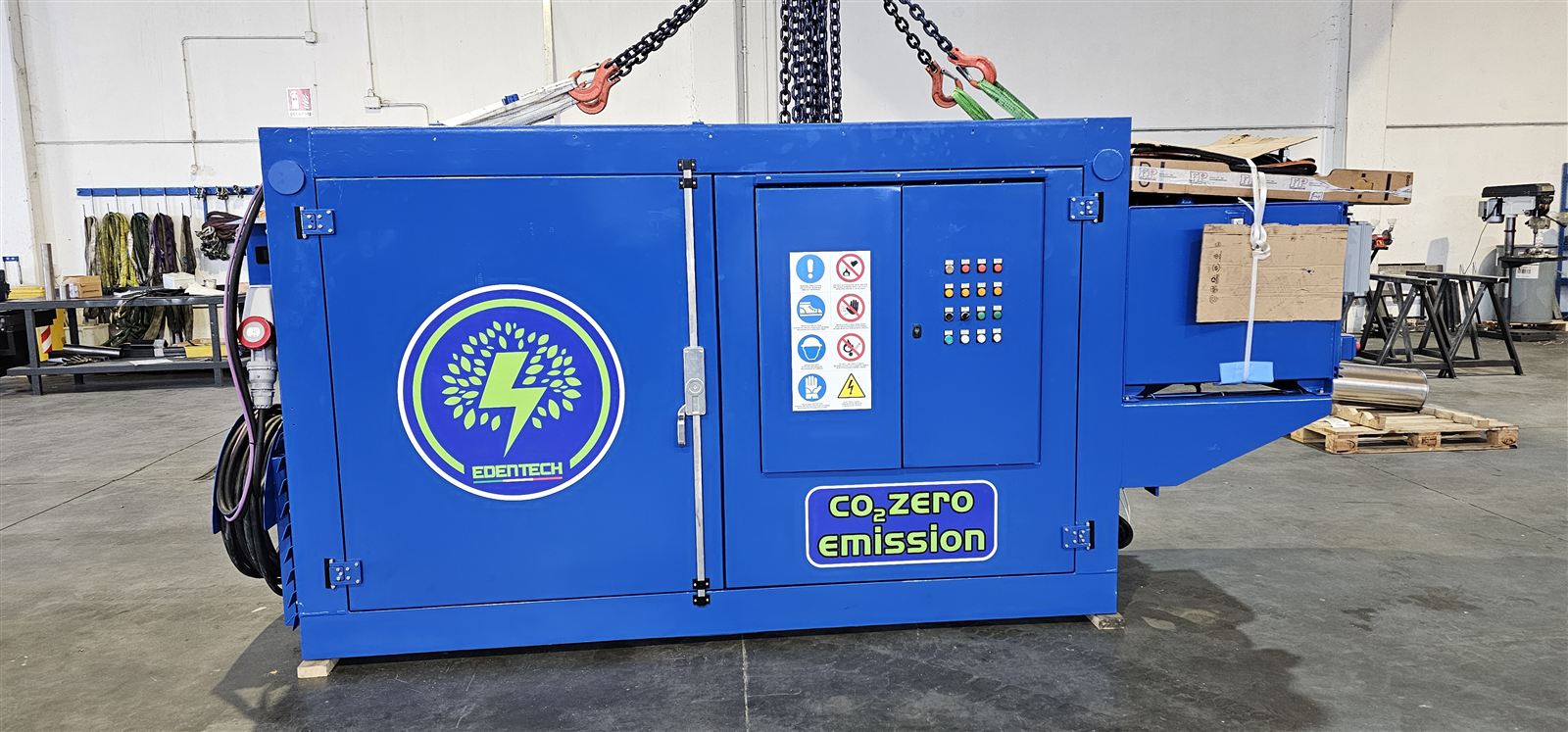
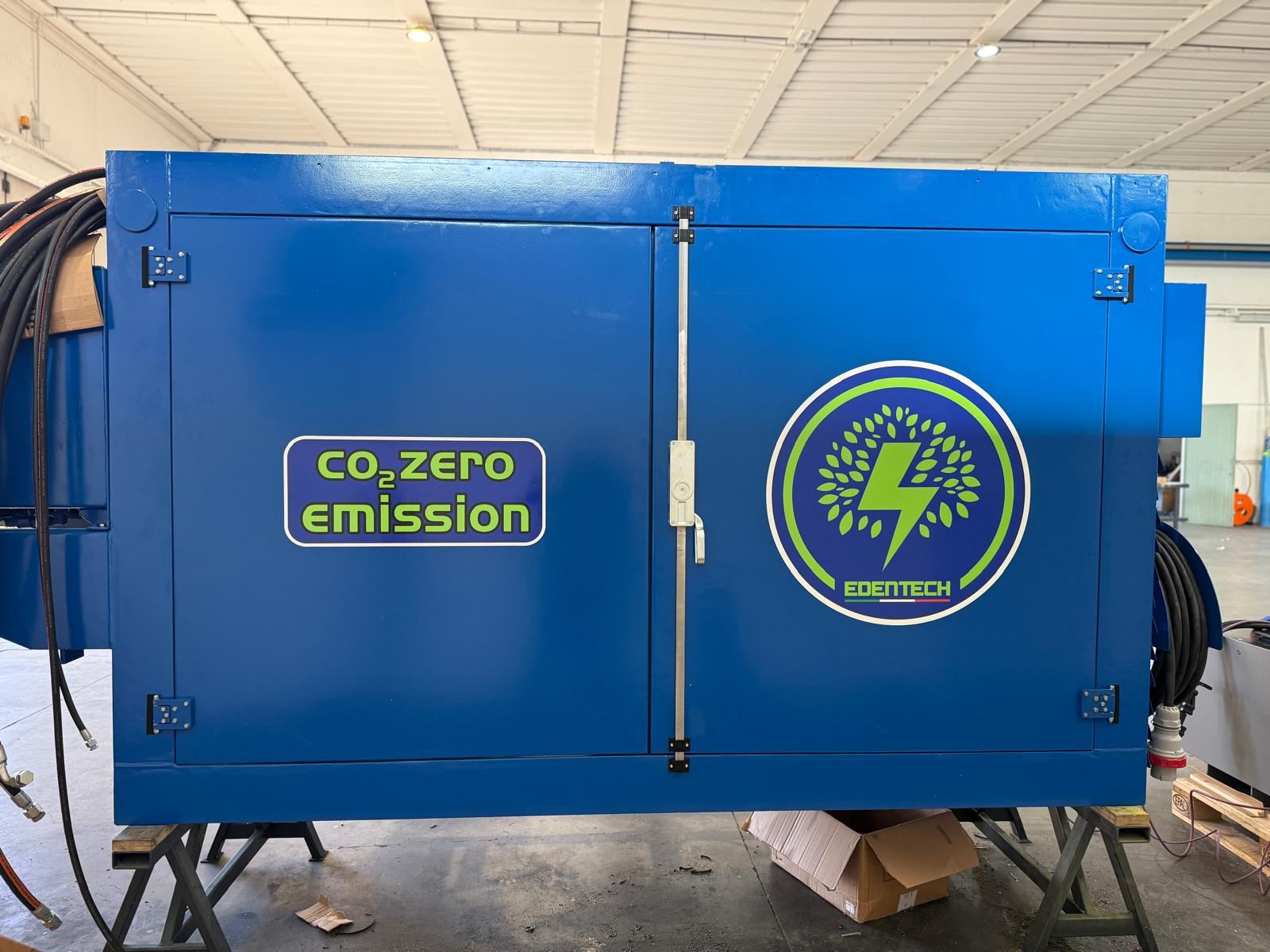
Marine Hoist 70 t — electric repowering of a Paolo De Nicola machine
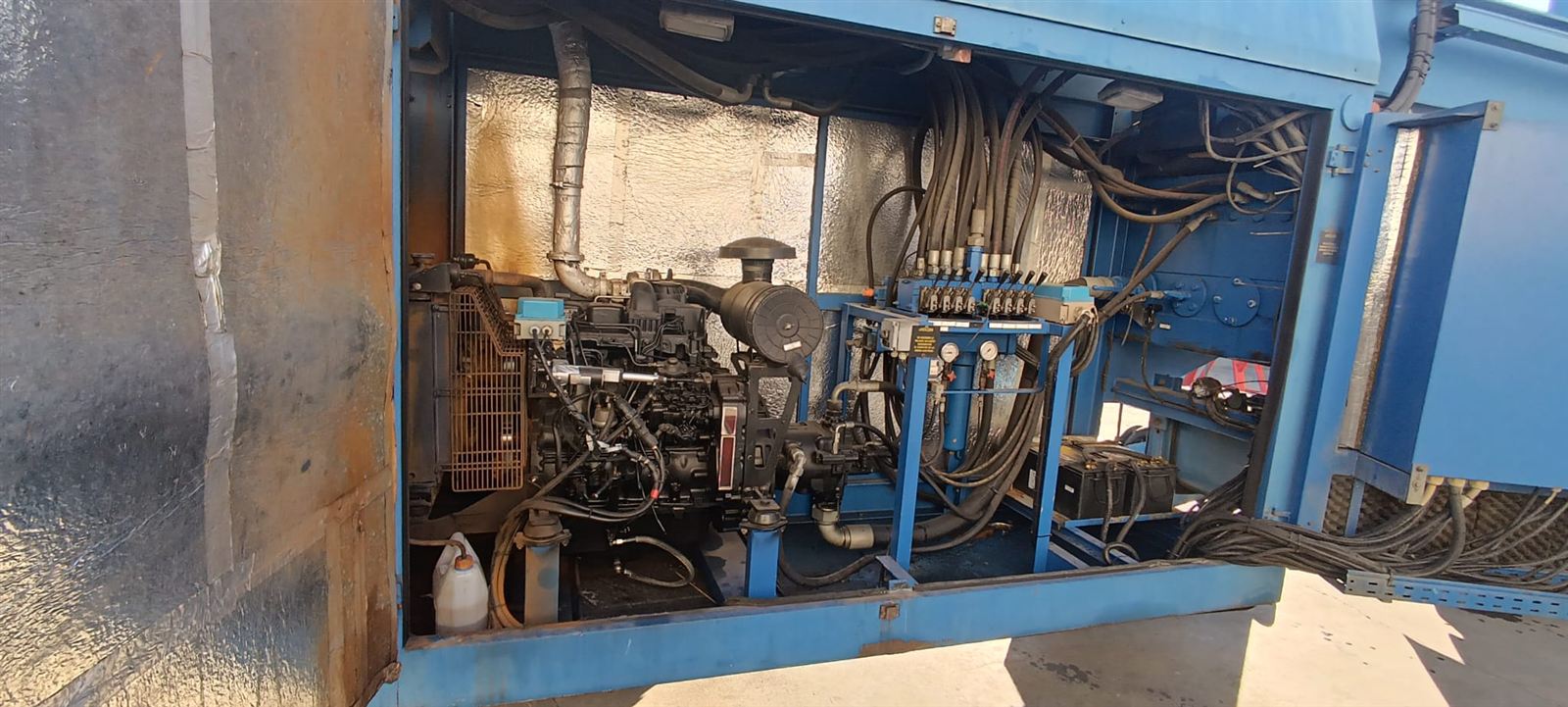
Diesel engine out, DC electric motor and lithium battery in: almost two days of operation, recharged from the yard’s photovoltaic plant.
- The structure is kept, the power unit is renewed. Machine life extended at a fraction of the cost and of the lead time of a new build.
- Water-cooled DC motor. High-efficiency drive, matched to the duty cycle of a travel lift.
- Almost two days of autonomy plus fast charging. Recharging fits inside the working cycle.
- Energy from the yard’s own photovoltaic plant. Handling cost decoupled from the price of diesel; local emissions and noise eliminated.
As owner of the Paolo De Nicola® trade mark, Eden Tech offers spare parts and service for machines carrying that name. Spares & service →
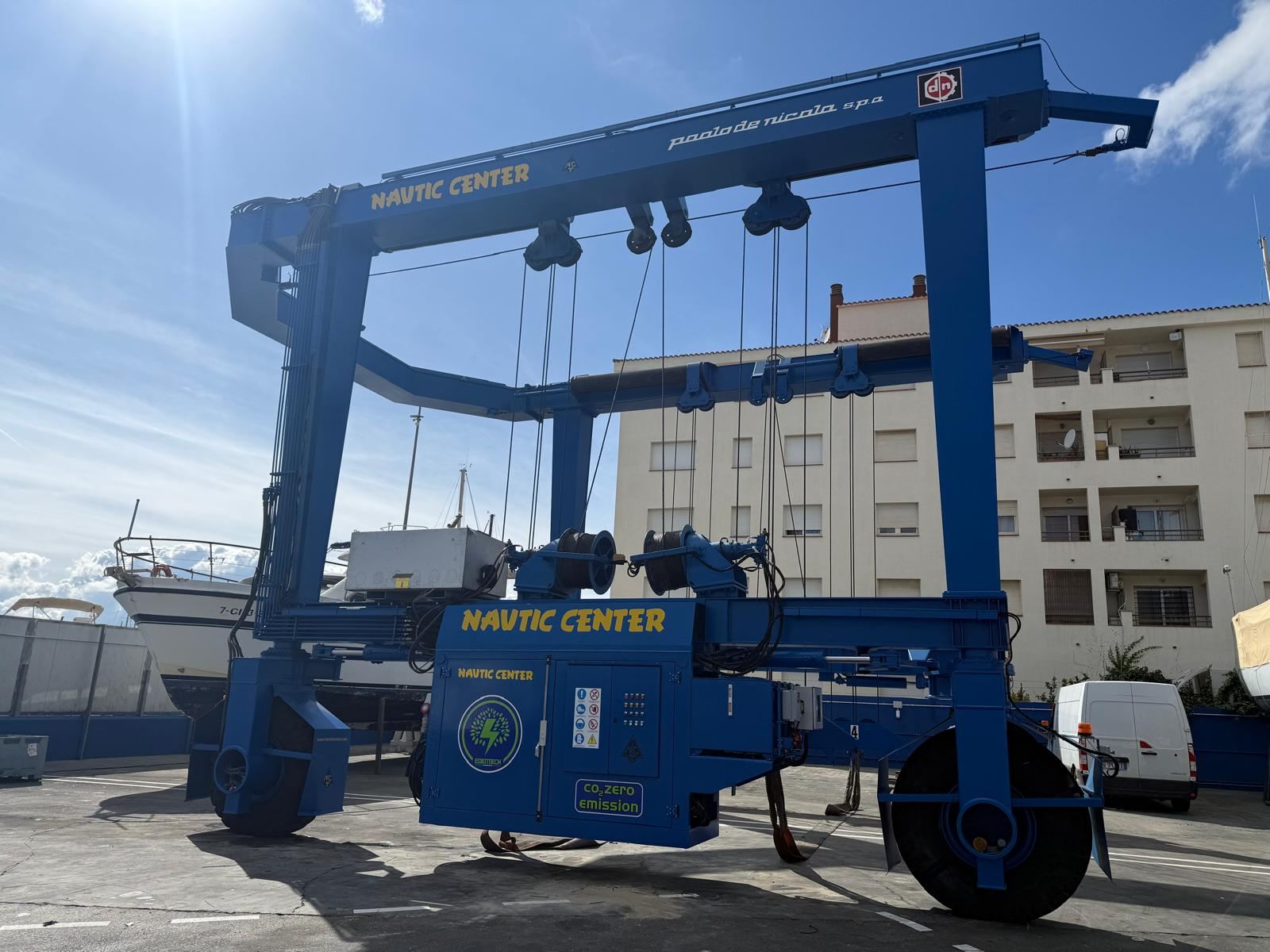

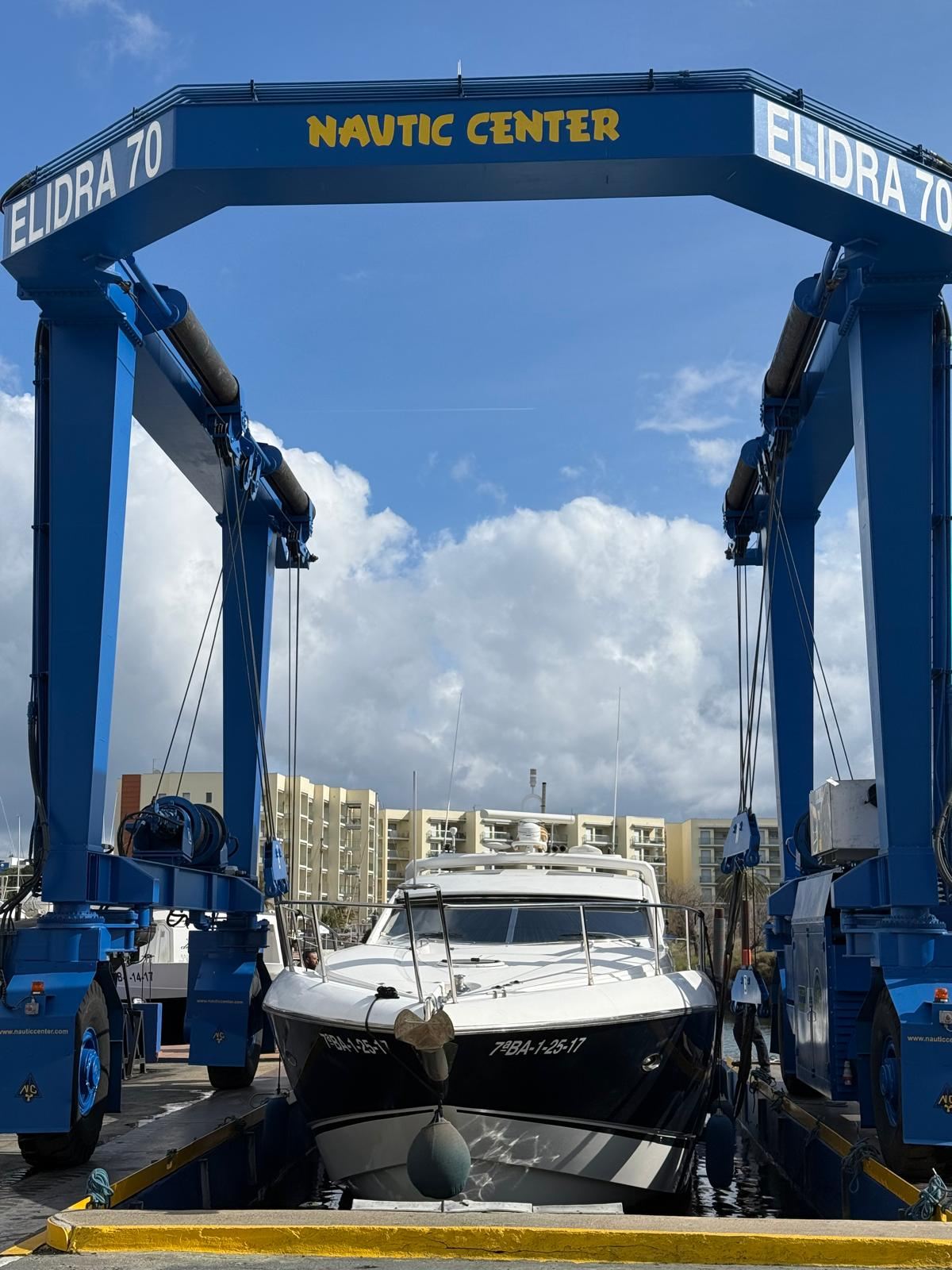
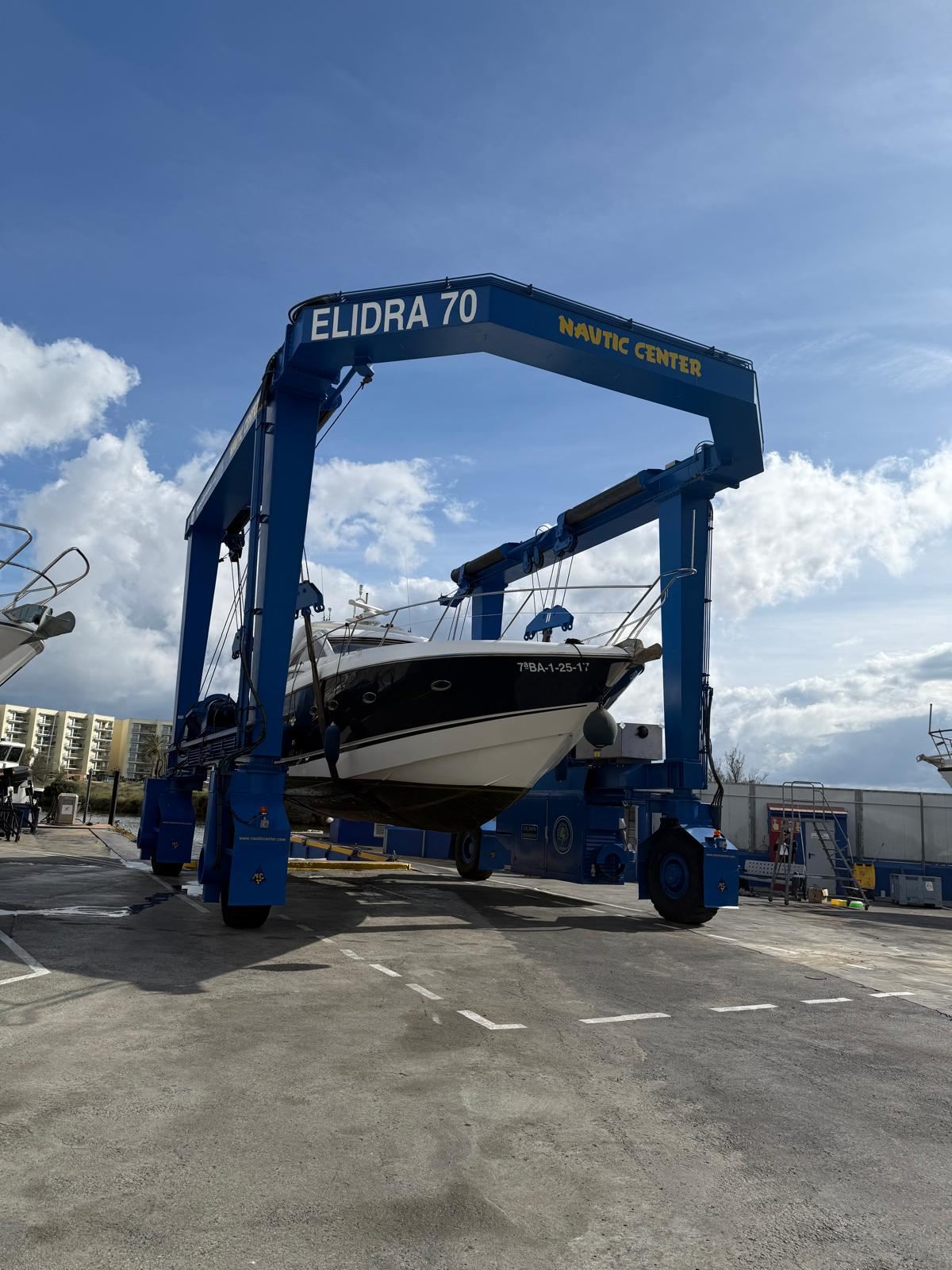
Marine hoists our people worked on before Eden Tech
The projects above are Eden Tech supplies. Before Eden Tech, members of our team designed and built marine hoists, Trollifts and marine railways at Paolo De Nicola S.p.A. and at Eden Technology Srl.
Work orders of Paolo De Nicola S.p.A. and Eden Technology Srl on which members of today’s Eden Tech team worked. They are listed as the professional experience of our people, not as Eden Tech supplies.
Tell us the constraint you cannot change.
We will tell you whether a machine can be built around it — and roughly what it takes.