


Straddle carriers, gantry and overhead cranes, special handling machines
Machines that work inside the production cycle: heavy MOBILIFT straddle carriers, gantry cranes, special non-standard overhead cranes and one-off handling machines, each one built around a constraint the customer could not change. We also design rubber-tyred (RTG) and rail-mounted (RMG) gantry cranes, following the Paolo De Nicola approach.
coming soon
MOBILIFT 215 t — heavy industrial handling
Two spreader beams, independent or synchronised, on a straddle carrier that also supports assembly. Under delivery, in operation by October 2026.
- Two spreader beams under independent and synchronised control. The lifting geometry adapts to the load; no dedicated lifting frame per size.
- Height and width both controlled. The machine positions the load, it does not only carry it.
- Four synchronised winches. Large industrial components are rigid, top-heavy and extremely expensive loads: synchronism is a safety requirement, not a convenience.
- Electric fine positioning on a hydrostatic base. DC motors and lithium batteries for the precise movements; hydrostatic drive for travel and gross lifting.
- It supports assembly, not only transport. The machine works inside the production cycle.
Project, machine & technical data
The project
An industrial manufacturer in Poland needed to move large finished products out of the production building, to the storage yard and onto trailers. The brief did not stop there: the machine also has to support the assembly phases, which makes it a production tool and not only a transport tool.
A machine that only carries a load needs to pick it up, move it and put it down. A machine that supports assembly has to position the load, hold it where it is required, and let the load be worked on — which means controlled, repeatable movements in every axis, not just a lift and a run.
The machine
The MOBILIFT 215 t is a heavy-duty diesel-hydrostatic straddle carrier that carries two spreader beams, moved independently or in synchronism and controlled both in height and in width. Each spreader carries a driven mobile lifting point and a 10 t auxiliary hook, driven by direct current electric motors fed by lithium batteries. The main hoist uses four winches, two per side, with electronic control for perfect synchronism; steering offers advanced modes, electronically controlled and actuated by hydraulic cylinders.
Technical data
- Machine type
- Heavy-duty straddle carrier (MOBILIFT), diesel-hydrostatic
- Capacity (SWL)
- 200 t under spreaders
- Lifting arrangement
- Two spreader beams, moved independently or in synchronism, controlled in height and in width
- Per spreader
- Driven mobile lifting point and 10 t auxiliary hook, DC electric motors fed by lithium batteries
- Main hoist
- Four winches, two per side, electronically synchronised
- Steering
- Advanced steering modes, electronic control, hydraulic cylinder actuation
- Application
- Handling of large industrial products to storage and onto trailers, plus support to the assembly phases
- Client
- Industrial manufacturer — Poland
- Status
- Under delivery — in operation by October 2026
no photographs published
MOBILIFT 63 t — service operations in a remote area
A straddle carrier designed to be simple and reliable in a remote location, with a new concept of electrical board protection. Travelling to destination, in operation by October–November 2026.
- Enhanced protection of the electrical board and controls. The part of the machine most exposed to dust, humidity, salt and temperature — and therefore the one that decides reliability.
- Simplicity adopted as a design target. In a remote area every avoidable component is an avoidable failure.
- Spreader dedicated to the operation. The machine is built around the task, not adapted to it afterwards.
- Conceived for remote operation. Designed for a site where a spare part takes days to arrive, not hours.
Project, machine & technical data
The project
A 63 t straddle carrier built for a service activity outside the European Union, in an environment with particularly severe conditions. The client and the application are confidential.
The determining factor here is not the capacity but the location. In a remote area, the cost of a machine is not its purchase price: it is the price of a day of downtime, plus the time it takes for a technician or a spare part to arrive. Sophistication that adds failure modes is a liability; every component has to justify itself by what it does when things go wrong.
The machine
A heavy-duty diesel-hydrostatic straddle carrier, supplied with a dedicated spreader. The technical innovation of this supply is a new concept of electrical board protection, enhanced for particularly severe conditions: protecting the board properly is where reliability is actually won in a remote installation.
Technical data
- Machine type
- Heavy-duty straddle carrier (MOBILIFT), diesel-hydrostatic
- Capacity (SWL)
- 63 t under spreader
- Lifting arrangement
- Dedicated spreader, designed for the specific operation
- Key feature
- New concept of electrical board and control protection, enhanced for severe conditions
- Design target
- A simple and reliable machine for a harsh environment in a remote area
- Status
- Travelling to destination — in operation by October–November 2026
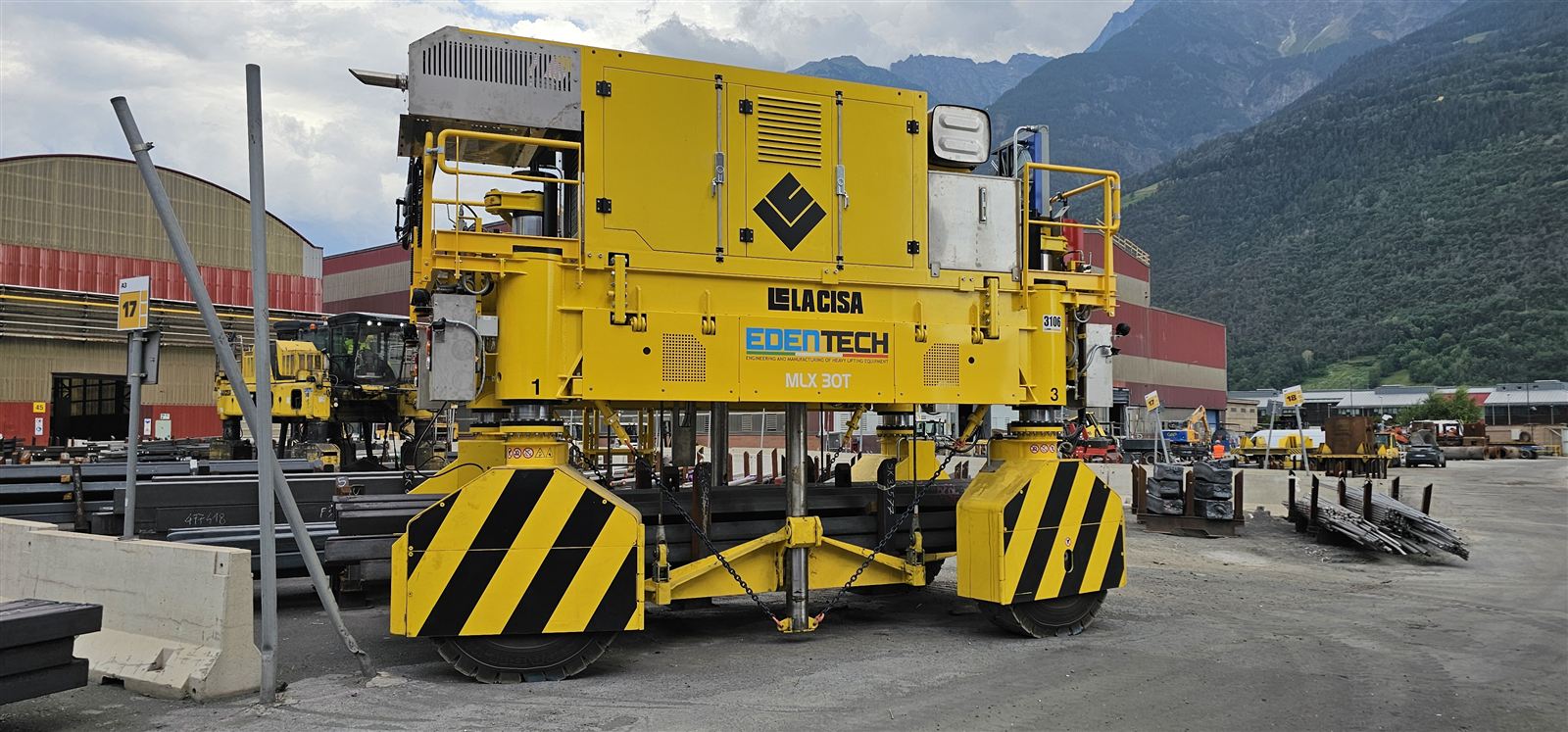
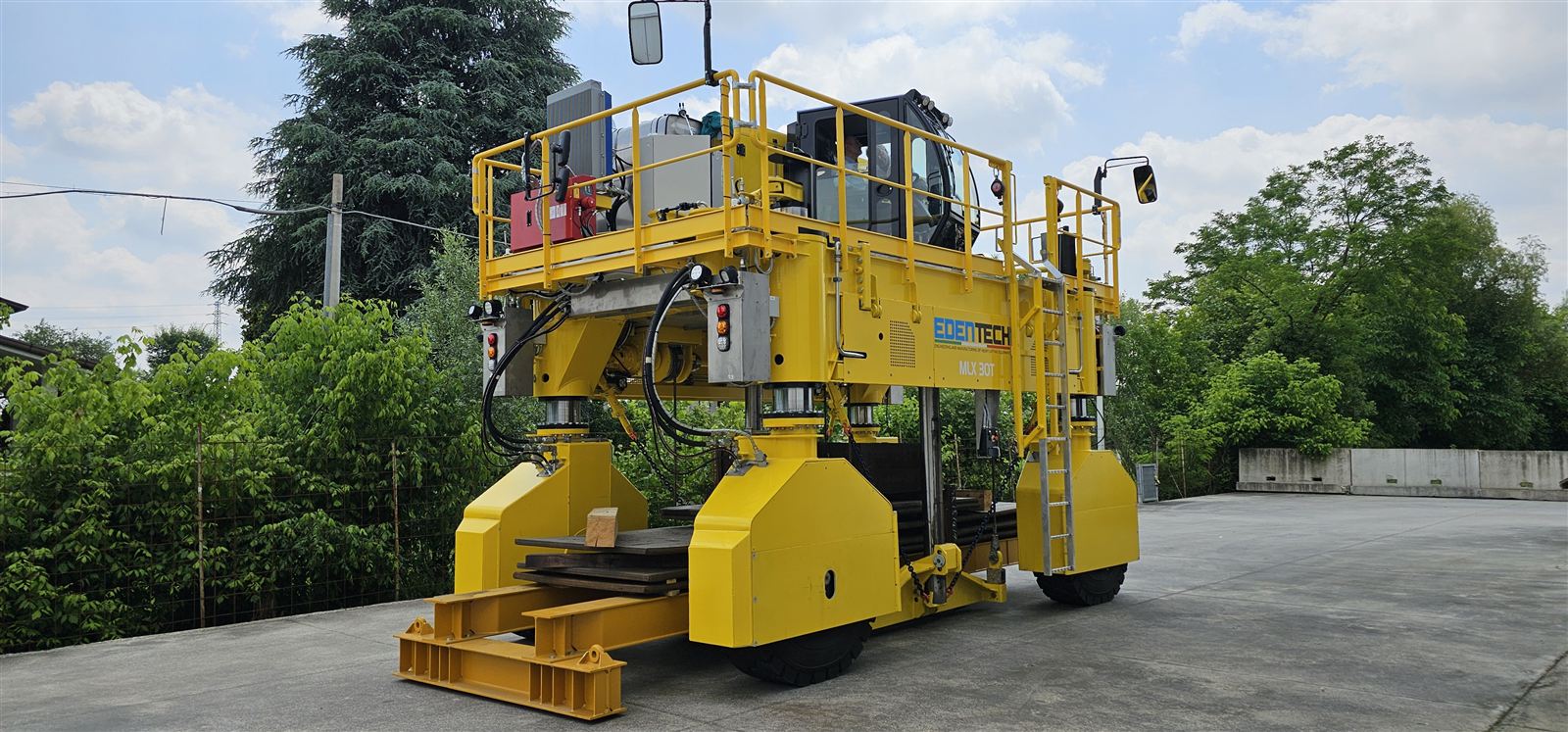
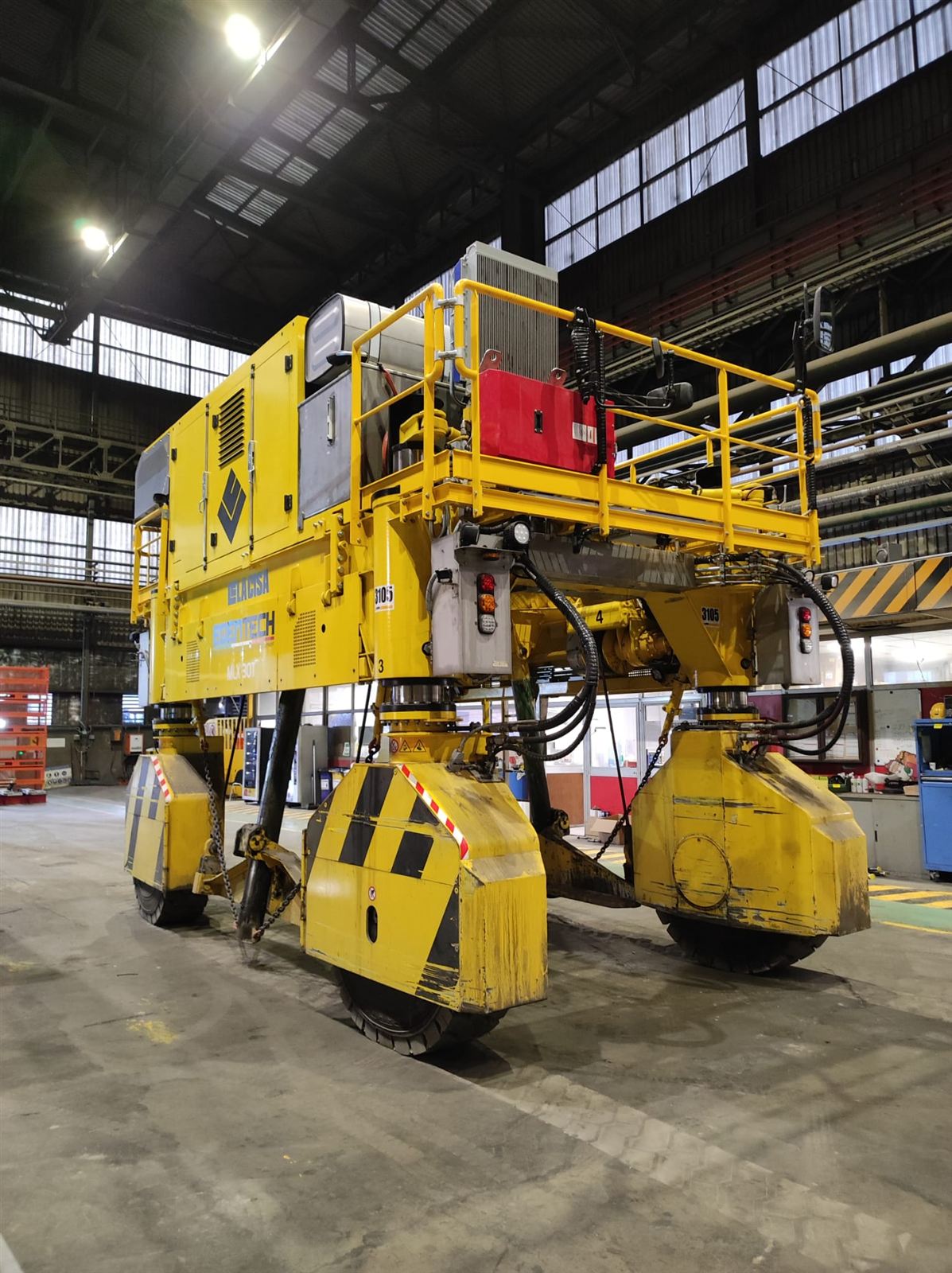
Two MOBILIFT 30 t — hot billet handling for a steel mill
Two machines carrying loads at 600 °C at up to 20 km/h on poor ground, two shifts a day, six days a week.
- Hydraulic suspensions with variable height and shock absorption. High speed on poor ground without destroying the structure, the load or the operator.
- 28 t carried against 30 t of tare weight. An efficient structure: the machine is not paying for itself in dead weight.
- Designed for a 600 °C load. Thermal exposure handled by design, not tolerated in service.
- Cabin rotating through 180°. One manoeuvre removed from every cycle on a shuttle route.
- Duty cycle stated openly. 2 shifts × 6 days is a production regime, and the machine was dimensioned for it.
Project, machine & technical data
The project
A logistics company operating inside a steel mill in Italy needed to carry pallets of billets from the casting area to the parking lot. The billets leave casting at approximately 600 °C, the ground between the two areas is poor, and the cycle has to keep up with the plant. Heat argues for a slow, careful machine; productivity for a fast one; poor ground punishes anything fast. The machine had to satisfy all three at once.
The machine
A heavy-duty diesel-hydrostatic straddle carrier on hydraulic suspensions, carrying an average load of 28 t against a tare weight of 30 t. The suspensions have variable height and absorb shock, so the machine runs at up to 20 km/h over poor ground without transferring every irregularity into the structure, the load and the operator. The cabin rotates through 180°, so the operator always faces the direction of travel without turning the machine.
Technical data
- Units supplied
- No. 2
- Capacity (SWL)
- 30 t each
- Average load
- 28 t per operation
- Tare weight
- 30 t
- Maximum speed
- 20 km/h
- Load temperature
- Approx. 600 °C
- Design duty
- 2 shifts per day, 6 days per week
- Suspensions
- Hydraulic, variable height, shock absorbing
- Cabin
- Comfortable, rotating through 180°
- Client
- Logistics company operating in a steel mill — Italy


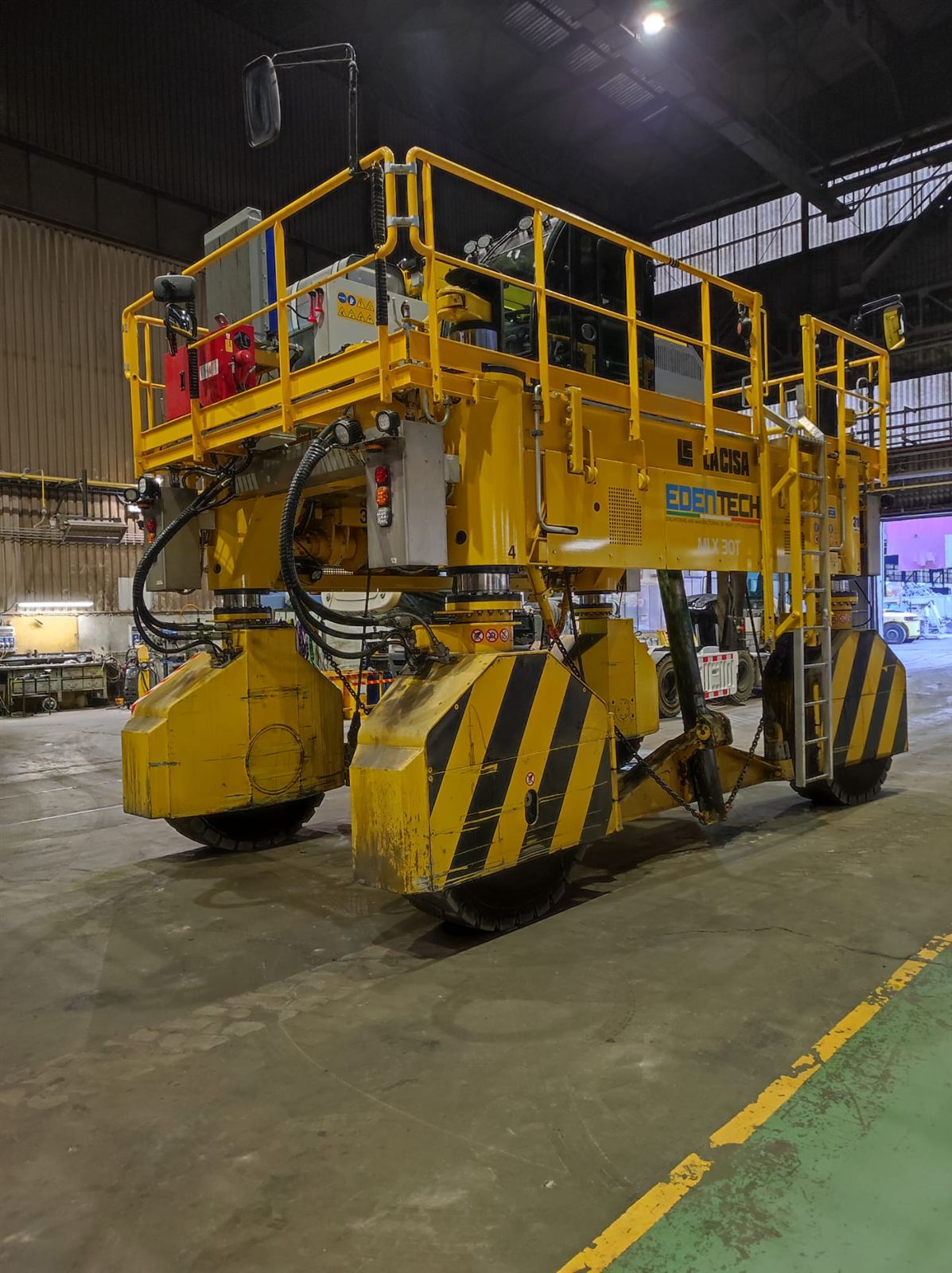
photographs on request
Semi gantry crane 30 t — aerospace research
A single-hook semi gantry crane for a load in a position no standard crane could reach.
- Designed for a load whose slope can change during the operation. The crane keeps control of the load while the geometry of the lift is changing.
- No gantry translation, by design request. Everything concentrated on the lifting operation; nothing built that the task does not require.
- A machine for a problem, not for a catalogue. The clearest illustration of what “special machine” means at Eden Tech.
- Extendable with auxiliary devices. A second life for the crane beyond the operation it was built for.
Project, machine & technical data
The project
A French aerospace research centre had to handle a particular load in a very difficult position, with a risk of change of slope and of loss of the load. When the slope can change during the operation, the load is not simply hanging — the geometry of the lift changes while the lift is in progress. The design constraints of this project remain confidential.
The machine
An electric semi gantry crane with a single 30 t hook. No gantry translation was required: the crane works where it stands. What can be stated is the outcome — the job was done perfectly and quickly, and the crane now has a second life ahead of it.
Technical data
- Machine type
- Electric semi gantry crane
- Capacity (SWL)
- 30 t, single hook
- Gantry translation
- None, by specific design request
- Design key features
- Confidential
- Client
- Aerospace research centre — France
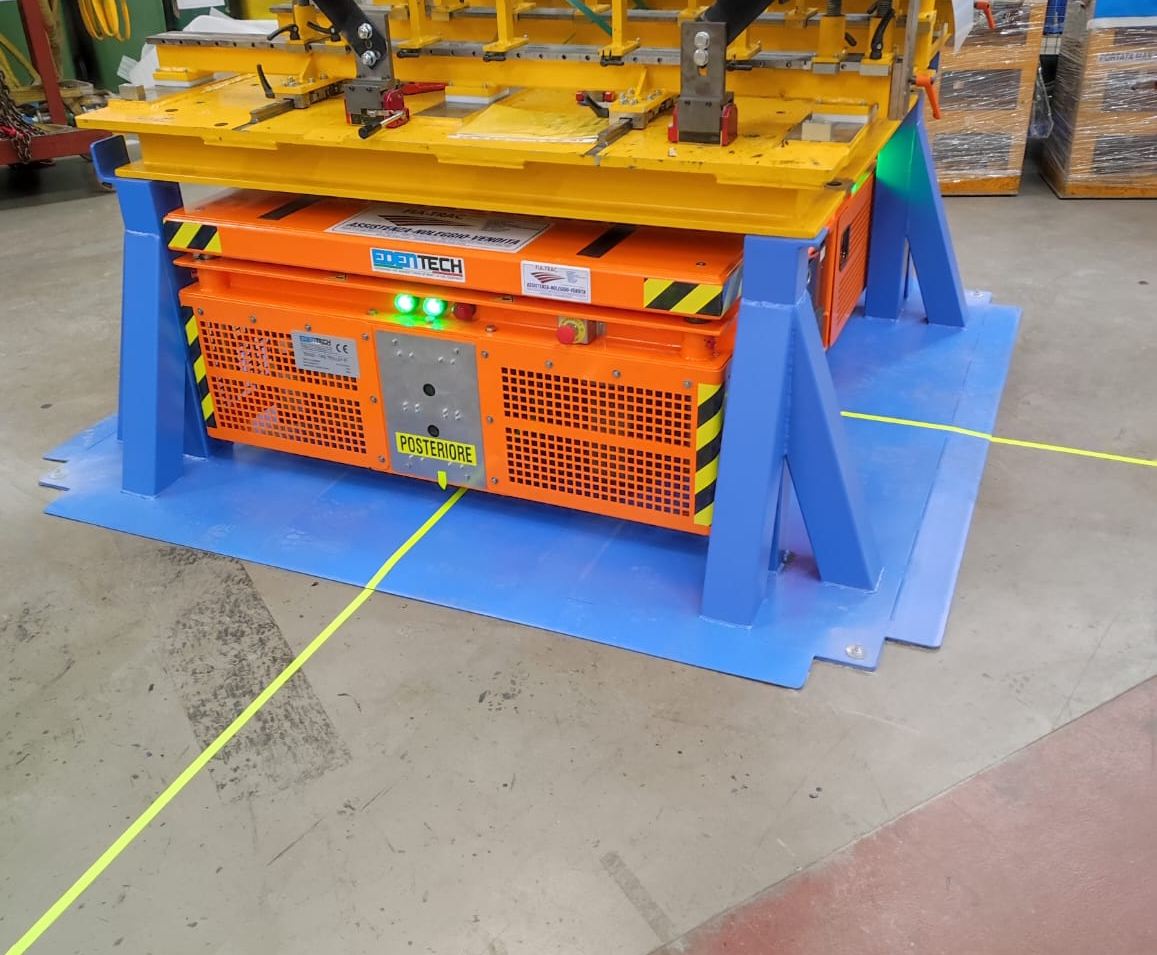
Full electric compact trolley 4 t
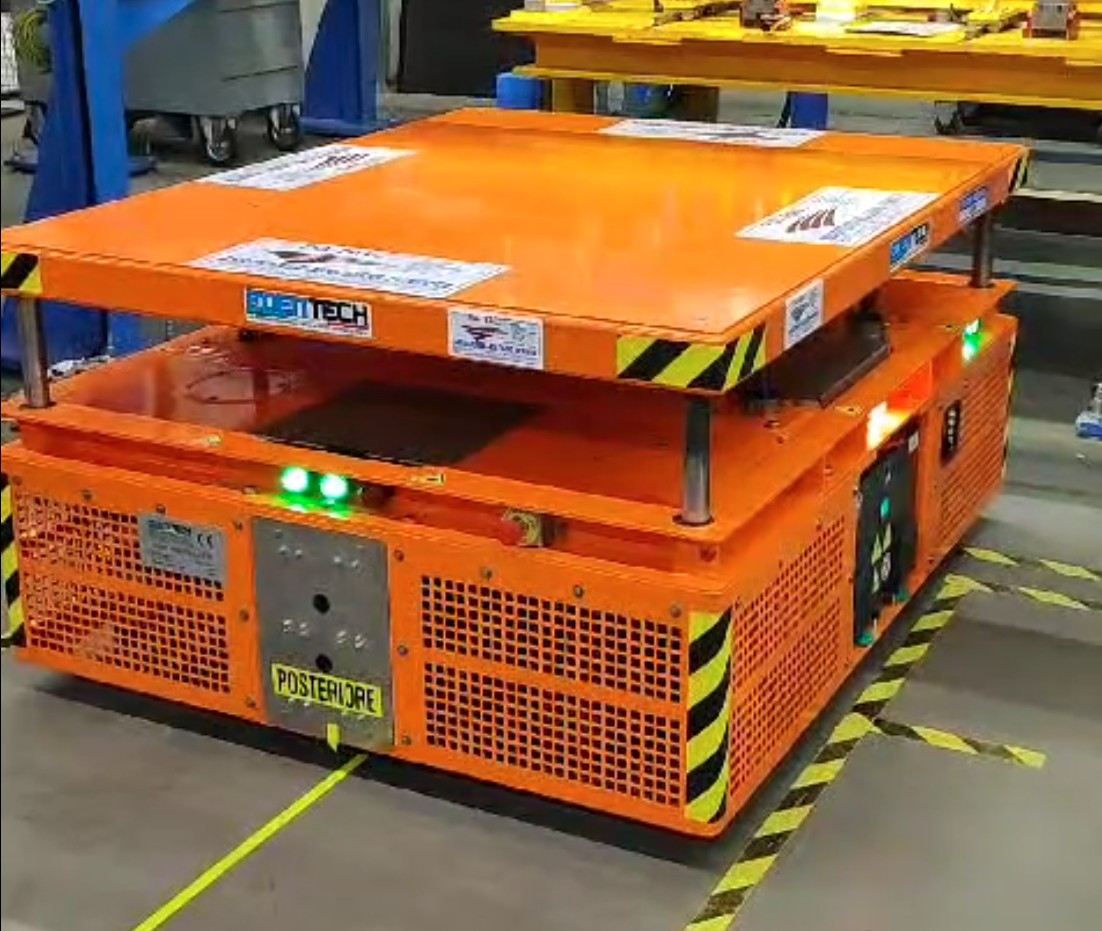
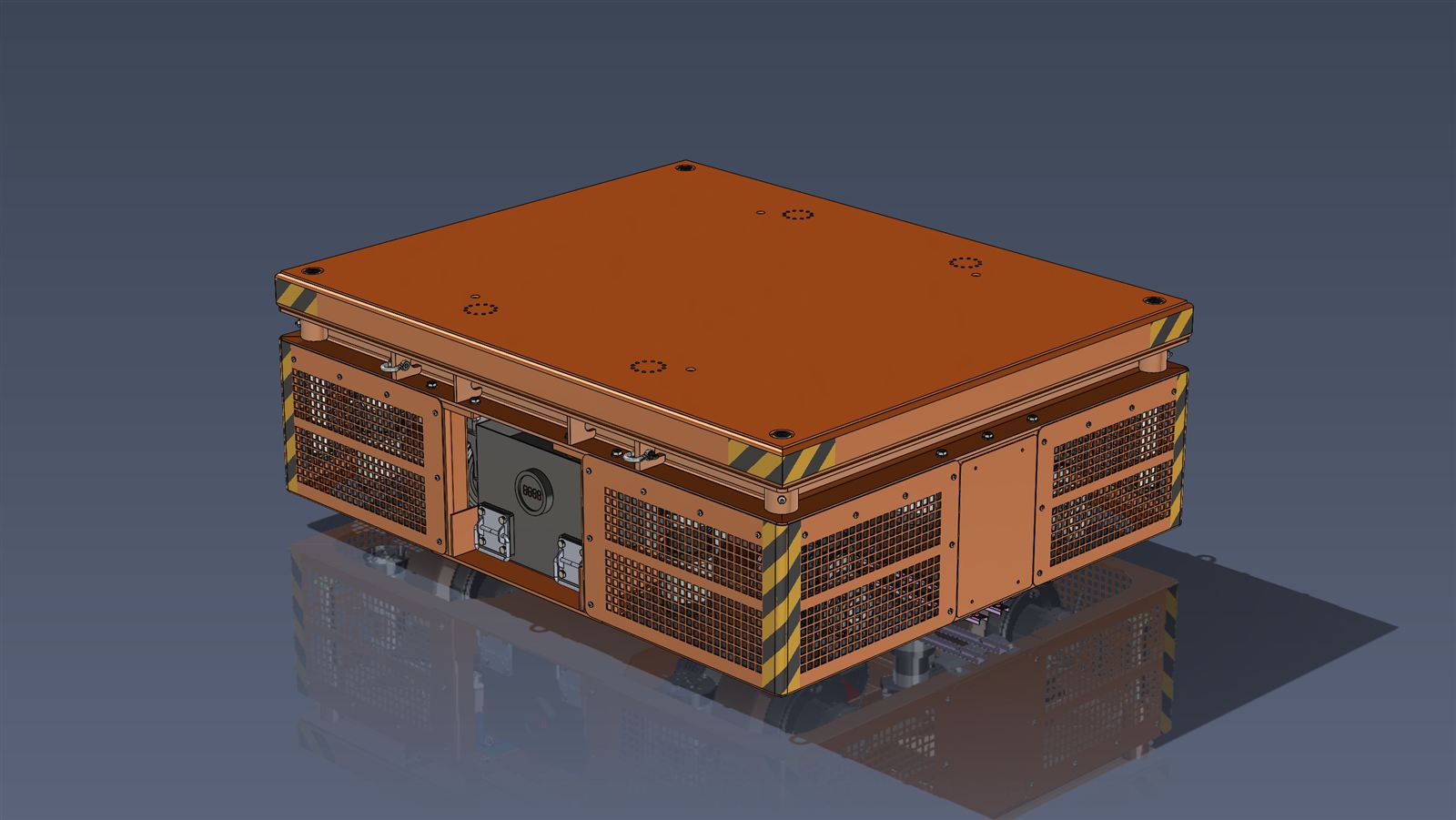
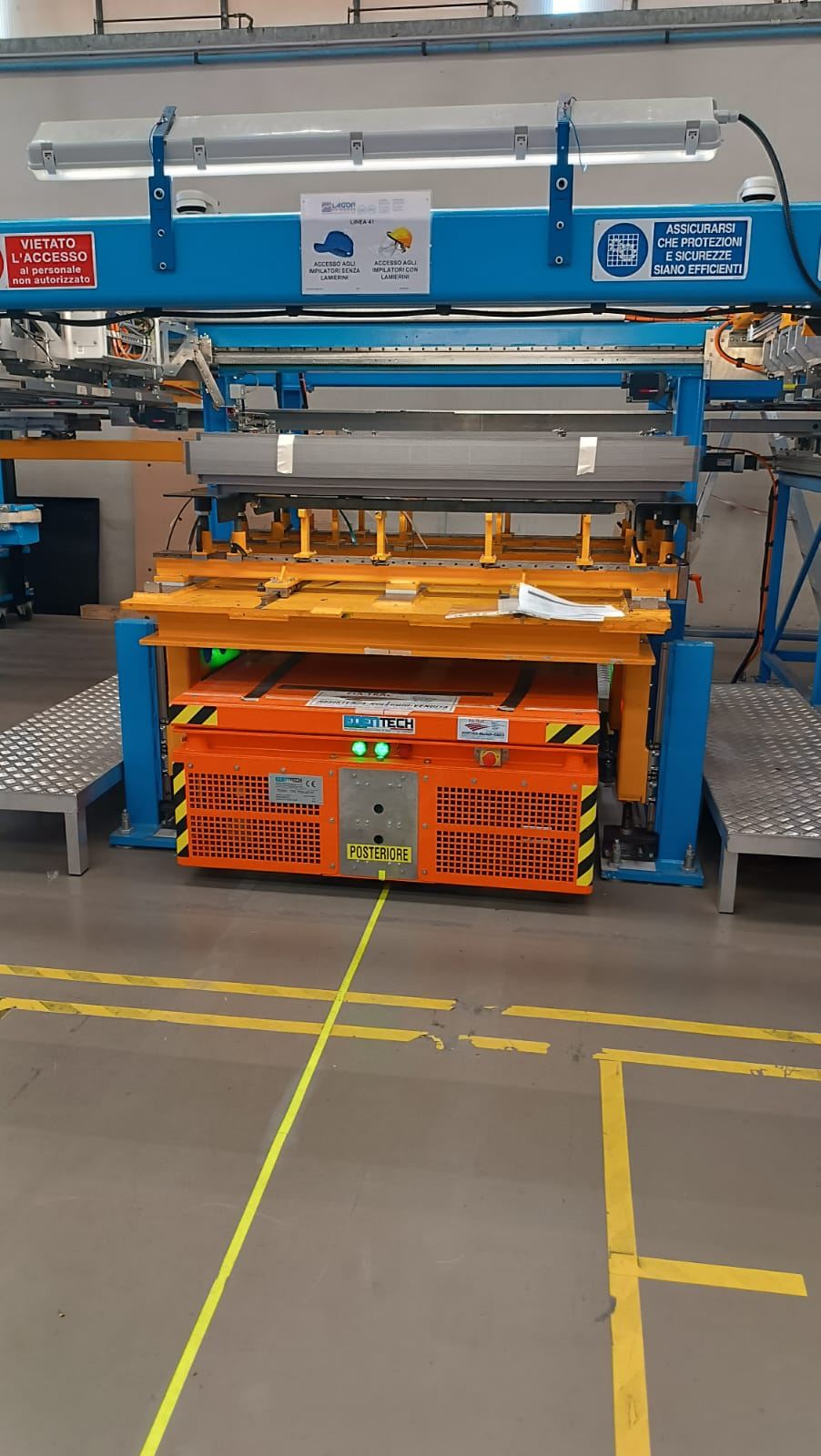
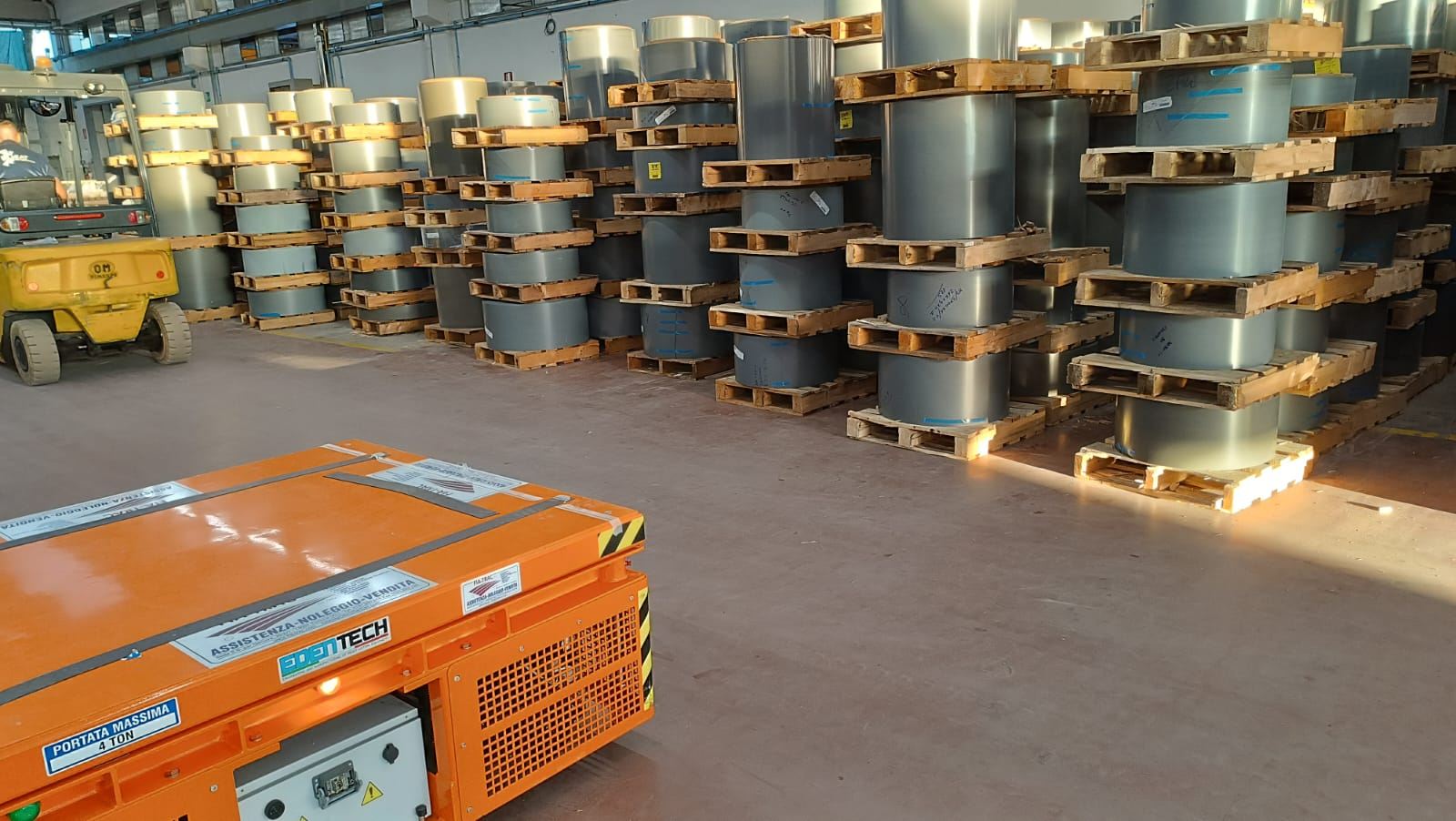
A very compact battery-electric trolley that moves semi-finished products between the stations of a production line, with self-guidance in the critical areas.
- Self-guidance only where it pays. Precision at the critical points, manual control everywhere else: lower cost, fewer failure modes.
- Variable-height loading table. The trolley adapts to each station; the line does not have to be modified.
- Fully electric, battery powered. No emissions and no noise inside the production building.
- Very compact. Designed to the aisles that exist, not to the aisles a handling machine would like.
Project, machine & technical data
The project
Inside a production line the constraint is not the weight — four tonnes is a modest load — but the space. The aisles were designed around the machines that produce, not around the machine that carries, and the indoor environment rules out a combustion engine.
The machine
A very compact, fully electric machine powered by a lithium battery, controlled by remote control, with a self-guiding system enabled only in the critical areas of the route — the approach to a station, a narrow passage — while the rest stays under direct manual control.
Technical data
- Capacity
- 4 t
- Power
- Fully electric, lithium battery
- Controls
- Remote control, plus self-guidance in critical areas
- Loading table
- Variable height
- Steering
- Advanced steering modes for maximum manoeuvrability
Jib crane 45 t @ 25 m for containers
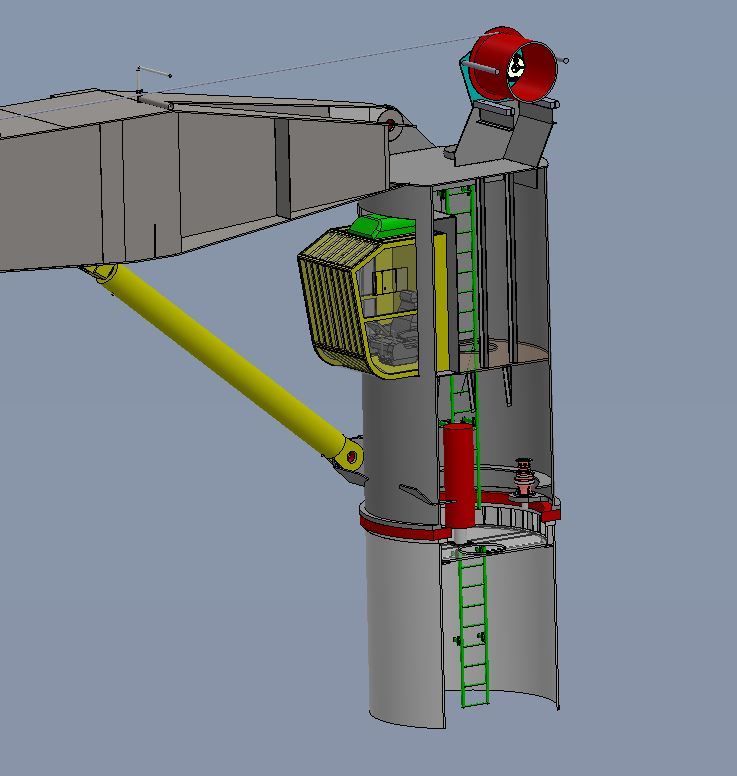
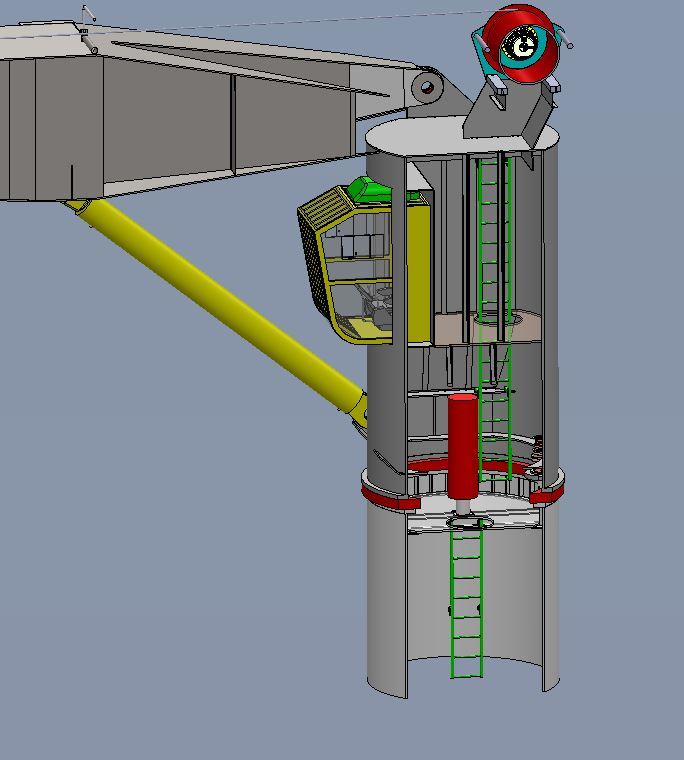
Full electric jib cranes designed to handle containers from a stocking barge. Eden Tech’s scope on this project is the design.
- 45 t at 25 m of overhang. The reach required to serve a container stock on a barge from a fixed position.
- Fully electric. No fuel handling on board; no local emissions in a congested port area.
- Designed for a floating installation. Crane and barge treated as one system, not as a crane placed on a deck.
- Design capability offered on its own. Eden Tech engineering is available as a service, not only as part of a machine supply.
Project & technical data
A crane on a barge does not have solid ground under it. The hull heels as the jib slews and as the load moves outwards, and the stock of containers on board changes the trim of the barge throughout the working day. The crane and the floating platform are one single system, and they have to be designed as one.
Technical data
- Machine type
- Heavy-duty jib crane, fully electric
- Capacity (SWL)
- 45 t at 25 m overhang
- Installation
- On a barge used to stock containers
- Eden Tech scope
- Design
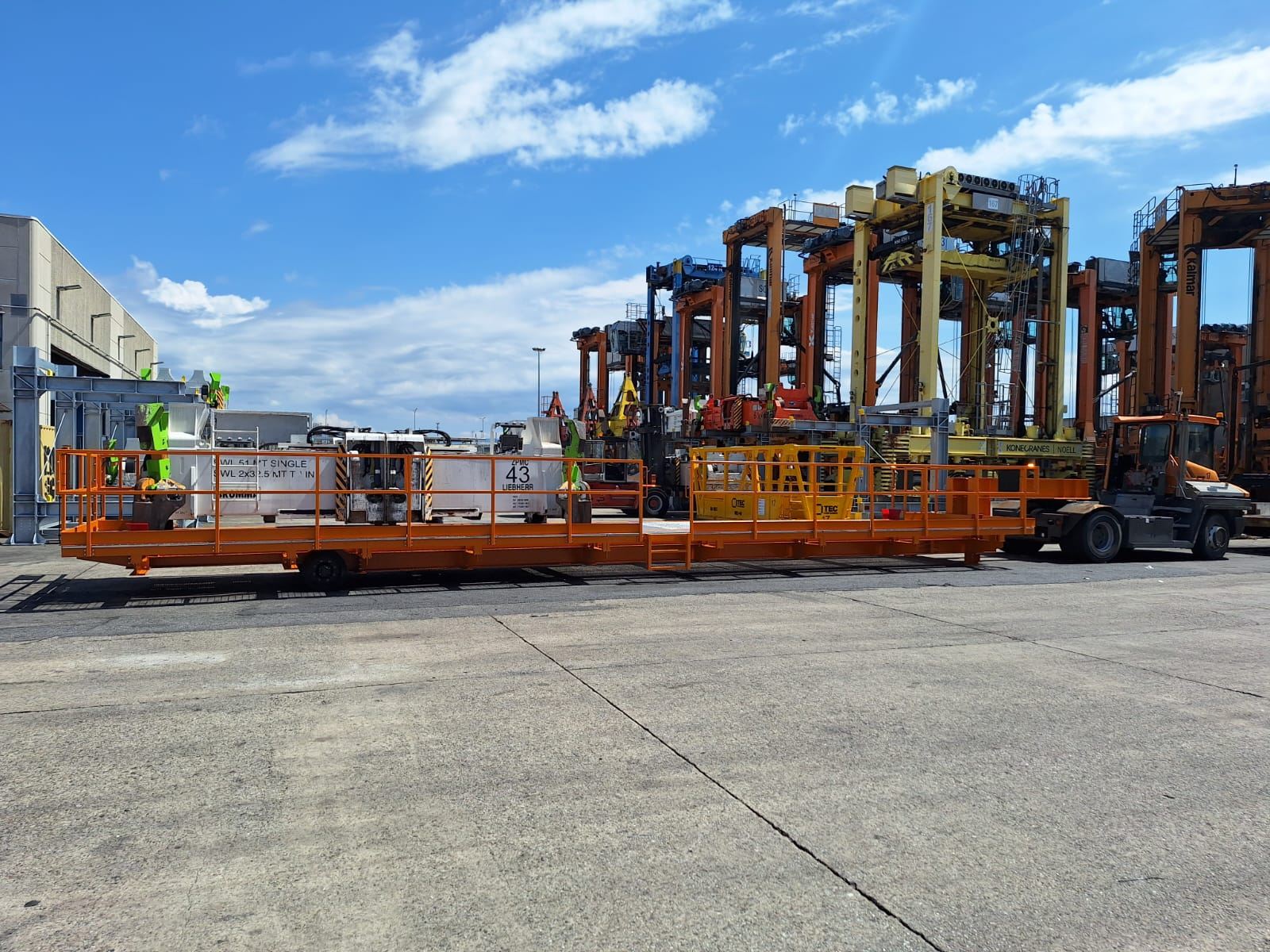
Spreader tow trailer 30 t
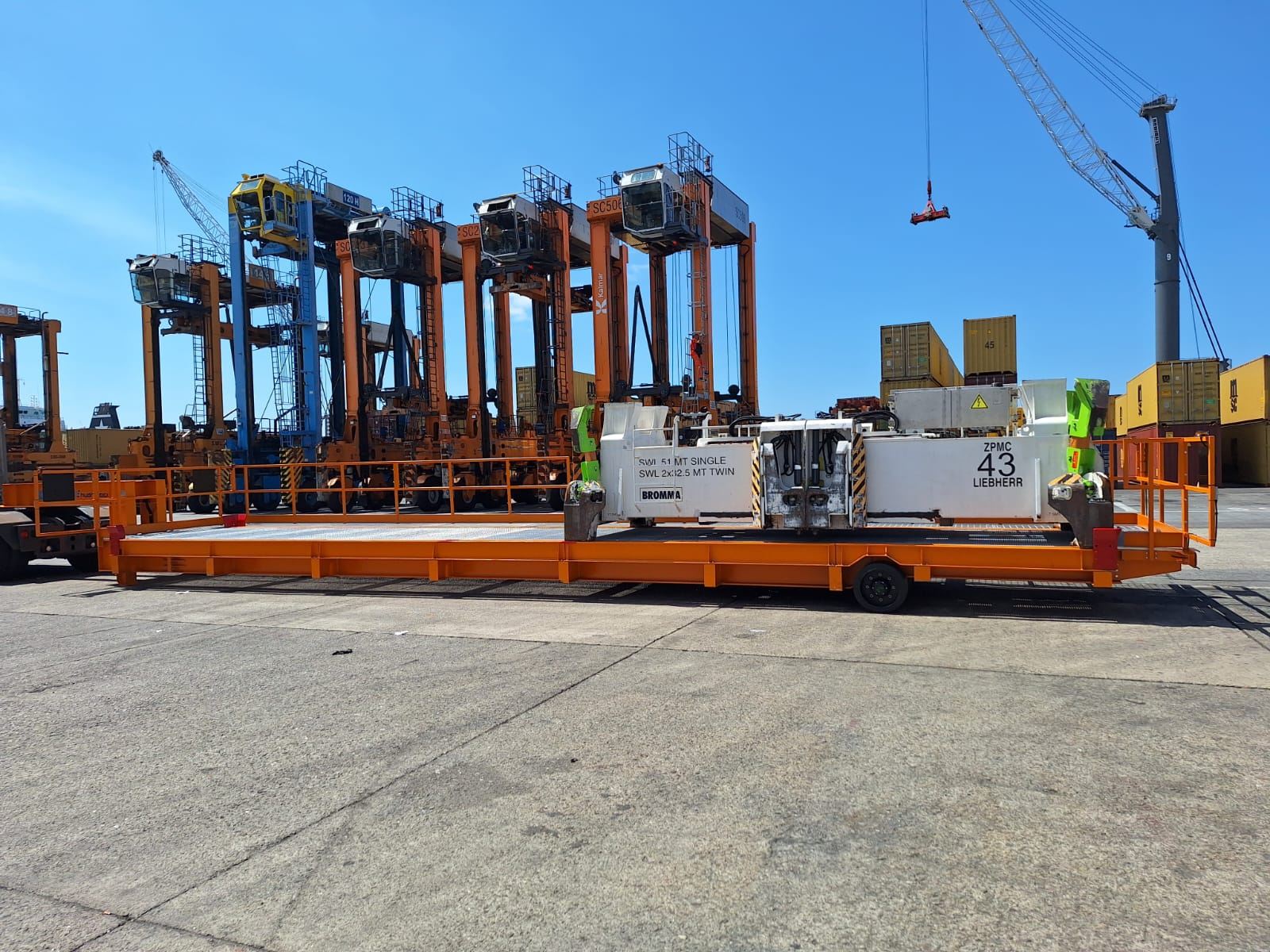
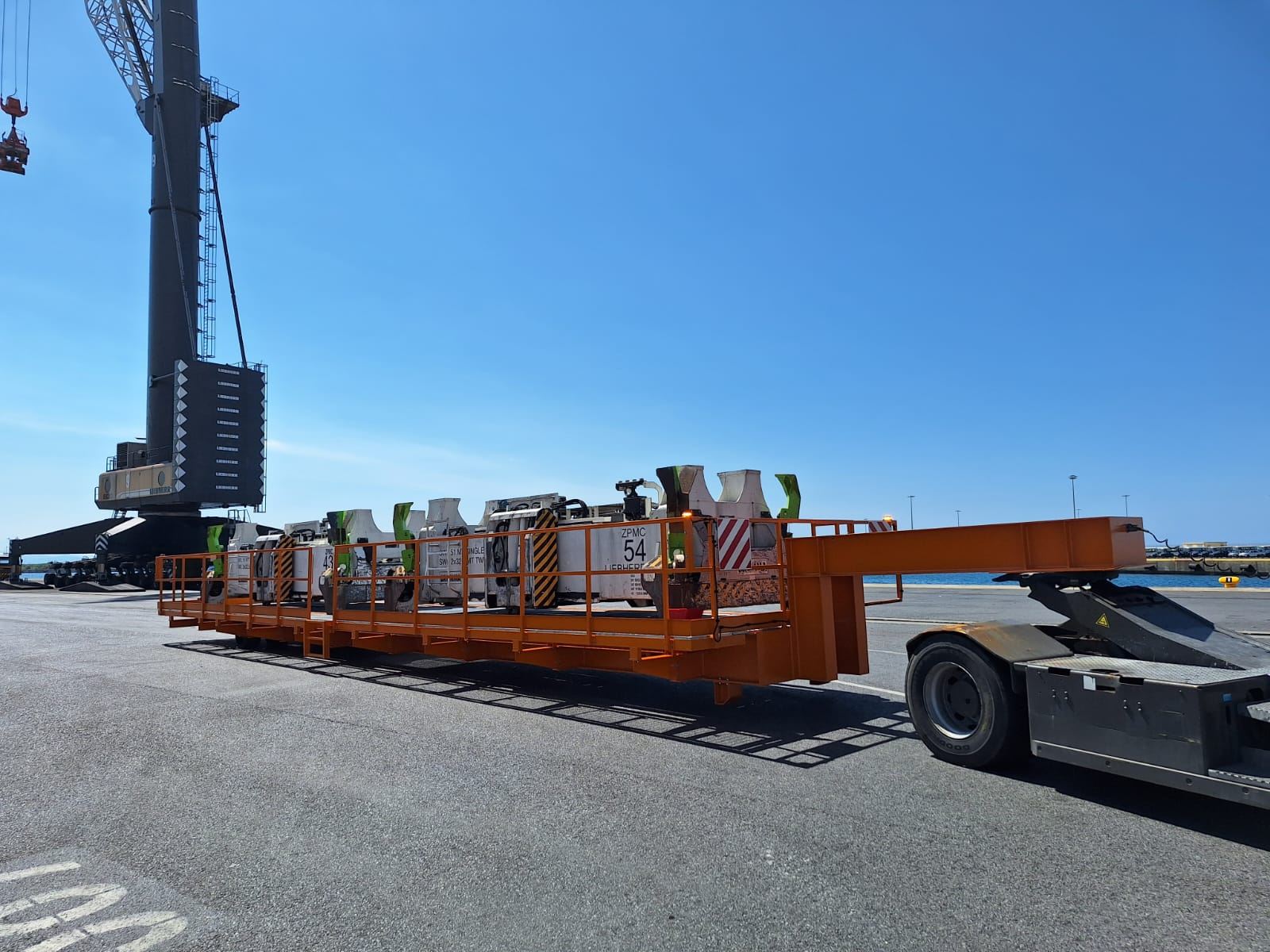
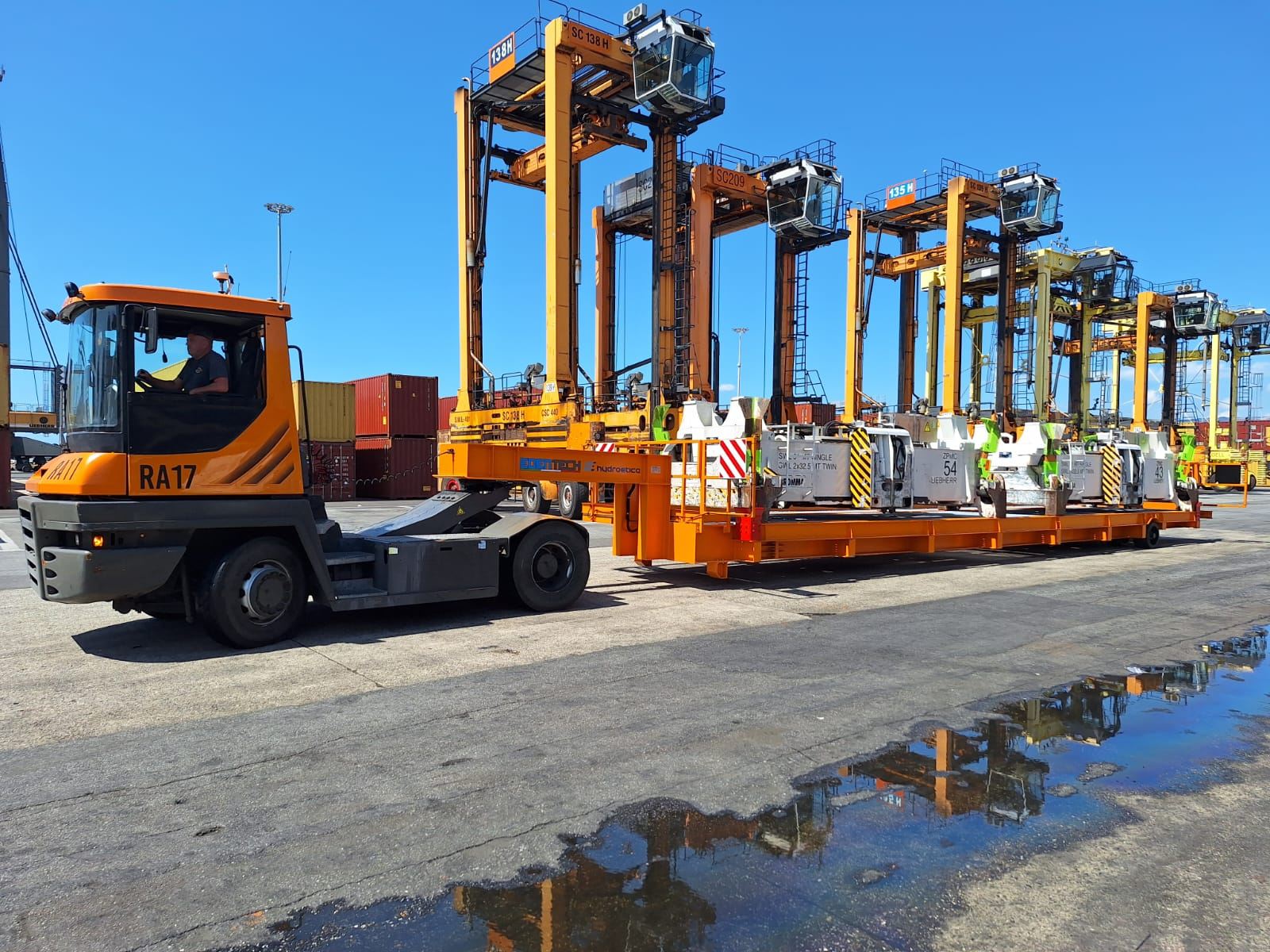
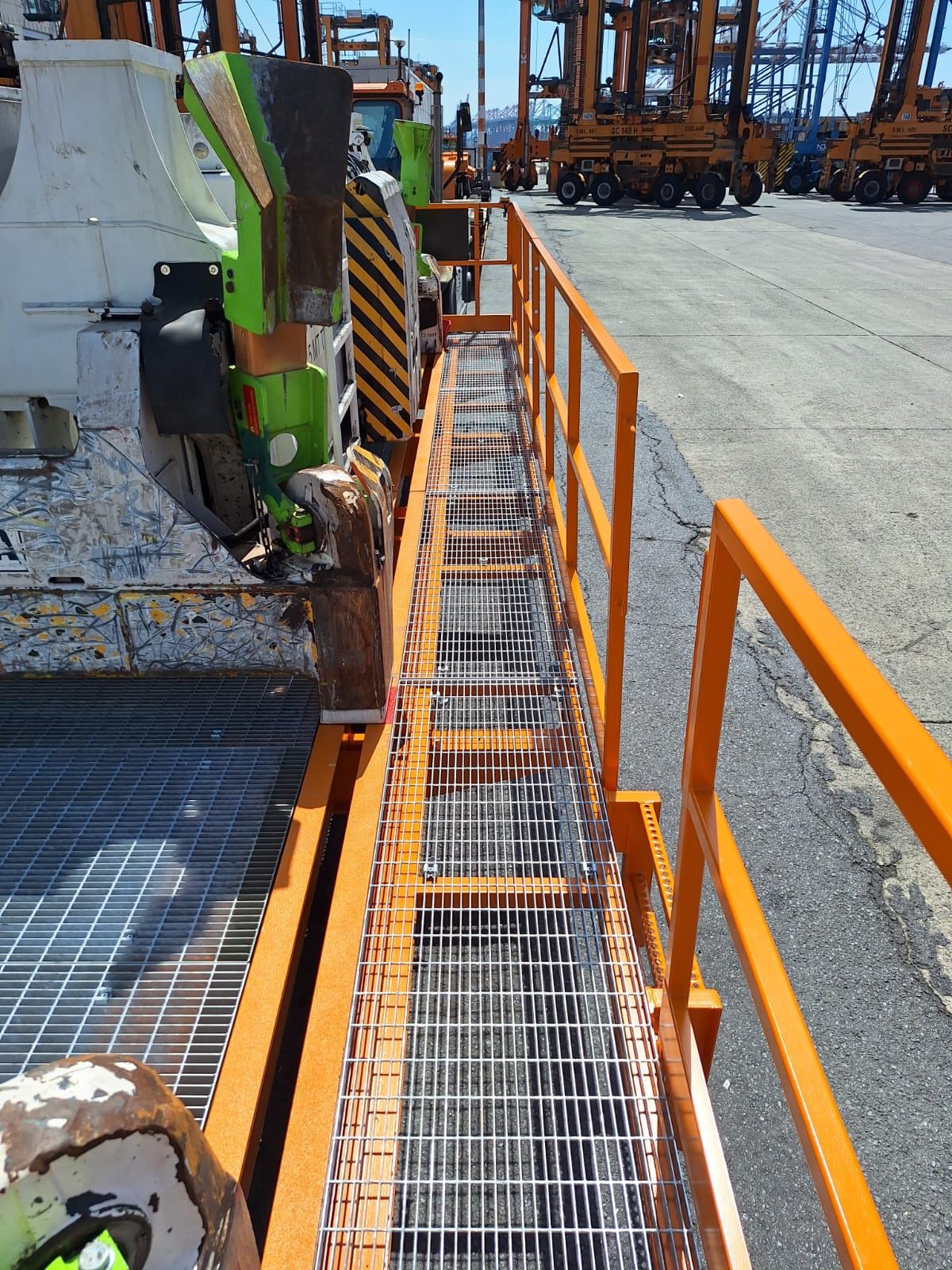
A towed trailer carrying two 20 ft container spreaders, or one 40/45 ft, secured by their own twist locks.
- Secured by the spreaders’ own twist locks. No additional lashing equipment; the load cannot be secured incorrectly.
- Two 20 ft or one 40/45 ft. The whole range of terminal spreaders on one trailer.
- Walkways on three sides. Maintenance carried out on the trailer, without transferring the spreader to a stand.
- A machine for the terminal’s own equipment. Eden Tech also builds what keeps the handling equipment working.
Technical data
- Machine type
- Towed trailer for container spreaders
- Capacity
- 30 t
- Load configurations
- 2 × 20 ft spreaders, or 1 × 40/45 ft spreader
- Securing
- By the spreaders’ own twist locks
- Service access
- Walkways on three sides
Also for infrastructure: the MOBILIFT 16 t for a road tunnel in London and the two 30+10 t gantry cranes for a transit project in Toronto are presented on the Tunnelling page →
What our people worked on before Eden Tech
The projects above are Eden Tech supplies. Before Eden Tech, members of our team designed and built machines at Paolo De Nicola S.p.A. and at Eden Technology Srl. Under the Paolo De Nicola name alone, more than a thousand machines and special equipment have been built since 1953.
Work orders of Paolo De Nicola S.p.A. and Eden Technology Srl on which members of today’s Eden Tech team worked. They are listed as the professional experience of our people, not as Eden Tech supplies.
Tell us the constraint you cannot change.
We will tell you whether a machine can be built around it — and roughly what it takes.