



Launching gantry cranes for bridges and viaducts
Launching gantry cranes — beam, full-span and segmental, span by span or cantilever — and special carriers for the erection of bridges and viaducts. Eden Tech designs and builds them to order, drawing on the experience our team gained on machines up to 2,800 t at Paolo De Nicola S.p.A. and Eden Technology Srl.
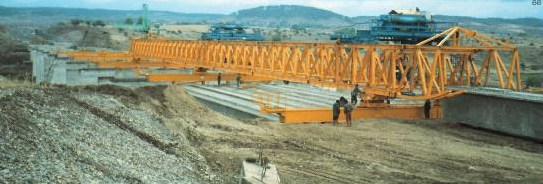
Archive photo: a machine built before Eden Tech, by a company where members of our team worked.
Launching gantry cranes, for every way a bridge is built
Launching gantry cranes are the machines that place a bridge deck on its piers. Which one is needed depends on how the deck is built: precast beams, whole precast spans, or segments erected span by span or by balanced cantilever. Around the launching gantry we also design the carriers and yard equipment that feed it.
Beam launching gantries
For decks made of precast beams: the gantry picks up each beam from the carrier, travels it over the span and lowers it onto the bearings, beam after beam, then moves itself to the next span.
Full-span launching gantries
One precast element for one span: the whole box girder is lifted and placed in a single operation. Our team has worked on full-span gantries of 1,600 t and more, fed by tyre trolleys running along the finished deck.
Segmental — span by span
For segmental construction: the gantry, overhead or underslung, holds all the segments of one span until it is post-tensioned, then launches itself forward. Up to 2,800 t in our team’s experience.
Segmental — balanced cantilever
The gantry places segments symmetrically on both sides of each pier until the cantilevers meet, on spans up to 90 m. Dual-purpose gantries can work both span by span and in cantilever on the same bridge.
Cable-stayed and special bridges
Self-launching equipment for cable-stayed decks and positioning equipment for steel segments, designed around one bridge and one construction method.
Carriers, trolleys and yard equipment
Tyre trolleys and special carriers that bring beams, spans and segments to the gantry, gantries for the casting yard, and straddle carriers — see MOBILIFT straddle carriers.
Built around the bridge, not taken from a list
No two viaducts are the same, so no two launching gantries are. These are the questions we answer with the contractor before the first drawing.
Construction method and weight
Beams, full spans or segments, span length and the heaviest element: they decide the type of gantry, its capacity and its structure.
Alignment
Curves in plan, longitudinal gradient, cross-fall and variable spans: the machine must follow the bridge geometry without being rebuilt at every pier.
Supports and loads on the structure
Where the gantry rests and what it puts on piers, pier caps and the finished deck — checked with the bridge designer, phase by phase.
Cycle time
The launching cycle drives the whole programme. We plan casting yard, transport and launching together, so no machine waits for another.
Controls and safety
Synchronised hydraulics, electronic control of the launching sequence, load and wind monitoring, and procedures written for the crew that will run the machine.
Reuse, modification and service
A launching gantry can work on more than one bridge. We modify, revamp and service existing machines, including Paolo De Nicola ones — see Spares & service.
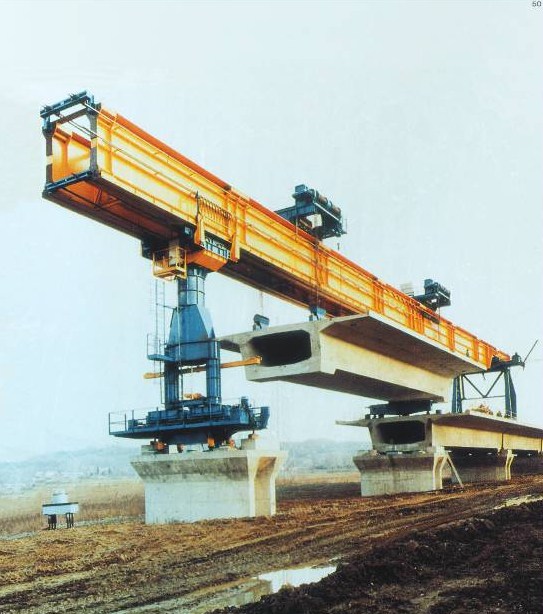
Launching gantries at work
Machines built by Paolo De Nicola S.p.A., on which members of today’s Eden Tech team worked.
- Segmental, span by span. Launching gantries for suspended segments from 100 to 1,600 t, and an underslung gantry of 2,800 t — South Korea, China, USA, France, Puerto Rico, Spain.
- Full span. Full-span launching gantries with low loaders and special loaders for precast box girders from 560 to 1,600 t — Italy, China.
- Beams. Beam launching gantries from 64 to 150 t, often together with straddle carriers for the yard — China, Mexico, Italy, South Korea.
- Balanced cantilever. A cantilever launching gantry of 100 t on an 85 m span, and a dual-purpose 850 t gantry for span by span and cantilever — Spain.
Photos: archive. Machines built before Eden Tech by companies where members of our team worked.
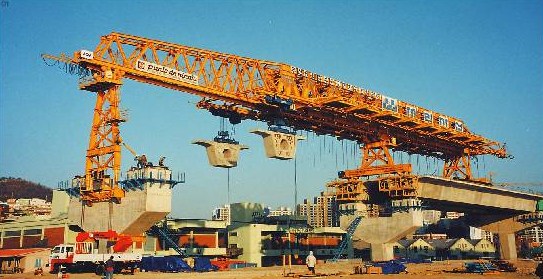
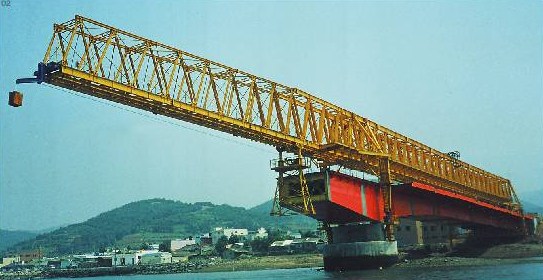
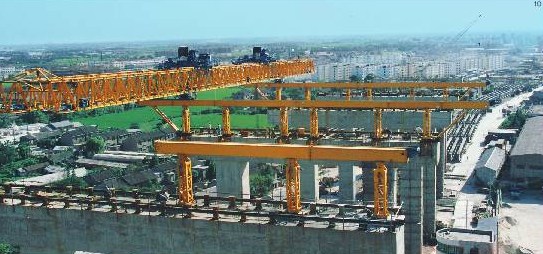
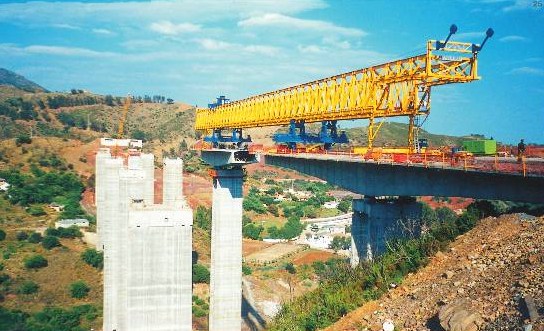
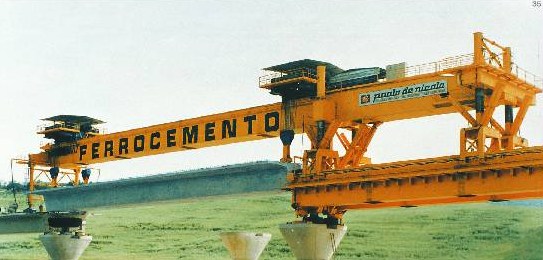
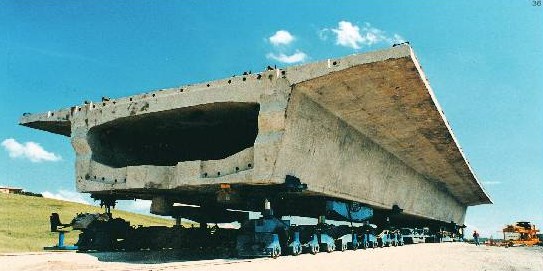
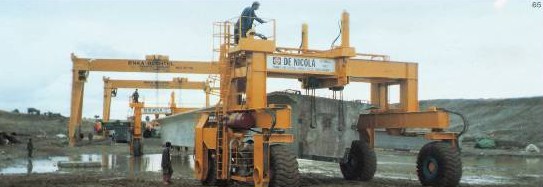
At Paolo De Nicola S.p.A. and Eden Technology Srl, members of today’s Eden Tech team worked on over sixty machines for the Chinese high-speed rail and bridge programme alone — launching gantries from 450 to 910 t, tyre trolleys, special carriers and twisting gantries.
Outside China, launching gantries and special carriers up to 990 t went to the Netherlands, Malaysia, South Korea, Italy and Egypt — for span-by-span erection and precast beam launching.
Where the launching systems went
Work orders of Paolo De Nicola S.p.A. and Eden Technology Srl on which members of today’s Eden Tech team worked. They are listed as the professional experience of our people, not as Eden Tech supplies.
Launching gantries our team has worked on
Machines built by Paolo De Nicola S.p.A., on which members of today’s Eden Tech team worked. They are listed as the professional experience of our people, not as Eden Tech supplies.
Bridge launching: frequent questions
Which type of launching gantry do I need?
It depends on how the bridge is built. Beam launching gantries place precast beams one by one. Full-span launching gantries place a whole precast span — one box girder per span — in a single operation, at 1,600 t and more. Segmental launching gantries build decks made of precast segments, span by span or by balanced cantilever.
Span-by-span or balanced cantilever: which machine do I need?
For span-by-span erection the gantry holds all the segments of one span until it is post-tensioned, then moves to the next. For balanced cantilever it places segments symmetrically from each pier. Some of our team’s gantries were dual-purpose and could do both on the same bridge.
What capacity and span can you design for?
Our team has worked on launching systems from about 60 t to 2,800 t and on spans up to 90 m. Capacity and span are defined together with the deck section, the alignment and the cycle time you need.
Can a launching gantry be reused on another bridge?
Often, yes, with modifications to span, supports or capacity. We assess existing machines — including Paolo De Nicola ones — and modify, revamp and service them.
Do you also supply the casting-yard and transport equipment?
Yes. Gantries for the casting yard, straddle carriers, tyre trolleys and special carriers are designed together with the launching gantry, so the whole chain from yard to deck works at the same pace.
Tell us the constraint you cannot change.
We will tell you whether a machine can be built around it — and roughly what it takes.