


Tunnelling equipment: segment handling and shaft gantry cranes
A specialisation, not an occasional activity: two current Eden Tech projects, backed by sixteen earlier tunnelling supplies our team worked on — segment handling behind the TBM, shaft and muck-removal gantries, machines that fit the tunnel the tunnel already is. Tunnelling (tunneling) equipment designed and built in Italy.
What a tunnel contractor screens suppliers on
Segment handling behind the TBM
Forwarding systems, backup wagons, MSV tyre trolleys and segment positioning — on slopes up to 15%.
Shaft handling and muck removal
Gantry cranes with full capacity on the overhang and negative hook travel, serving the shaft directly from surface level.
Work in a confined section
Machines that adapt to the tunnel profile, electro-hydrostatic drives for limited ventilation, no manoeuvre that a tunnel has no room for.
Non-European standards
CSA and OSHA compliance — demonstrated on a delivered project in Toronto, not declared in a brochure.
The critical path
Underground, every manoeuvre costs time on the whole project. A handling cycle with one manoeuvre fewer is worth far more than on a surface site.
2 + 16 supplies
Two Eden Tech projects, in the UK and Canada; sixteen earlier ones our team worked on at Paolo De Nicola S.p.A. and Eden Technology Srl, in Hong Kong, Qatar, Greece, Norway, Italy and China.
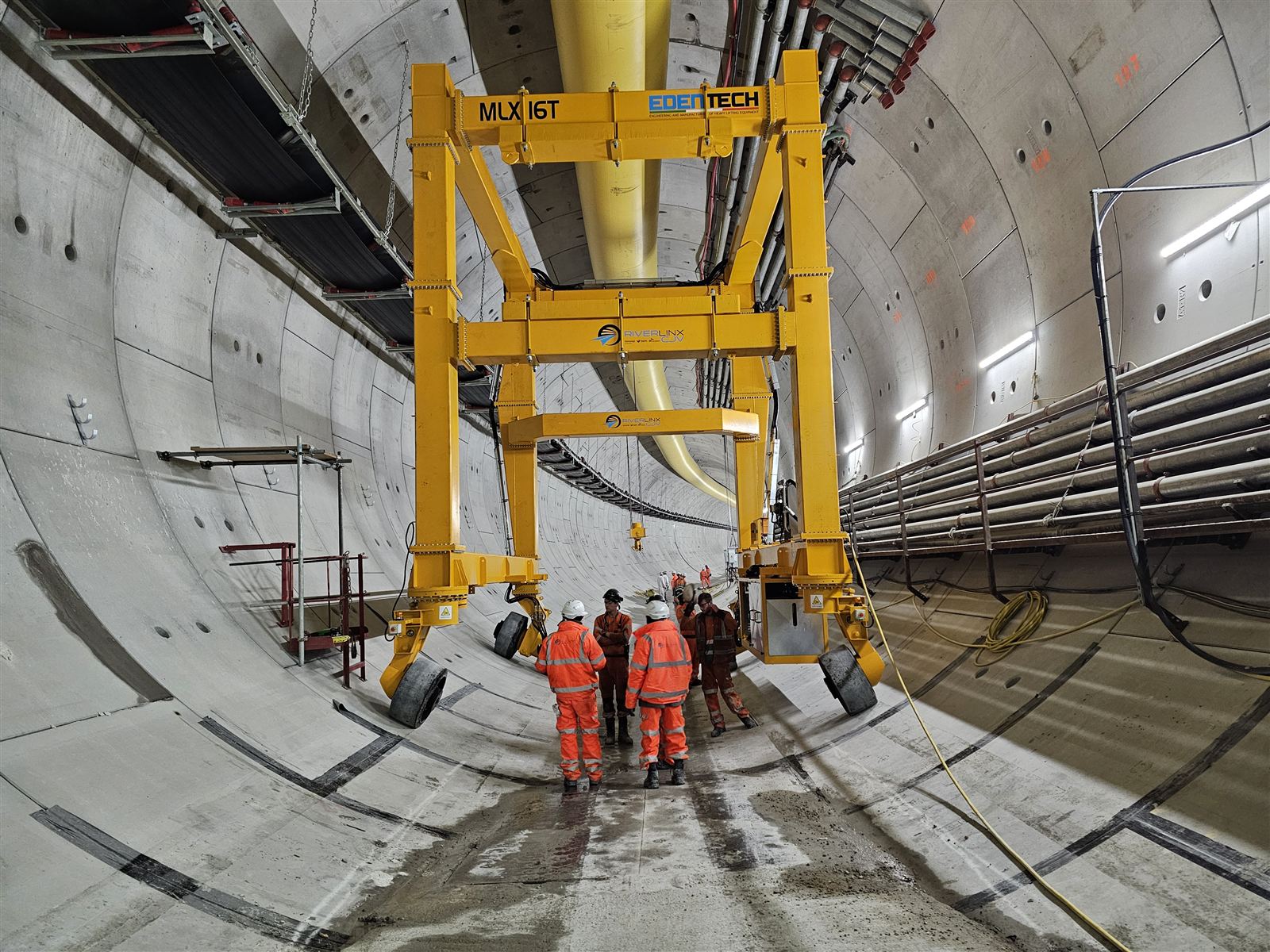
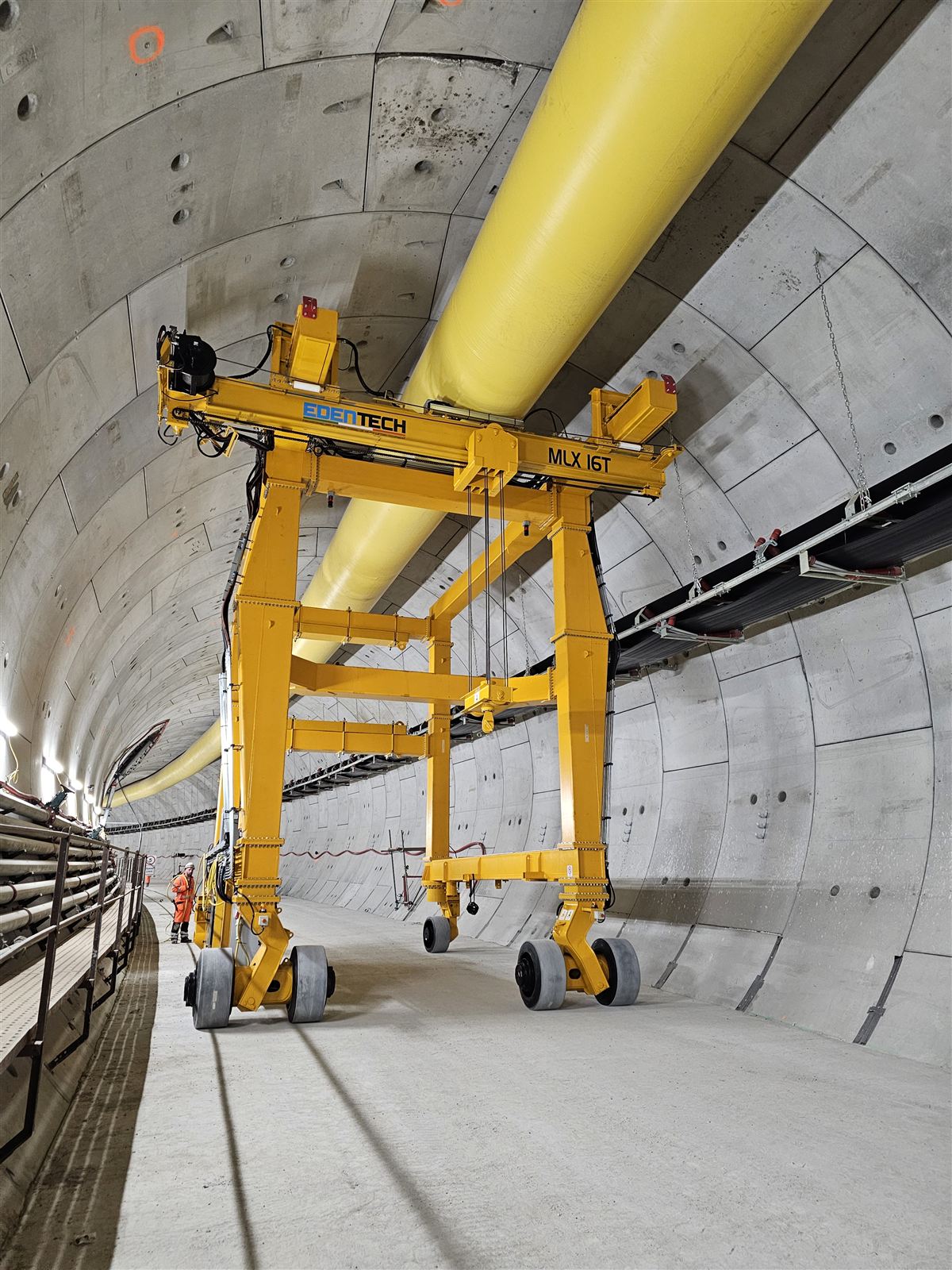
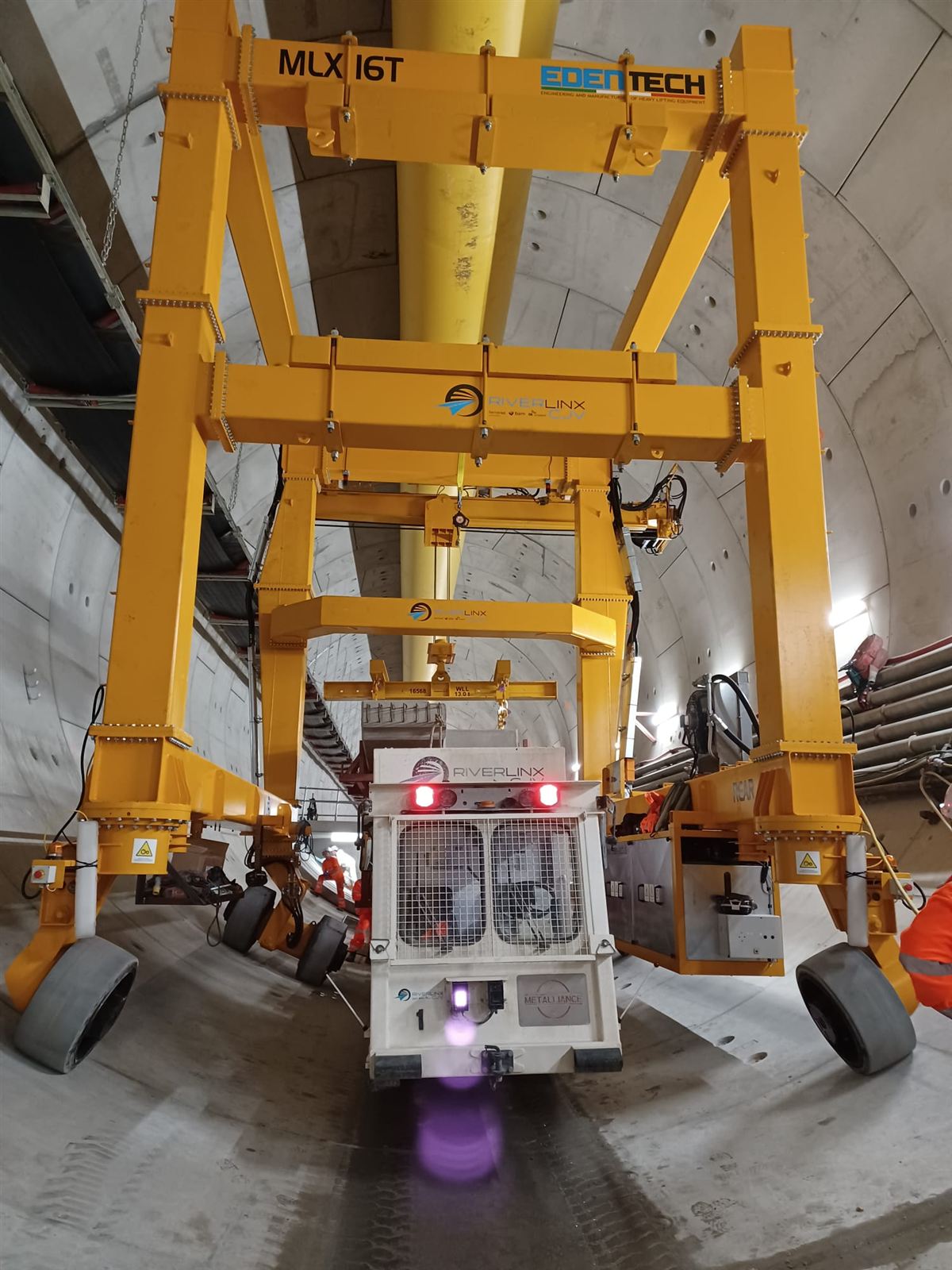
MOBILIFT 16 t — road tunnel, London
A machine that shapes itself to the tunnel: it takes a concrete segment from a trolley, travels with it on the overhang, rotates it and sets it in position.
- Self-adapting front wheel supports. The machine follows the tunnel profile; no reconfiguration between curved and flat sections.
- Full capacity on the overhang. The segment is carried where it has to be placed, not where it is convenient to hold it.
- Hook and lifting structure travelling right to left. Both sides of the tunnel are served without turning the machine around.
- The whole cycle performed by one machine. Pick, travel, rotate and place: no transfer to a second machine, no second lift.
- Electro-hydrostatic drive. Suited to a confined environment with limited ventilation.
Project, machine & technical data
The project
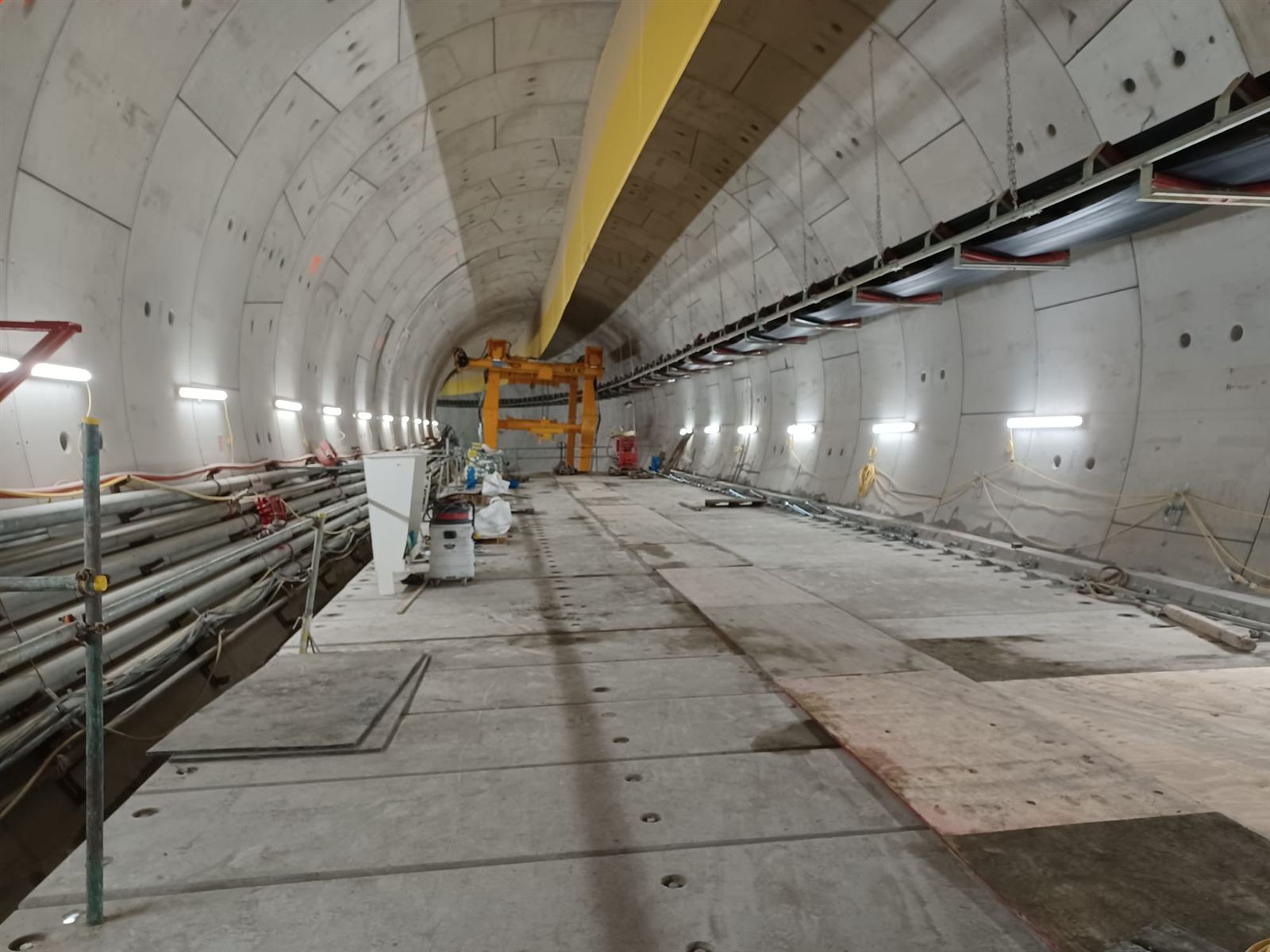
A road tunnel project in London required concrete elements, taken from the MSVs (multi-service vehicles), to be positioned inside the tunnel. A tunnel is the most constrained working environment a lifting machine can be given: the cross section is fixed, the profile changes between straight and curved sections, and the floor is not a flat slab. The machine has to fit the tunnel the tunnel already is.
The machine
The MOBILIFT 16 t runs on tyres and is electro-hydrostatic. Its front wheel supports are self-adapting and the rear steering allows an easy change of inclination. The hook is on the overhang and can move from right to left, as can the entire lifting structure — which is what allows a segment to be placed on either side of the tunnel without the machine having to turn around.
Technical data
- Machine type
- Electro-hydrostatic lifting machine on tyres, for tunnel work
- Capacity (SWL)
- 16 t on the overhang
- Front wheel supports
- Self-adapting to the curved and flat sections
- Rear steering
- Easy change of inclination
- Handling cycle
- Segment picked from the trolley, carried on the overhang, rotated and placed
- Client
- Tunnel contractor — United Kingdom
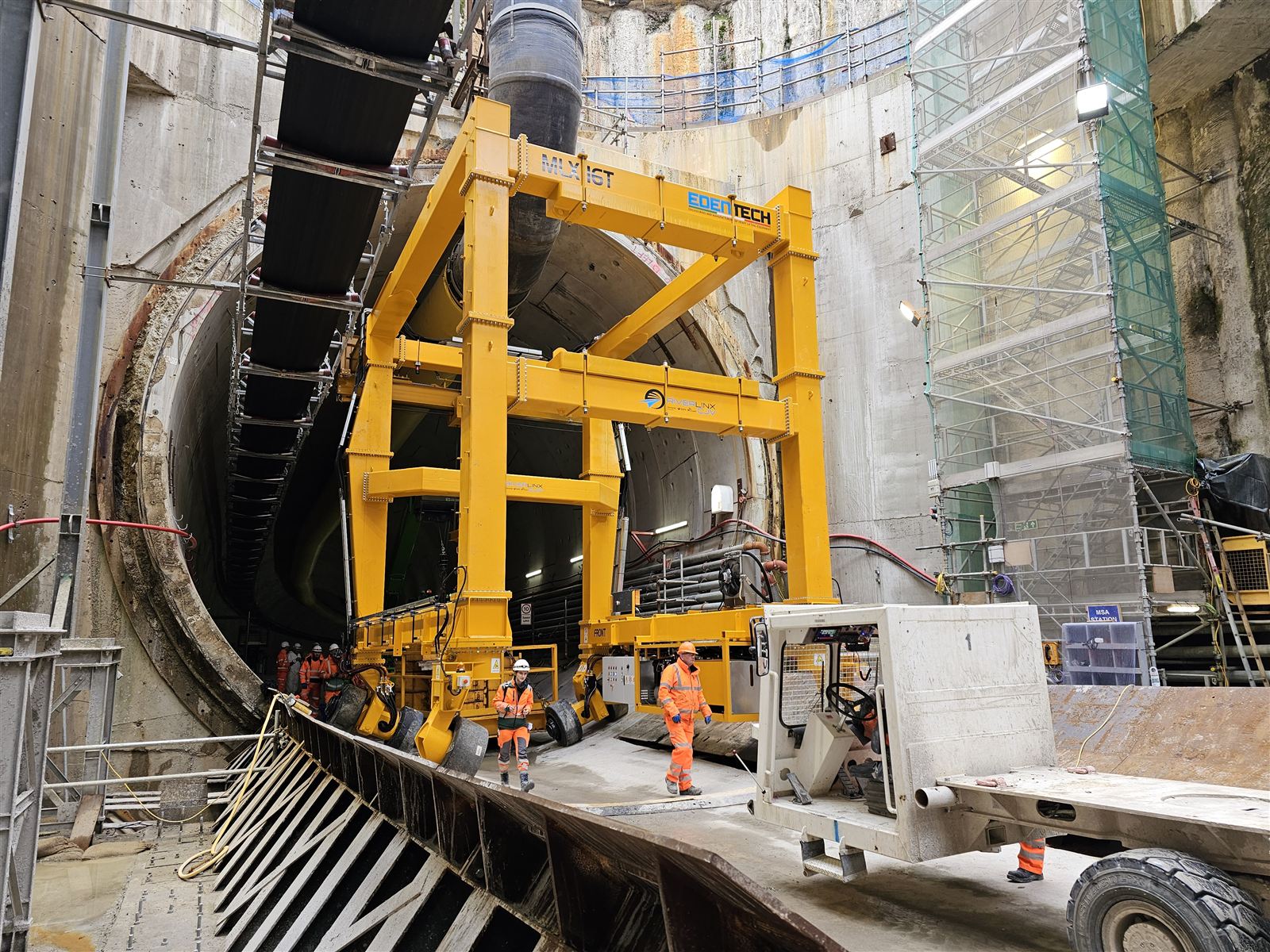
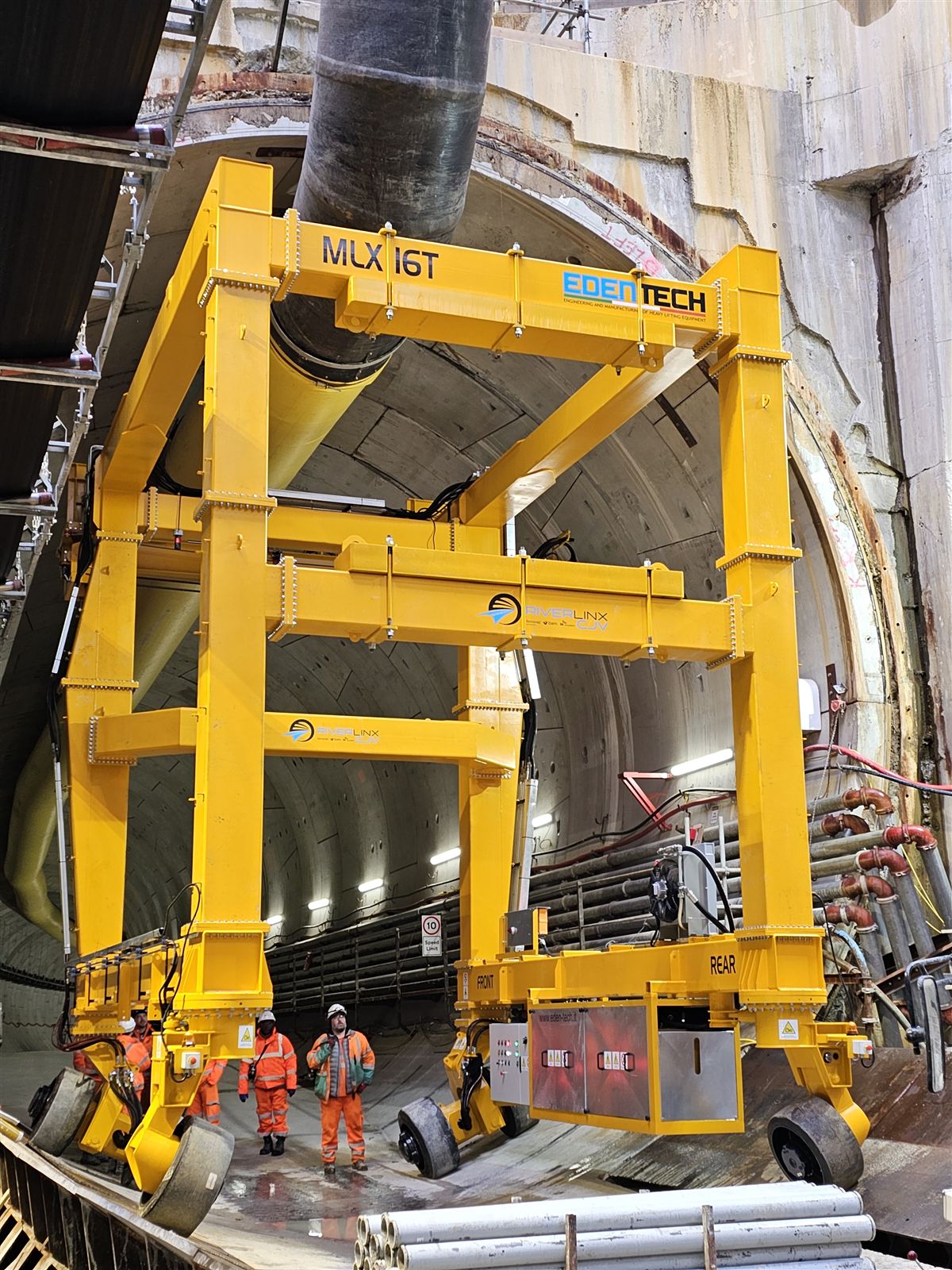
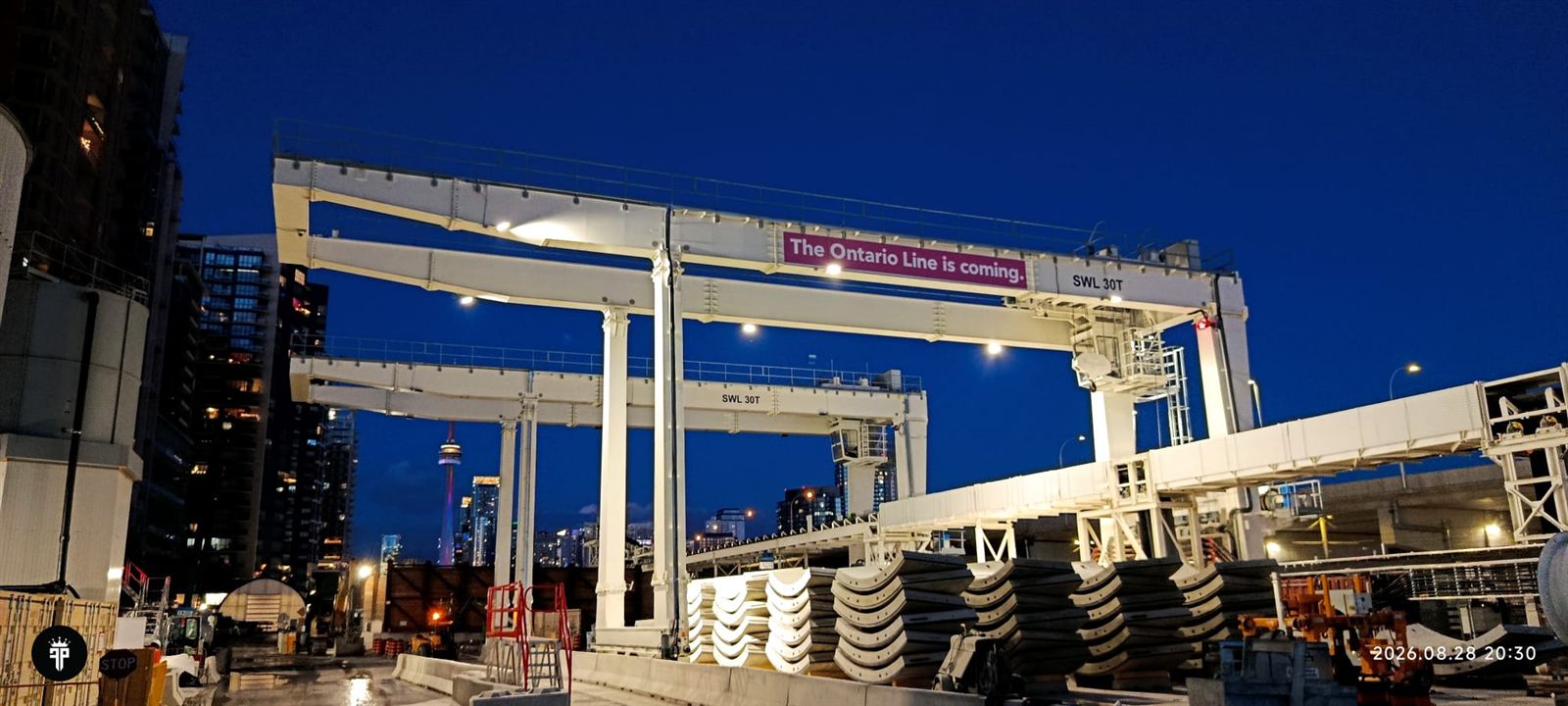
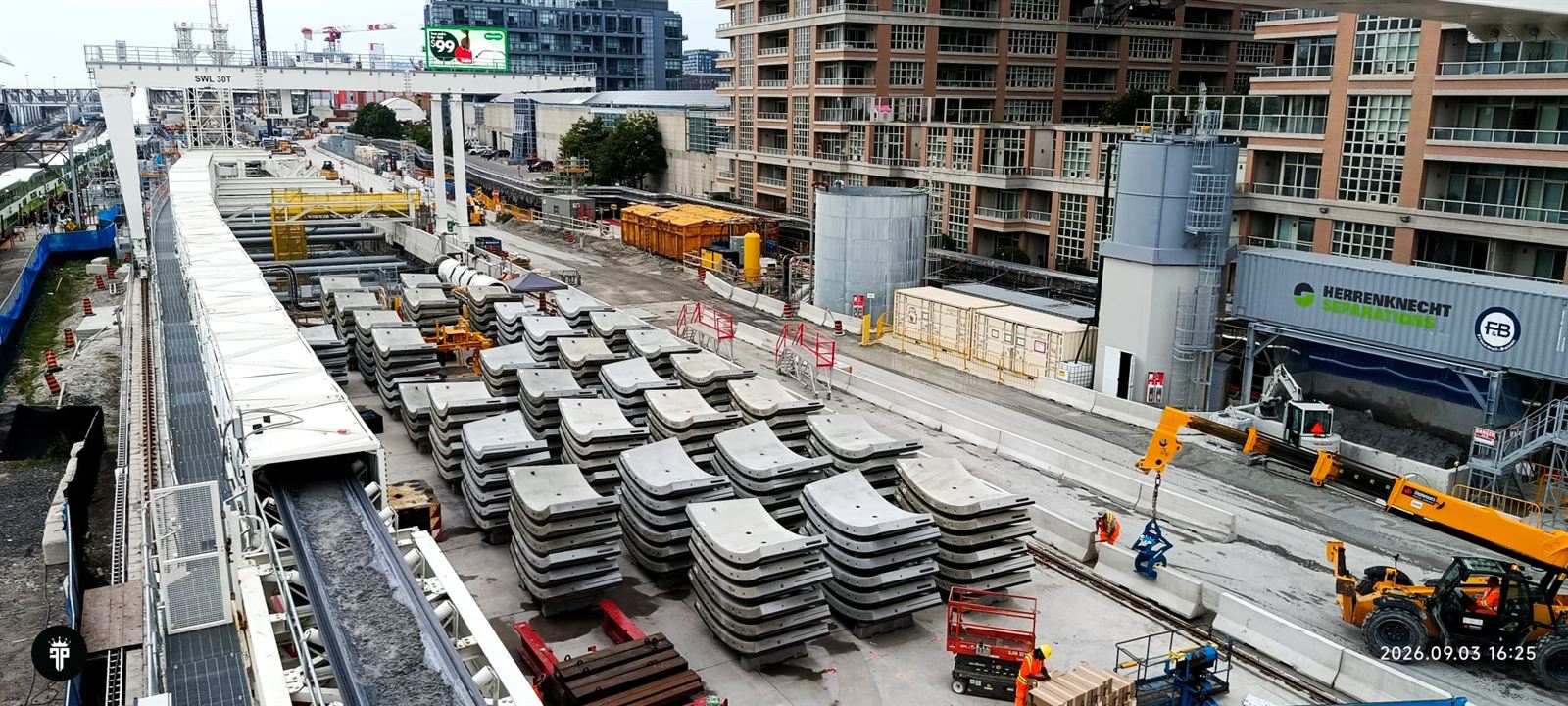
Two gantry cranes 30+10 t — transit shaft, Toronto
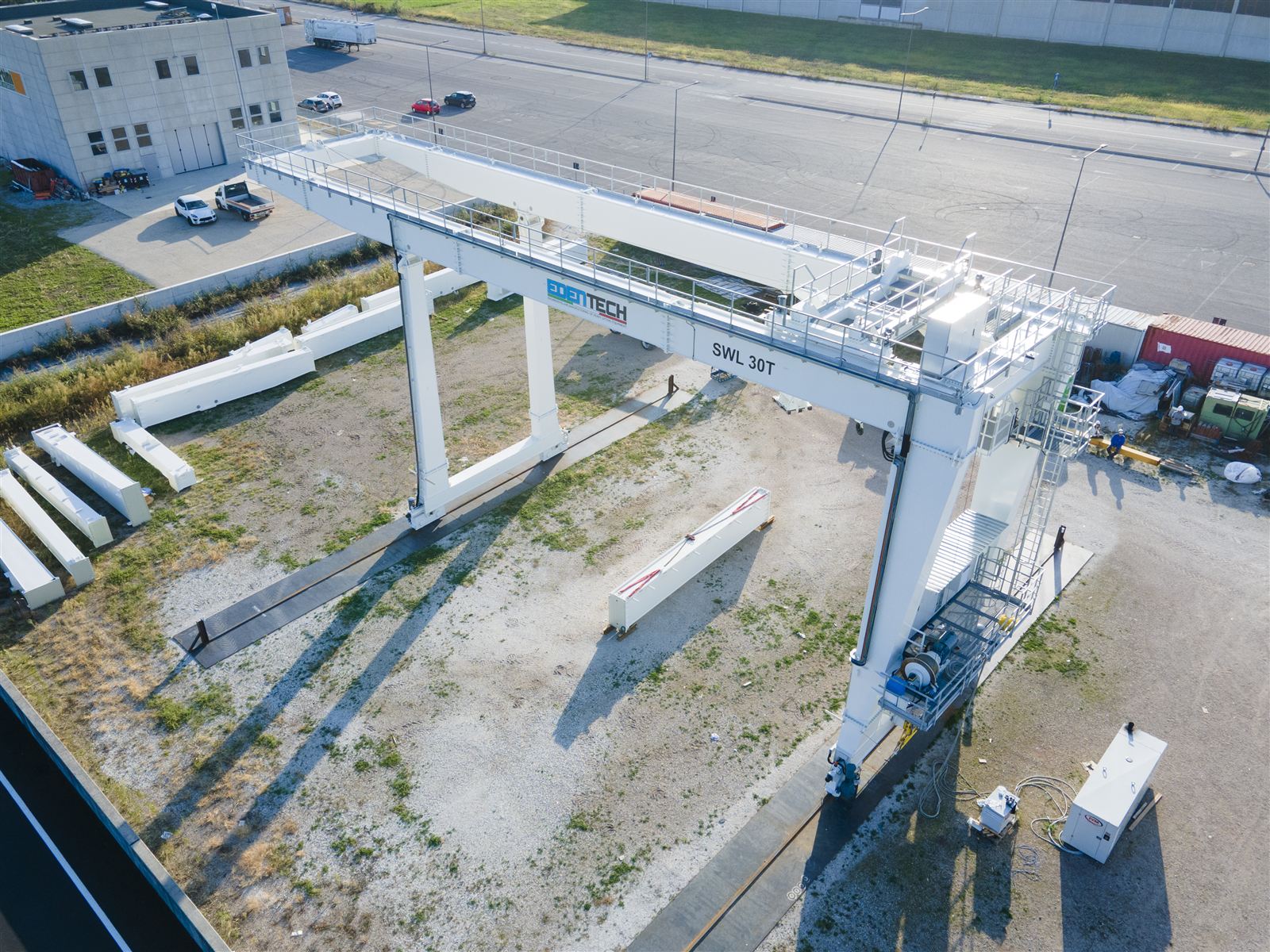
Electric gantry cranes for shaft work: full capacity on the overhang, negative hook travel, CSA and OSHA compliant.
- Full capacity on the overhang. The rated load is available beyond the legs, where the shaft is.
- High speed hoisting.
- Negative hook travel. The load is lowered below crane level: the shaft is served directly from surface level.
- Light upper trolley. Less dead load along the girder, therefore less steel for the same capacity, and lower transport and erection costs.
- CSA and OSHA compliance. Design, documentation and components to the North American framework.
Project, machine & technical data
The project
Handling into a shaft is a vertical problem with a horizontal constraint. The load is picked up at surface level, moved horizontally to the shaft opening, and then lowered well below the level of the crane rails. On an urban transit project the shaft is the only way in and out of the works, so the crane is the bottleneck of the whole site: its availability governs the progress of everything underground.
The machine
Heavy-duty electric gantry cranes with full capacity on the overhang and negative hook travel. The upper trolley is light, since it only carries the pulley blocks: moving the winches off the trolley reduces the dead load along the girder, and with it the girder section, the wheel loads and the size of the whole structure — on a site where every delivery has to be routed through city streets.
Technical data
- Units supplied
- No. 2
- Capacity (SWL)
- 30 t main hoist + 10 t auxiliary
- Overhang
- Full capacity available on the overhang
- Hook travel
- Negative travel, below crane level
- Trolley
- Light upper trolley, carrying the pulley blocks only
- Standards
- Fully compliant with CSA and OSHA
- Client
- Transit infrastructure contractor — Canada



Sixteen earlier tunnelling supplies
Before Eden Tech, members of our team designed and built tunnelling equipment at Paolo De Nicola S.p.A. and at Eden Technology Srl, for projects in Hong Kong, Qatar, Greece, Norway, Italy and China.
Work orders of Paolo De Nicola S.p.A. and Eden Technology Srl on which members of today’s Eden Tech team worked. They are listed as the professional experience of our people, not as Eden Tech supplies.
Tell us the constraint you cannot change.
We will tell you whether a machine can be built around it — and roughly what it takes.